
Information
How Many Appliances Can You Safely Plug Into an Extension Lead?
Quick Answer: You can plug in as many appliances as the lead has sockets, provided their combined current stays under the lead's rating, usually 13A, or roughly 3,000W at 230V. Add up each appliance's wattage, divide by 230 to find amps, and keep high-load items such as heaters and kettles on their own wall socket.
Every extension lead has a limit and that limit is set by the plug, not by the number of sockets. A standard 13A plug lead can safely carry around 3kW in total, so the sockets simply tell you how many things you can connect. Low-power items like lamps and chargers are not an issue. Heaters, kettles and power tools will easily use up the bulk of the capacity. At Meteor Electrical we supply a wide variety of trailing sockets for every job, so selecting the right extension lead is really easy. This guide covers load, limits, lead types and safe habits.
- How many appliances can an extension lead really handle?
- How do you work out the total load on an extension lead?
- Which appliances should never share an extension lead?
- Does the type of extension lead make a difference?
- Which Meteor Electrical extension leads suit different jobs?
- What safe-use habits matter as much as the maths?
- When is a fixed socket better than an extension lead?
- Key takeaways
- Using an extension lead with confidence
- Frequently Asked Questions (FAQs)
How many appliances can an extension lead really handle?
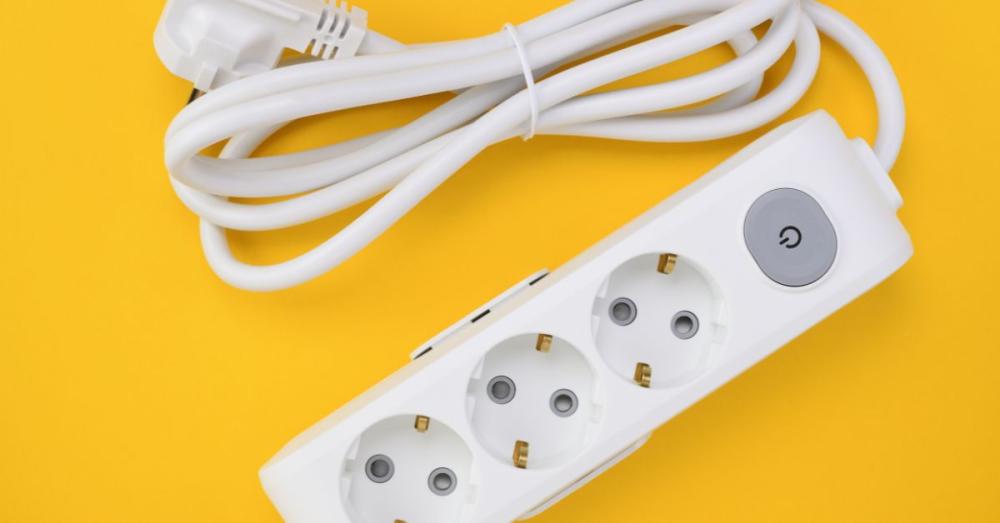
The honest answer is there is no fixed number of appliances. It's all to do with the total current they draw. A lead with a 13A plug is limited to 13A in total (regardless of how many sockets it has), and the Selectric leads below are all described as being suitable for domestic use at 240V and 3kW.
Think of it as a water pipe really. The extra sockets are just extra taps; the pipe itself is the same size. A 6-gang lead feels a lot more roomy than a single socket, but it still only goes through one wall socket and one fuse in the plug.
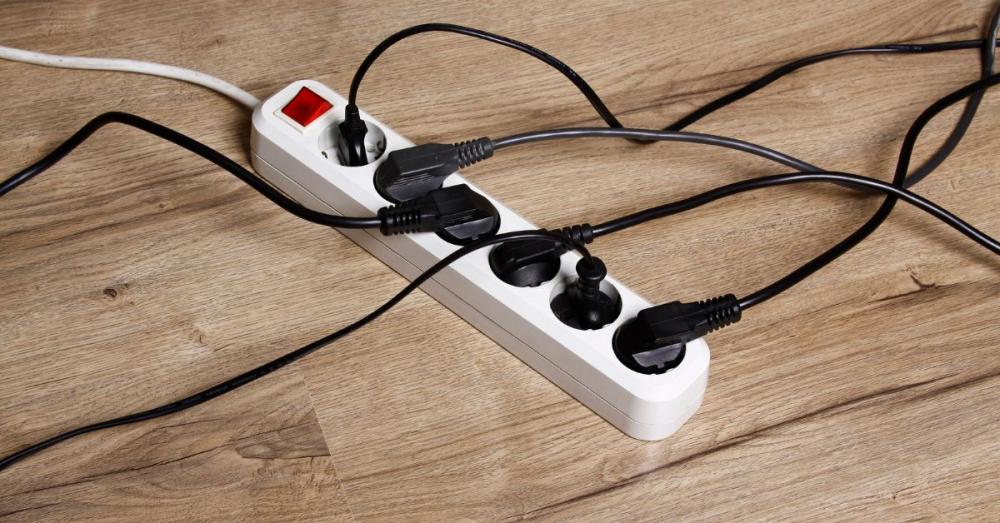
That's why a desk setup with a monitor, a laptop and a lamp is usually perfectly fine on one lead, whereas two heaters on the same lead are not. The sockets themselves didn't change; it was just the load that was different.
How do you work out the total load on an extension lead?
You do not need special tools, only the rating plate on each appliance and a calculator. Follow these steps:
- Find the wattage either on the rating plate of each appliance or in the manual.
- Add the wattages up to get the total.
- Divide the total by 230 to give you the current in amps.
- Compare the result with the lead's rating (normally 13A).
- Leave some headroom rather than running the lead at its limit.
A lamp, a monitor and a laptop charger will usually be a few hundred watts, which is well within the limit (though you should always check the rating plates). Swap the lamp for a fan heater and the picture changes quite dramatically. If an appliance gives its current rather than its watts, then just use the amps.
Which appliances should never share an extension lead?
Heaters, kettles and power tools are the usual culprits. Anything that heats, boils or cuts tends to draw heavily for long periods, which is why high-load items should ideally have their own wall socket.
| Appliance type | Sharing a lead? | Why |
|---|---|---|
| Lamps, routers, phone chargers | Yes, within the total rating | Low draw |
| TVs, consoles, monitors | Yes, add up the ratings | Moderate draw, so check the plates |
| Heaters, kettles and similar | Ideally their own wall socket | High draw for long periods |
| Power tools | Ideally their own wall socket | High load and harsher use |
Two habits cause more trouble than any single appliance. First, never plug one extension lead into another. This is called daisy chaining, and it hides the true load, adds extra connections and raises the risk of overheating. Second, if you use a cable reel for a high load, unwind it fully. A coiled reel cannot shed heat, and the cable can overheat.
Does the type of extension lead make a difference?
Yes, although the type changes features, not the 13A limit. The right lead simply makes the job tidier and safer.
| Lead type | Best for | What to know |
|---|---|---|
| Multi-gang (4 or 6 gang) | Desks, workstations, media units | Check the combined load, as the limit stays 13A |
| Heavy-duty trailing socket | Workshops and tougher use | Rugged casing, and some are socket only |
| Surge protected | Computers, TVs, chargers | Helps against minor spikes |
| USB lead | Phones, tablets, desks | Charges without separate adaptors |
| Smart lead | Scheduled or remote switching | App, Alexa or Google control |
Surge protection deserves a short note. A surge-protected lead diverts short voltage spikes away from connected equipment, but it will not protect against everything, such as a direct lightning strike. For wider protection, surge protection devices can be fitted at the consumer unit as part of the fixed installation.
Which Meteor Electrical extension leads suit different jobs?
Matching the lead to the job is the easiest way to stay inside the limit. Here are six options from our trailing sockets range, from simple multi-gang leads to a smart, surge-protected model.
1. Selectric 4 Gang 13 Amp Unswitched Extension Lead 5M
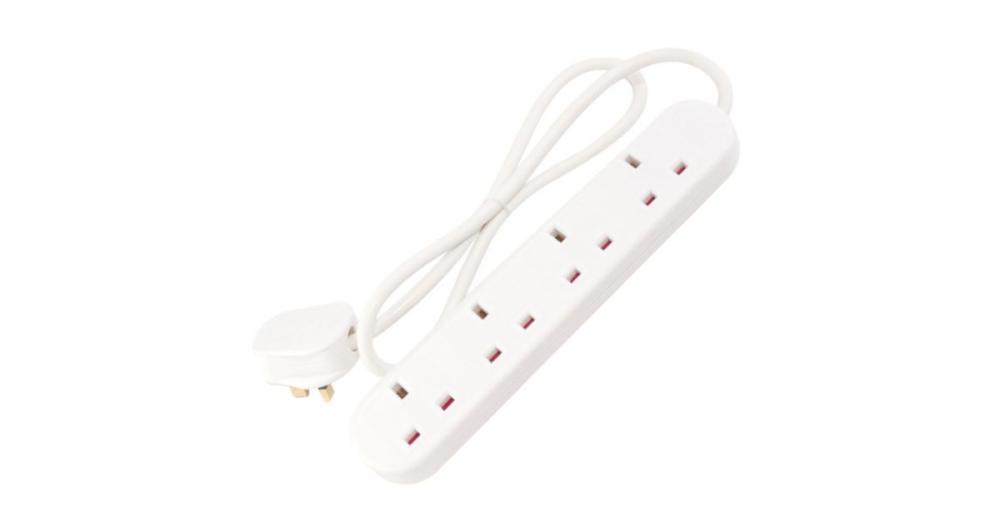
This is the one for rooms where the wall socket is stubbornly far away. The five metre lead has four sockets in a polycarbonate body, meets BS 1363/A and is suited to domestic use up to 240V and 3kW. It is also wall mountable, with fixing holes 108mm apart, which keeps the floor clear.
2. Selectric 6 Gang 13 Amp Unswitched Extension Lead 2M
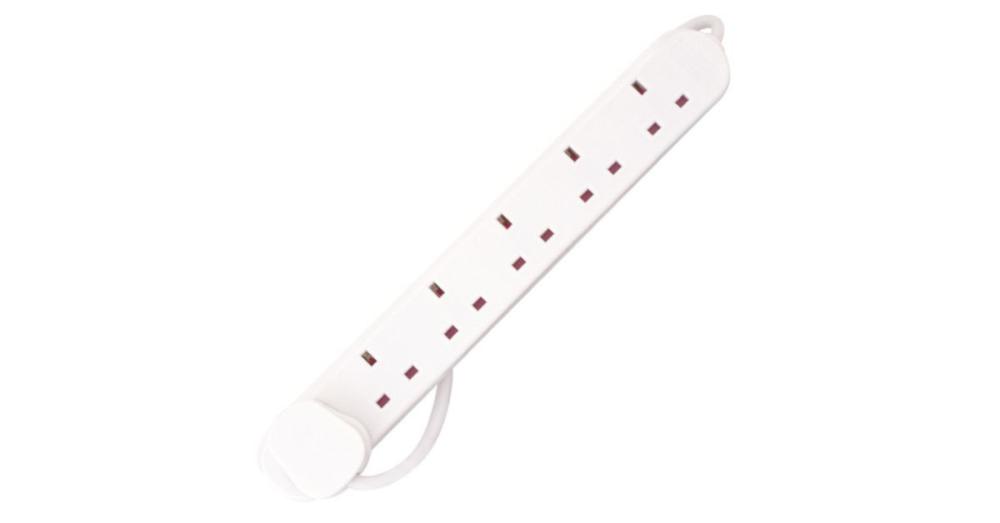
Six sockets on a two metre lead make this a handy pick for a media unit or workbench with plenty of small plugs. Remember the six sockets still share one 13A limit. It uses the same polycarbonate construction, and the wiring instructions are found on the back of the socket, with wall fixing holes 215mm apart.
3. 2 Gang 13 Amp Heavy Duty Trailing Socket, Black
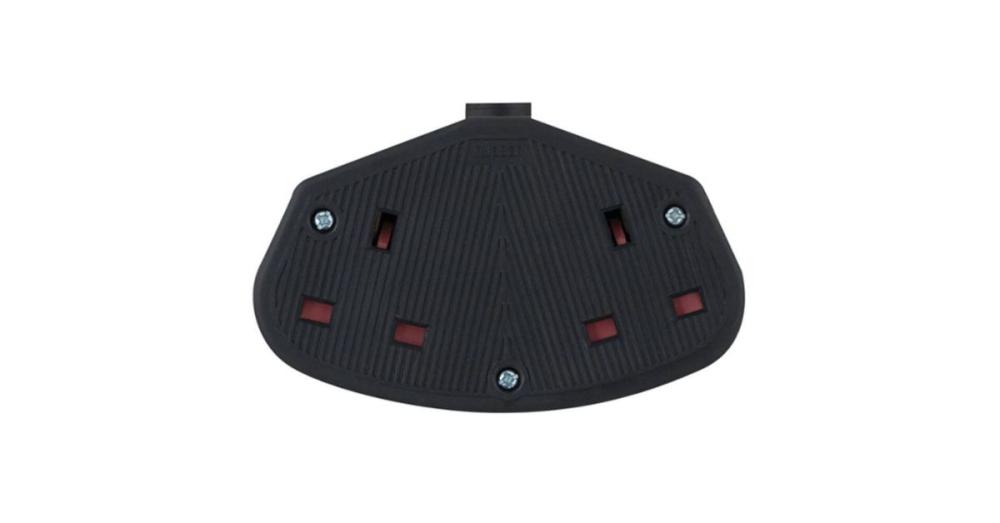
Built for harsher spots, this tough rubber and polycarbonate unit is aimed at industrial settings and meets BS 1363/A. It is socket only, so you choose the cord length, but it must be wired to a 13A fused plug top using 1.25mm or 1.5mm 3 core cable. Safety shutters guard each outlet, and the max load is 13A.
4. Knightsbridge Smart 3G Surge Protected Extension Lead with Quad USB Charger
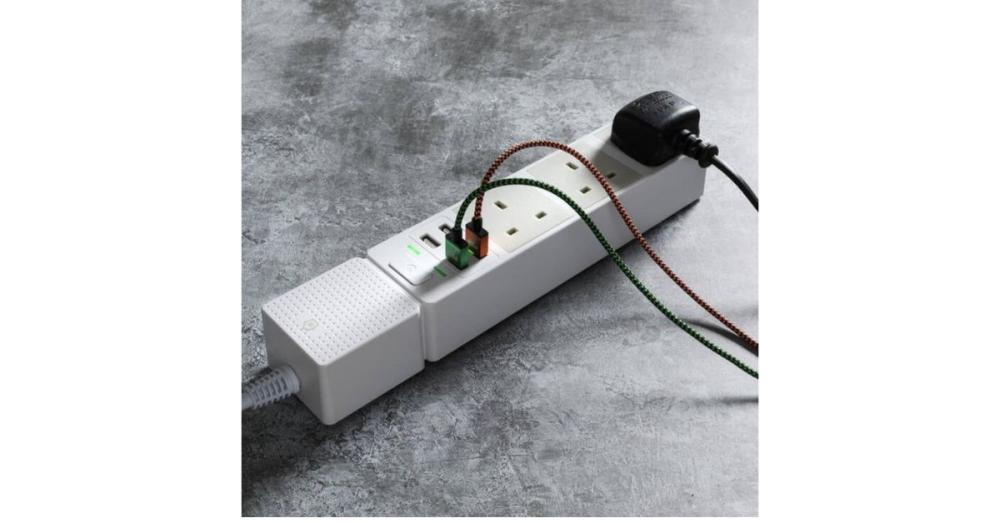
The smartest option here, quite literally. It gives you three power outlets and a quad USB charger on a 1.5 metre cable, with a 10A rating, so it suits low-load kit. Schedule appliances on and off through the SmartKnight app, or use Alexa or Google Assistant. Surge protection and the manufacturer warranty add peace of mind.
5. BG Electrical White Power Socket, 4 Gang 2 USB Compact Extension Lead, 2 Metre
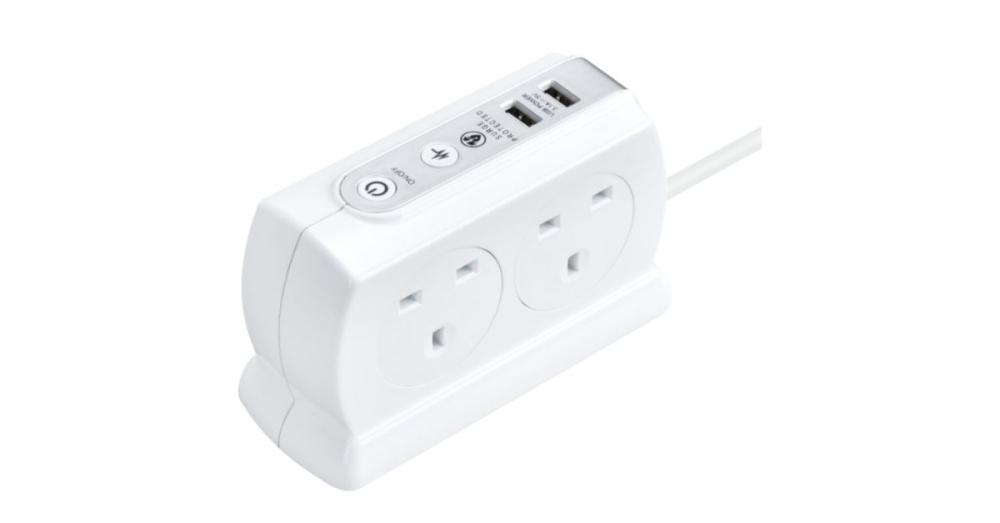
A tidy choice for desks and bedside spots. It has four sockets plus two USB ports sharing 3.1A, a two metre cord and a 13A rating. Safety shutters, power and surge indicators and wall-fixing capability are all included, and it meets BS 1363-2. White, compact and neat.
6. AVSL 6 Gang Extension Lead 2m
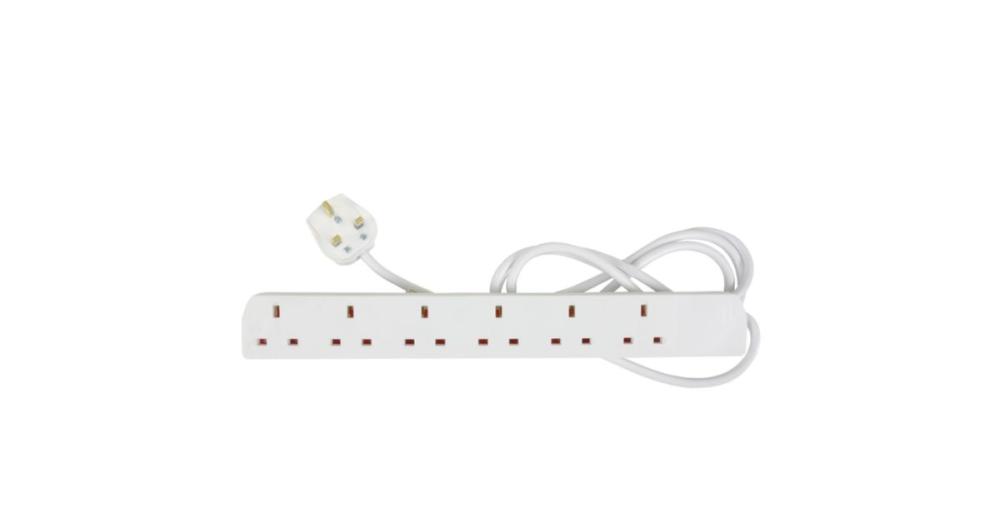
A simple, no-fuss lead for adding six sockets wherever you need them. It comes in white with a 2.0m cable, 230Vac, a 13A maximum rating and a 13A UK plug already fitted. Standards are BS1363/A, and keyhole slots on the back allow wall mounting, which helps keep things tidy.
What safe-use habits matter as much as the maths?
Staying under 13A is only half the job. How you use the lead matters just as much.
- Check cables, plugs and sockets regularly, and stop using anything damaged.
- Fully unwind cable reels when running higher loads.
- Keep indoor leads away from water and out of walkways to avoid trip hazards.
- Use RCD protection where leads supply tools outdoors.
- Follow the manufacturer's instructions and current guidance on portable appliance checks.
When is a fixed socket better than an extension lead?
If you keep reaching for the same extension lead every day, the room is telling you something. Permanent needs are better served by extra fixed outlets, and our switches and sockets range, including floor sockets, offers tidy options.
New sockets or circuits must meet BS 7671, so check current regulations or use a qualified electrician. Site teams with temporary power needs may also find our guide to temporary lighting for construction sites useful.
Key takeaways
- A lead's limit is set by its plug, usually 13A, not by its number of sockets.
- Add up the wattages, divide by 230 and compare the result with the lead's rating.
- Give heaters, kettles and power tools their own wall socket.
- Never daisy chain one extension lead into another.
- Unwind cable reels fully, and check leads regularly for damage.
- For permanent needs, choose fixed sockets and a qualified electrician.
Using an extension lead with confidence
So, how many appliances can you plug into an extension lead? As many as the sockets allow, provided the combined load stays within the lead's 13A rating and the heavy hitters, such as heaters, kettles and power tools, have their own wall socket. Add up the wattages, leave some headroom and avoid daisy chaining, and you will rarely have a problem. Two minutes with the rating plates is time well spent. Choose the lead to suit the job, whether that is a simple multi-gang, a rugged trailing socket or a smart surge-protected model. If you would like a hand, the team at Meteor Electrical is happy to help you pick the right extension lead for your home, workshop or site.
Ready to find the right extension lead for your home, workshop or site?
Multi-gang, heavy-duty, USB and smart leads from Selectric, BG Electrical, Knightsbridge and AVSL. Trade prices, next working day delivery across NI & ROI on in-stock orders before 5pm.
Frequently Asked Questions (FAQs)
How many appliances can I safely operate off one extension lead?
As long as the total current of all the sockets doesn't exceed the lead's rating (normally 13A), then you can have as many as there are sockets. Add up the wattages, divide by 230 and leave some headroom.
Can I safely plug a kettle or heater into an extension lead?
It's best to avoid them. Heaters, kettles and power tools all draw a lot of power, so it's best they have their own separate wall socket rather than sharing a lead with other appliances.
Why is it unsafe to plug an extension lead into another one?
Daisy chaining masks the actual load, adds extra connections and increases the risk of overloading and overheating. Use a single lead of the correct length and number of sockets.
Do surge-protected extension leads actually protect the computer?
They divert short voltage spikes away from the kit, thus providing some useful protection against minor surges. They won't stop everything (e.g. a direct lightning strike).
Should I go for an extension lead with switches or with USB ports?
Switches allow you to switch off the standby power without having to unplug. USB ports will charge your phone without the need for an adaptor, and unswitched leads are ideal for kit that you absolutely have to leave on (e.g. a router).