
Information
Why Are Fire Resistant Cable Supports Important During a Fire?
Why Are Fire Resistant Cable Supports Important During a Fire?
Quick Answer: Fire resistant cable supports hold life-safety cable in place while a building burns. Without metal clips or fire-rated fixings, the cable can drop once plastic melts, blocking escape routes and cutting power to alarms and emergency lighting. The cable only works if its fixing lasts as long as the cable does.
Fire resistant cable supports are the clips, ties and fixings that keep alarm and emergency lighting cable on the wall or ceiling when the heat climbs. The cable itself may survive the flames, but it cannot do its job lying on the floor. Plastic fixings soften and let go long before good cable gives up, which is why the fixing matters as much as the core. At Meteor Electrical, we supply the cable and the steel clips that go with it. Below, we cover what supports do, how cable grades differ, the products we stock and how to fit it all properly.
- What Are Fire Resistant Cable Supports?
- Why Do Fire Resistant Cable Supports Matter in a Fire?
- Fire Resistant, Flame Retardant or LSF: What’s the Difference?
- Standard or Enhanced Grade: Which One Does Your Building Need?
- Which Fire Resistant Cables Does Meteor Electrical Stock?
- How Do You Fit Fire Resistant Cable and Its Supports?
- Key Takeaways
- Keeping Circuits Alive When It Matters
- Frequently Asked Questions
What Are Fire Resistant Cable Supports?
A cable on its own is only half the story. The supports are the metal clips, saddles, ties and fixings that attach it to the building structure. On a normal day you don't notice them at all. In a fire they determine whether the cable stays on the wall or ends up on the floor.
Fire resistant cable is designed to carry its power or signal for a certain period of time in the event of a fire, so fire alarms, emergency lighting and voice alarms will all continue to work. That whole concept is predicated on the cable staying where the designer intended it to.
Why Do Fire Resistant Cable Supports Matter in a Fire?
Heat travels very quickly and ordinary plastic won't cope with it. Plastic clips and trunking can melt, allowing the cable to fall and block escape routes or those of the firemen. A cable that has fallen can also be pulled, stretched and damaged which may well break the very circuit it was there to protect.
That's why the current wiring regulations (BS 7671) require wiring systems in escape routes to be supported against premature collapse. In practice that means fire rated metal clips, ties and fixings rather than plastic alone.
Think about what's reliant on those circuits: the alarm detectors, the sounders that tell people to get out and the emergency lighting that shows them the way out. If the cable fails they all fail with it. Our steel clips and fire protection range are made for exactly this job.
Fire Resistant, Flame Retardant or LSF: What’s the Difference?
These terms get mixed up on site all the time. They describe different behaviours, so it pays to be clear.
| Cable type | What it does |
|---|---|
| Fire resistant | Keeps working for a defined period during a fire |
| Flame retardant | Resists the spread of fire into an area |
| FRLS | Fire retardant, and gives off less smoke than normal PVC |
| LSF | Modified PVC that produces less HCl gas and smoke than standard PVC |
LSF is not yet a blanket requirement, although regulations may change. Check current regulations or use a qualified electrician if you are unsure what your project needs.
Standard or Enhanced Grade: Which One Does Your Building Need?
Both grades are used for life-safety circuits, but they are not interchangeable.
- Standard grade suits many fire alarm and emergency lighting circuits where the system design calls for it.
- Enhanced grade has passed more demanding fire survival tests, so it keeps working for longer. It is specified for larger or more complex buildings, phased evacuation and critical circuits.
The designer chooses the grade, normally working from BS 5839-1 for fire detection and alarm systems and BS 5266 for emergency lighting. Never drop to a lower grade without approval. If you are fitting a panel and detectors alongside the cable, our fire alarm systems category covers the rest of the setup.
Which Fire Resistant Cables Does Meteor Electrical Stock?
Our fire resistant cable range is deliberately simple: 2 core and earth, 1.5mm, red, in standard and enhanced grades, plus a detector cable for residential systems. Here is how each one fits.
1. 2 Core+Earth 1.5mm Enhanced Red Fire Resistant Cable (500m Drum)
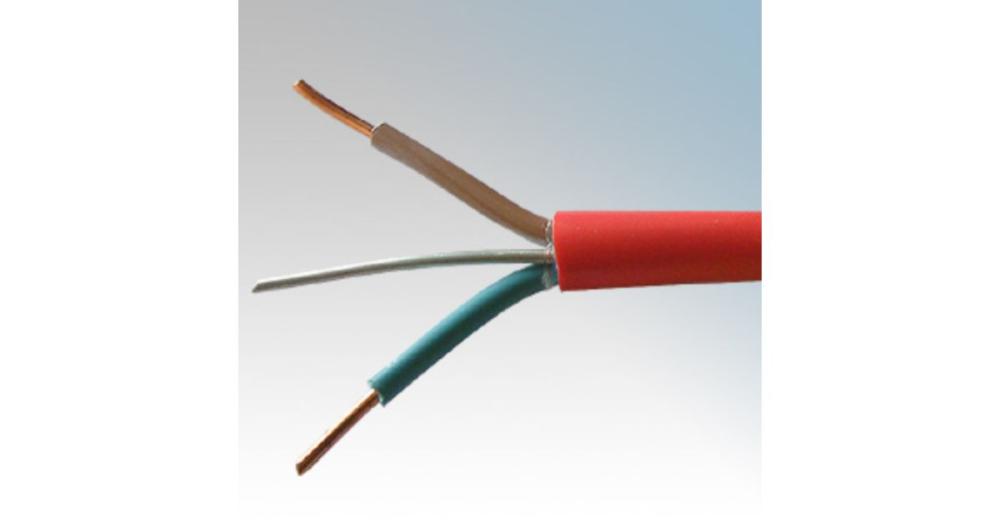
This is the heavy-duty option for large sites. Enhanced grade has passed tougher fire survival tests, and the 500m drum means fewer joins across long runs. It suits big commercial buildings where circuits must keep working for longer. Product code FIR2C1.5R/ENH/500.
2. Detector Cable NHXMH (Coil 100 Meters)
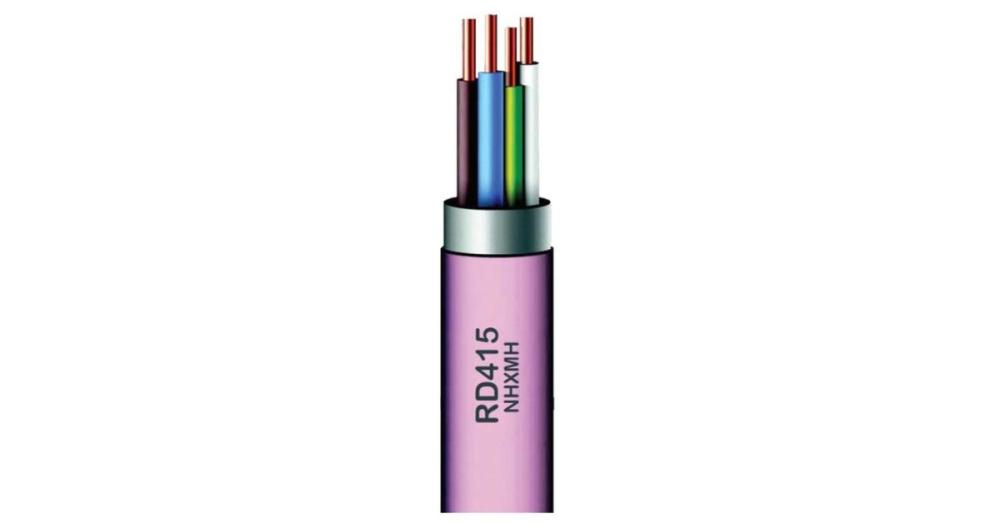
Known as RD415, this is used with residential smoke, heat and carbon monoxide detectors. Its core colours are brown, blue, green/yellow and white, which meets ETCI regulations, and the pink outer sleeve makes it easy to tell from other cables once it is installed.
3. 2 Core+Earth 1.5mm Red Fire Resistant Cable (500mt Reel)
Standard grade on a large reel, ideal for bigger fire alarm or emergency lighting jobs where the design calls for standard cable. Buying 500m in one go saves time cutting and joining on a long project. Product code FIR2C1.5R/500/EU.
4. 2 Core+Earth 1.5mm Red Fire Resistant Cable (100mt Reel)
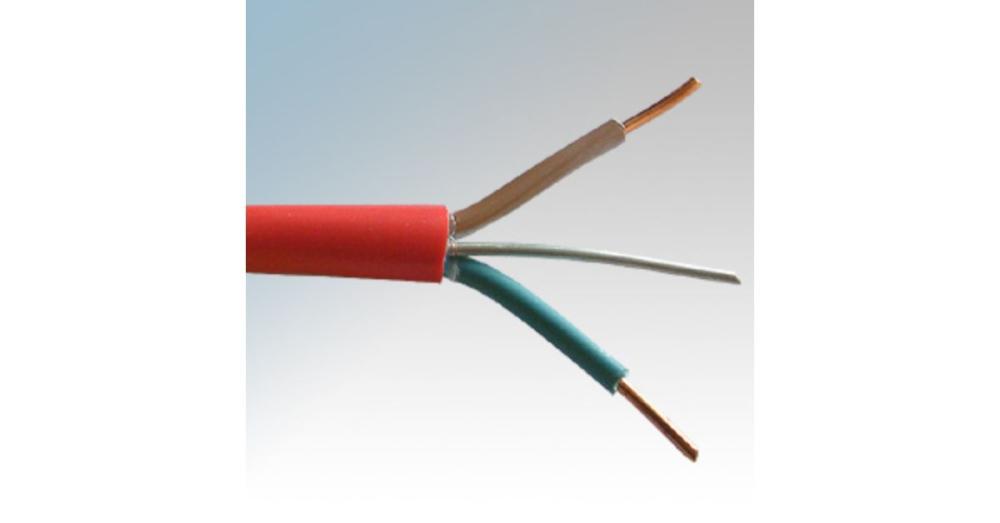
A manageable standard grade reel for smaller jobs, shops, small offices or a single floor of a building. The red sheath keeps life-safety circuits easy to spot, and you only buy what the job needs. Product code FIR2C1.5R/EU.
5. 2 Core+Earth 1.5mm Enhanced Red Fire Resistant Cable (100mt Reel)
Enhanced grade in a compact reel, useful when a smaller project still needs the longer survival time. Check availability on the product page before you plan your delivery. Product code FIR2C1.5R/ENH.
How Do You Fit Fire Resistant Cable and Its Supports?
Good cable can still fail if it is installed badly. Follow these steps, and always follow the manufacturer’s instructions.
- Confirm the grade. Check the design specification prior to ordering. Standard and enhanced are not interchangeable.
- Choose metal fixings. Use fire rated metal clips, ties or fixings of the appropriate size for the cable. Don't rely on the plastic trunking alone.
- Plan the route. Keep the life safety circuits separate from the other cables and keep them away from anything that could in any way interfere with them.
- Fix at regular intervals. Adhere to the manufacturer's guidance on spacing so that the cable doesn't sag along its length.
- Terminate carefully. Use the glands and accessories that the cable manufacturer recommends and be very careful not to damage the fire-resistant insulation when stripping.
- Test and record. Connect the devices in accordance with the panel and detector instructions, test the system and record it.
For anything with fixed wiring, check the current regulations or get a qualified electrician to look at it.
Source - TSCables
Key Takeaways
- Fire resistant cable supports keep life-safety cables securely in place during a fire, helping maintain power to fire alarms and emergency lighting.
- Metal clips, saddles, ties and fire-rated fixings prevent cables from falling when plastic supports melt under high temperatures.
- Fire resistant, flame retardant, FRLS and LSF cables have different properties and should not be treated as interchangeable.
- Standard and enhanced fire resistant cables offer different levels of fire survival, depending on the building design and safety requirements.
- Meteor Electrical supplies standard and enhanced fire resistant cables, detector cables and suitable accessories for commercial and residential installations.
- Always use appropriate metal fixings, follow manufacturer guidance on support spacing and check the relevant wiring regulations.
- Choosing the correct cable grade and reliable supports helps keep essential safety circuits operational when they are needed most.
Shop Fire Resistant Cable and Fixings at Meteor Electrical
Browse standard and enhanced fire-resistant cable, residential detector cable and steel clips for dependable life-safety installations.
Visit Meteor Electrical Browse fire resistant cableKeeping Circuits Alive When It Matters
So why are fire resistant cable supports important in a fire? They stop the cable from falling which in turn keeps the alarms going, the emergency lighting on and the escape routes clear for the duration of the system design. A strong cable with a weak fix is still a weak system.
Get the right grade of cable with the right metal supports, fit them to the manufacturer's guidance and the circuit has a real chance of surviving. If you're doing any work at all, then Meteor Electrical has fire-resistant cable supports, clips and the matching cable in stock, and our counter team are more than happy to go through what your project requires.
Frequently Asked Questions (FAQs) About Fire Resistant Cable Supports
1. What are fire resistant cable supports?
Fire resistant cable supports are the metal clips, ties and fixings that hold the life-safety cable in place during a fire. Their job is to prevent the cable from dropping or sagging whilst the circuit is still required to work, so that the alarms, emergency lighting and escape routes remain operational for the period required by the system design.
2. Why can’t I use plastic clips on fire alarm cable?
Plastic clips and trunking can melt in a fire, causing the cables to fall and thus obstructing escape routes as well as those of the fire fighters. The current wiring regulations (BS 7671) require that the wiring system is to be supported so that it won't collapse prematurely. Metal clips or fire rated fixings are used to keep the cable where it should be for as long as it needs to be.
3. Fire resistant vs flame retardant cable: what’s the difference?
Fire-resistant cable will keep the circuit live during a fire (it's fire-resistant), whereas flame-retardant cable will just resist the spread of the fire (it won't keep the circuit live). Fire alarms and emergency lighting require fire resistant cable, general wiring can be flame retardant.
4. Is enhanced fire resistant cable better than standard?
Enhanced fire resistant cable has passed more demanding fire survival tests than standard grade, so it keeps working for longer. It is usually specified for larger buildings, phased evacuation and critical circuits. The system designer should state which grade is needed, and you shouldn’t swap to a lower grade without approval.
5. Why is fire alarm cable red?
Red is the preferred sheath colour for fire alarm cable because it makes life-safety circuits easy to spot and helps stop them being disturbed or reused for other purposes. Fire alarm standards recommend one common colour that stands apart from every other cable in the building.
6. Who decides which fire resistant cable grade I need?
The fire alarm or emergency lighting designer specifies the grade, normally using BS 5839-1 for fire detection and alarm systems and BS 5266 for emergency lighting. If you’re unsure, check current regulations or use a qualified electrician rather than guessing, because the wrong grade can leave a system unprotected.