
Information
How to Choose the Right Industrial Electrical Control Equipment: A Complete Buyer’s & Panel-Building Guide
Quick Answer: Match your control and automation products to the control circuit voltage (24V or 230V), cut-out size (22mm or 22.5mm), and site IP rating. Pair motors with calibrated overload protection, verify BS EN compliance on emergency stops, and pick keylock or mushroom operators suited to local access risks.
Whether you're wiring up a motor starter, building a pump panel or just mounting a local stop station up next to some machinery, the choice of parts is going to have a massive impact on the whole job. The wrong part or one that's under rated is going to lead to all sorts of nuisance faults, failed inspections and of course a lot of downtime. Industrial control and automation products bring together the operator devices, enclosures and protective equipment used to start, stop, signal and protect plant machinery in a safe manner.
In this blog we look at the key switches and indicators, go through the IP ratings and voltages, share some of our practical DIN rail wiring habits and point out some of the hardware that you should be specifying in your work.
- What Core Electrical Control and Automation Components Do Industrial Panels Need?
- How Do You Match Enclosures, IP Ratings, and Site Power to Your Operating Environment?
- What Wiring Standards and Panel-Building Best Practices Should Installers Follow?
- Which Industrial Control and Automation Products Should You Specify for Your Next Job?
- Key Takeaways
- Conclusion: Specify and Source Reliable Industrial Control Equipment with Confidence
- Frequently Asked Questions (FAQs) About Industrial Electrical Control Equipment
What Core Electrical Control and Automation Components Do Industrial Panels Need?
Push Buttons, Emergency Stops, and Contact Blocks
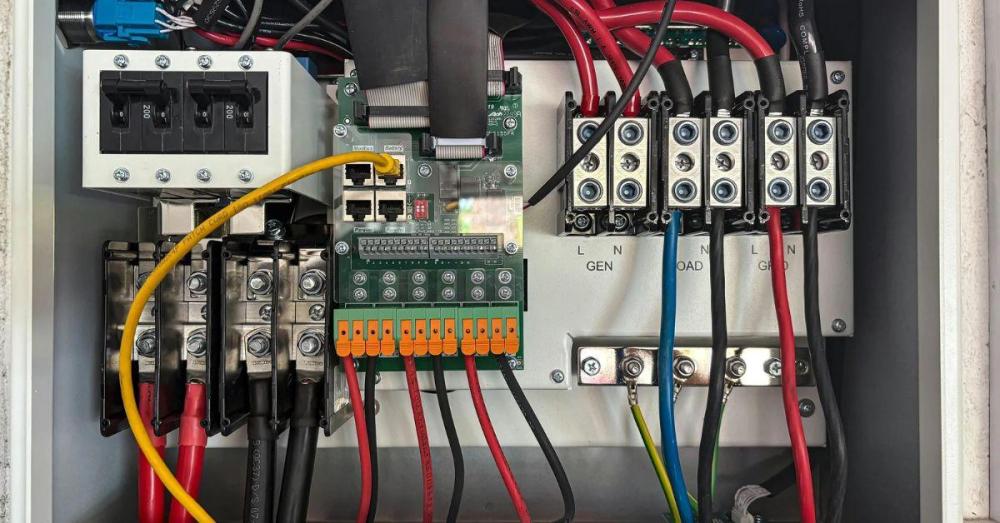
Standard 22.5mm push buttons follow clear UK colour conventions: green for start and red for stop. Flush heads work well for routine cycles where knocks happen easily, while protruding mushroom head stop buttons offer an oversized target for fast emergency actuation. Behind the fascia, collar-mounting and back-mounting normally open (N/O) contact blocks complete modular operator devices, letting installers add auxiliary circuits without cutting extra holes.
Selector Switches and Keylock Operators
Multi-mode plant uses stay-put 2 and 3 position selector switches. The 2 position switches are for the simple On/Off or Local/Remote type of application and the 3 position switches are for Hand-Off-Auto (HOA) control of pumps and fans. On the factory floor in general, facilities managers will often specify key operated switches to prevent unauthorised mode changes.
LED Pilot Lamps for Visual Status Signalling
Available in 24V and 230V AC/DC, LED pilot lamps provide instant visual confirmation of run, fault or mains status. Over and above the filament type, the LED indicators have the advantage of:
- Lower heat output inside tight enclosures
- Stronger resistance to constant machine vibration
- Longer operating life with fewer maintenance visits
Overload Relays for Motor Protection
Thermal overload relays are used in conjunction with contactors to protect the motor from sustained overcurrent (they will tolerate the normal inrush on startup). Set the dial to the motor's Full Load Current (FLC) as marked on the rating plate of the motor rather than sizing it against the upstream circuit breaker.
How Do You Match Enclosures, IP Ratings, and Site Power to Your Operating Environment?
Site conditions are just as important as the electrical specs when you're selecting control and automation products.
Selecting Local Control Stations and IP Ratings
Rather than route every switch back to a central cabinet, fit empty and keylock control stations (1 hole or 2 hole boxes to take the standard 22mm operator devices) right beside the machinery for local control. Match the seal to the job:
| IP Rating | Dust Protection | Water Resistance | Typical Site Use |
|---|---|---|---|
| IP44 | Solids over 1mm | Splashing water | Dry indoor workshops |
| IP65 | Dust-tight | Low-pressure jets | Dusty floors, sheltered plant |
| IP66 | Dust-tight | Powerful water jets | Washdown bays, outdoor gear |
Comparing 24V vs. 230V Control Circuits and Hardware Compatibility
| Factor | 24V AC/DC Circuit | 230V AC Circuit |
|---|---|---|
| Safety | Lower shock risk in damp zones | Higher shock risk; stricter isolation |
| Wiring | Requires control transformer or PSU | Direct feed, simpler layout |
| Best Fit | PLC panels, frequent operator touch | Standalone starters, basic pumps |
Before you go ahead and order, check the mechanical and electrical alignment across the panel. The cut out size (22mm or 22.5mm), the contact block thermal current (Ith) and the coil voltages all need to be the same.
Choosing 110V Portable Transformers for Site Power
On site at construction and maintenance sites you'll find 3.3kVA 110V site transformers which step the mains down to a reduced low voltage via yellow 16A outlets for corded power tools. Two practical checks to remember:
- Compare the continuous and intermittent kVA ratings so that sustained tool loads don't overheat the windings.
- Pair with matching 110V industrial plugs and sockets for site use.
Source: Autocad Electrical Hub
What Wiring Standards and Panel-Building Best Practices Should Installers Follow?
DIN Rail Layout, Terminal Blocks, and Panel Organisation
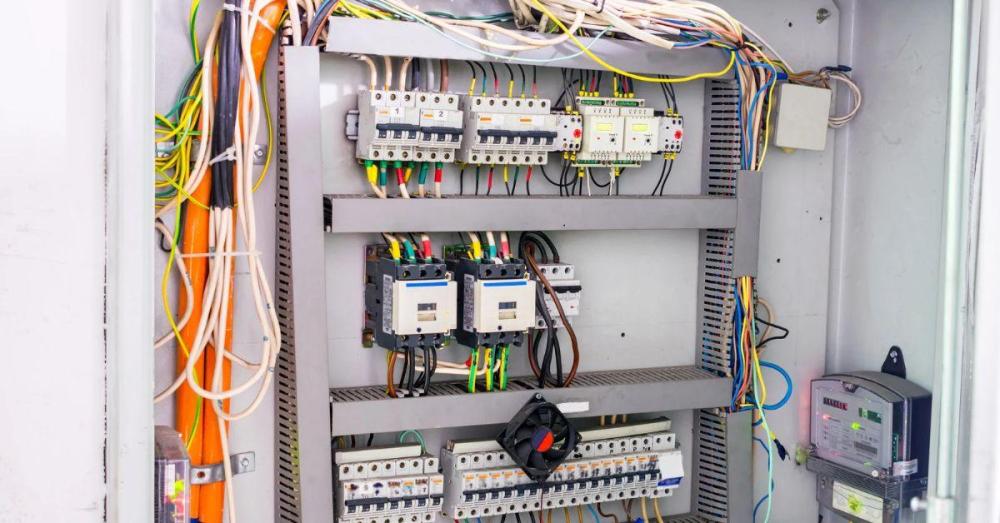
Follow these four steps for tidy, serviceable panel builds:
- Mount the contactors, terminal blocks and motor relays onto the DIN rail with plenty of spacing to allow for airflow.
- Separate the power cabling from the low voltage control wiring to minimise electrical interference.
- Fit numbered ferrules and robust cable labels at every termination to facilitate future fault finding.
- Torque the terminal screws to manufacturer's guidance and run a gentle tug test prior to energising.
Emergency Stop Circuit Safety and Regulatory Compliance
Emergency stop circuits are subject to very strict machinery safety requirements. The relevant standards (BS EN 60947-5-1, manufacturer's datasheets, current UK and Irish wiring regulations) must be observed. Prior to commissioning it is essential to verify that the contacts are positive opening and that there is mechanical latching on the mushroom head stop stations so that the power is off until the circuit is deliberately reset.
Common Specification Mistakes That Cause Callbacks
Avoid these frequent site oversights:
- Under-specifying enclosure IP ratings near washdown equipment
- Ordering 24V indicators for a 230V control circuit
- Skipping compatibility checks between contact blocks and operator devices
- Leaving thermal relay dials on factory defaults instead of setting them to motor FLC
Which Industrial Control and Automation Products Should You Specify for Your Next Job?
Selecting vetted control and automation products saves fitting time and supports compliance. Consider these four trade-ready options:
1. Live Electrical SPB 1-Way Mushroom Head Stop Push Button
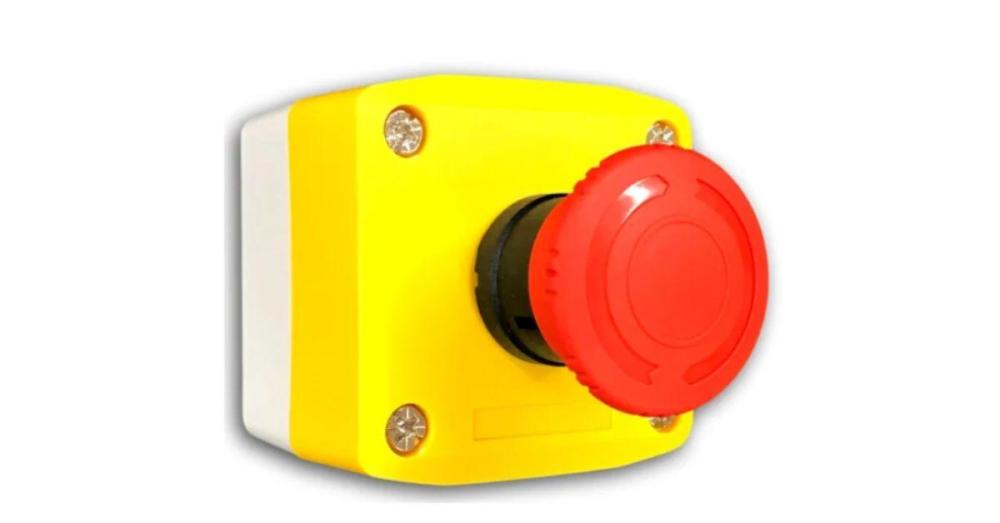
Best for local emergency stopping on industrial machinery and plant rooms.
- IP66 weatherproof, dust-tight housing with 20mm cable entry knock-outs
- 10A rated thermal current, BS EN 60947-5-1 compliant
Shop Live Electrical SPB 1-Way Mushroom Head Stop Push Button at Meteor Electrical
2. Europa Components Control Station - Keylock Switch (RC1PBG4)
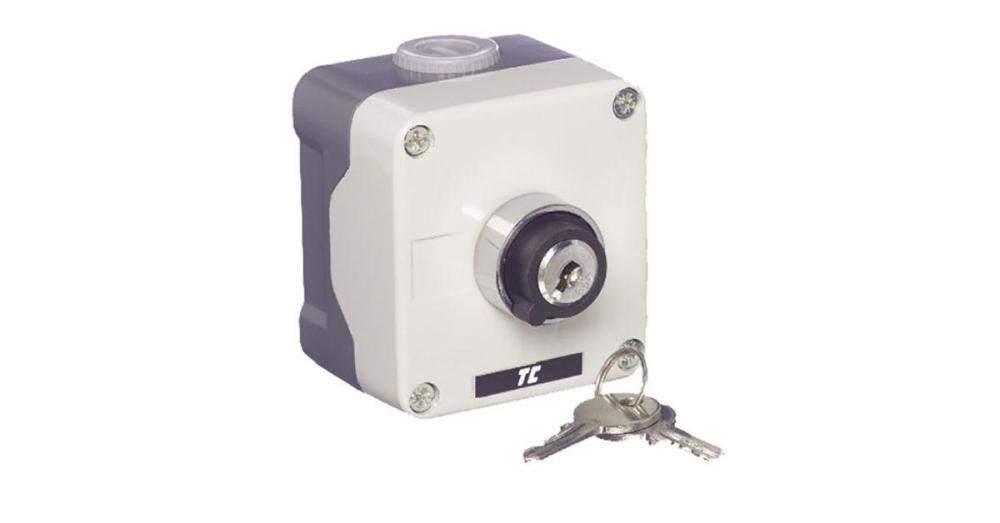
Best for restricting machine start/stop or mode changes to authorised staff in shared workshops.
- Durable IP65 ABS enclosure rated from -25°C to +70°C
- Key removable in ON and OFF positions, EN 60947-5-1 compliant
Shop Europa Components Keylock Switch Control Station at Meteor Electrical
3. Europa Components 9-13A Thermal Overload Relay (TR2-D12316)
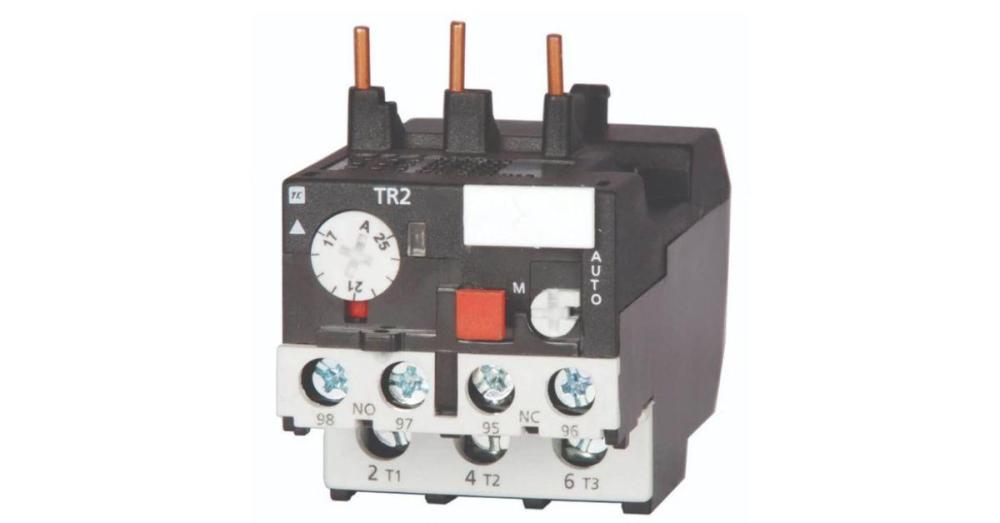
Best for protecting mid-range motors, pumps, and HVAC units from sustained overcurrent (a 17-25A model covers heavier motors).
- Adjustable 9-13A dial, 690V/600V rating, IP2x finger protection
- Compliant with IEC 60947-4-1 and BS 4941
4. Jefferson 3.3kVA Portable Site Transformer (JEFKVA03.3)
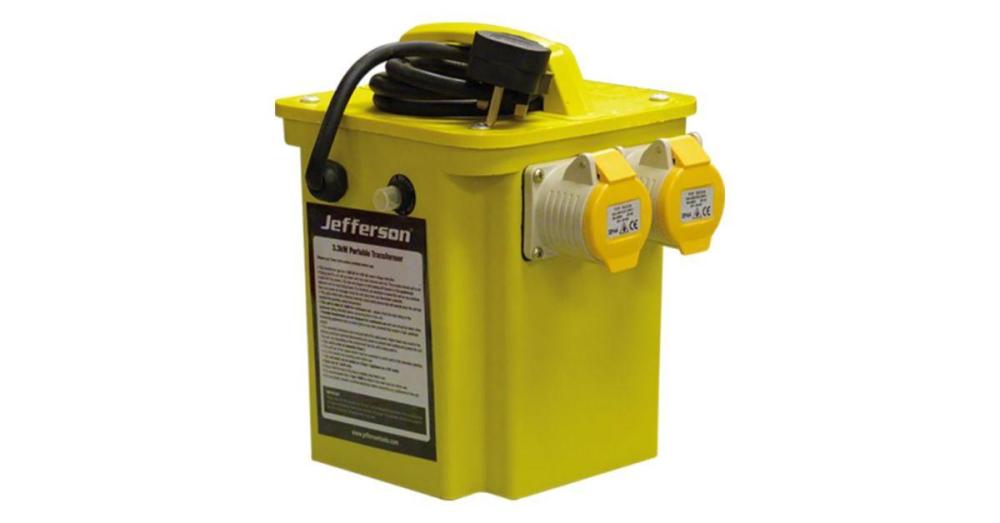
Best for compliant 110V stepped-down tool power on construction and refurbishment sites.
- 3.3kVA intermittent / 1.65kVA continuous rating, twin 16A yellow outlets
- Rugged portable case with pre-fitted 1.5m cable and 13A plug
Shop Jefferson 3.3kVA Portable Transformer at Meteor Electrical
Key Takeaways
- Choosing the right industrial electrical control equipment helps improve operational safety, reduce machinery downtime and prevent costly installation errors.
- Essential control and automation products include push buttons, emergency stops, selector switches, LED pilot lamps and thermal overload relays, each serving a specific operational purpose.
- Matching enclosure IP ratings, control circuit voltages and mounting dimensions to site conditions is critical for reliable performance and component compatibility.
- Thermal overload relays must be set according to the motor’s full load current to provide appropriate protection against sustained overcurrent.
- Following panel-building best practices, including organised DIN rail layouts, proper cable separation and accurate terminal labelling, simplifies maintenance and fault finding.
- Selecting quality electrical control components that meet relevant UK and Irish safety standards supports regulatory compliance, installation reliability and long-term equipment performance.
Conclusion: Specify and Source Reliable Industrial Control Equipment with Confidence
Dependable control installations rest on four checks: matching operator devices to circuit voltages, selecting the right enclosure IP rating, calibrating motor protection to FLC, and following current wiring and machinery safety standards.
When it is time to order, Meteor Electrical brings trade sourcing under one roof, stocking 5,000+ products from 100+ trade brands, from 22.5mm push buttons, pilot lamps, and overload relays to DIN rail, terminal blocks, panel gear, and 110V site transformers.
Ready to build smarter on your next contract?
Browse the full Control & Automation range at Meteor Electrical or open a trade account today for competitive pricing and rapid delivery direct to site.
Explore Control & Automation Products at Meteor Electrical
Browse industrial control equipment, push buttons, selector switches, overload relays, panel components and site transformers for your next electrical project.
Frequently Asked Questions (FAQs) About Industrial Electrical Control Equipment
1. What is the difference between a standard red stop button and a mushroom head emergency stop button?
A flush red button handles routine operational stopping, while a mushroom head emergency stop uses an oversized latching actuator for rapid striking and typically incorporates positive-opening safety contacts.
2. Should I use 24V or 230V LED pilot lamps in an industrial control panel?
Match LED pilot lamps directly to your control circuit: pick 24V AC/DC for extra-low-voltage PLC or transformer-fed panels, and 230V AC when signalling off a mains control feed.
3. How do I choose between a 2-position and a 3-position selector switch?
Use 2 position selector switches for simple binary tasks like On/Off or Local/Remote, and step up to a 3-position switch for Hand-Off-Auto (HOA) pump or fan control.
4. How do I set a thermal overload relay for an industrial electric motor?
Read the motor's Full Load Current (FLC) from its rating plate and set the relay dial to match, paired with a suitable contactor and upstream short-circuit protection.
5. What IP rating do I need for a local machine control station?
Clean, dry indoor zones may suit basic splash resistance, whereas dusty workshops, outdoor plant, and washdown bays generally require sealed IP65 or IP66 enclosures.