
Information
How Do You Choose the Right Plastic Conduit for Electrical Wiring? Sizes, Gauges, Fittings & Installation Guide
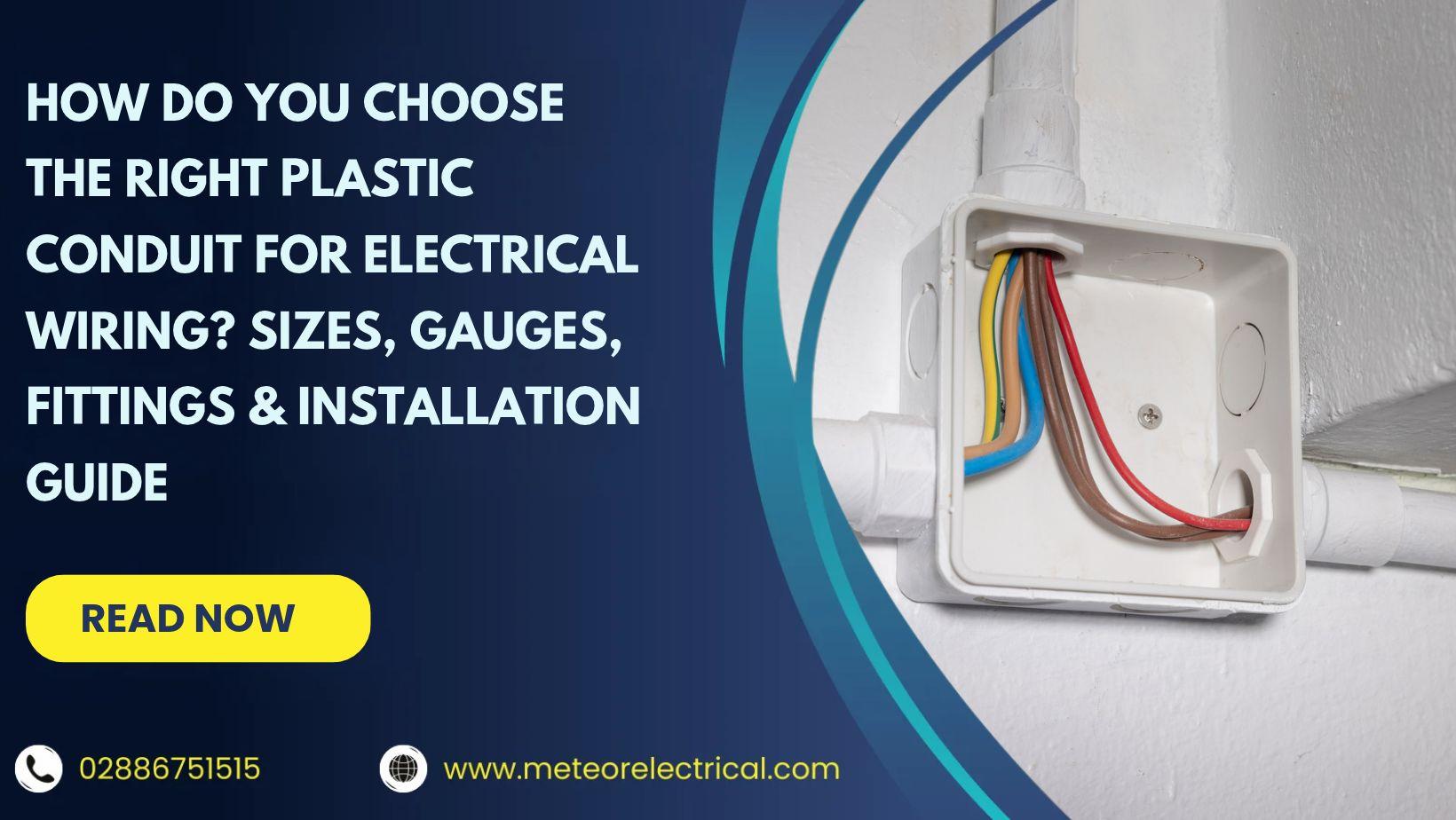
Quick Answer: Choose 20mm or 25mm rigid round plastic conduit in heavy gauge for exposed surface runs, oval profiles for plastered switch and socket drops, and flexible tubing for awkward bends or equipment connections. Size diameters using BS 7671 cable factors, and specify LSF ratings for public or commercial spaces.
Walk into almost any plant room, garage or commercial corridor and you'll see plastic conduit doing the work. It's light, it doesn't rust and it's easy to work with on site so it's still the go-to for cable containment in both surface and concealed circuits.
It's still very much the case that getting the right setup is by no means as simple as just buying a bundle of 3m lengths. Electricians and facilities managers constantly weigh up profiles, wall thicknesses, cable capacity rules and the appropriate accessories. One small error and you're looking at very tight cable pulls, kinked bends or an awful lot of snagging on the inspection list.
This guide goes through the various conduit shapes, gauges, fire ratings, compatible fittings and the sort of site practice that you need to be able to specify with confidence.
- Which Type of Plastic Conduit Best Fits Your Wiring Route?
- When Should You Switch from Plastic Conduit to Steel Conduit?
- How Do Conduit Gauge, Diameter, and LSF Ratings Impact Performance?
- What Fittings and Installation Practices Keep PVC Conduit Compliant?
- Which Plastic Conduit Products Should You Specify for Your Next Installation?
- Key Takeaways
- Conclusion: Specify Trade-Rated Plastic Conduit for Your Next Electrical Project
- Frequently Asked Questions (FAQs) About Plastic Electrical Conduits
Which Type of Plastic Conduit Best Fits Your Wiring Route?
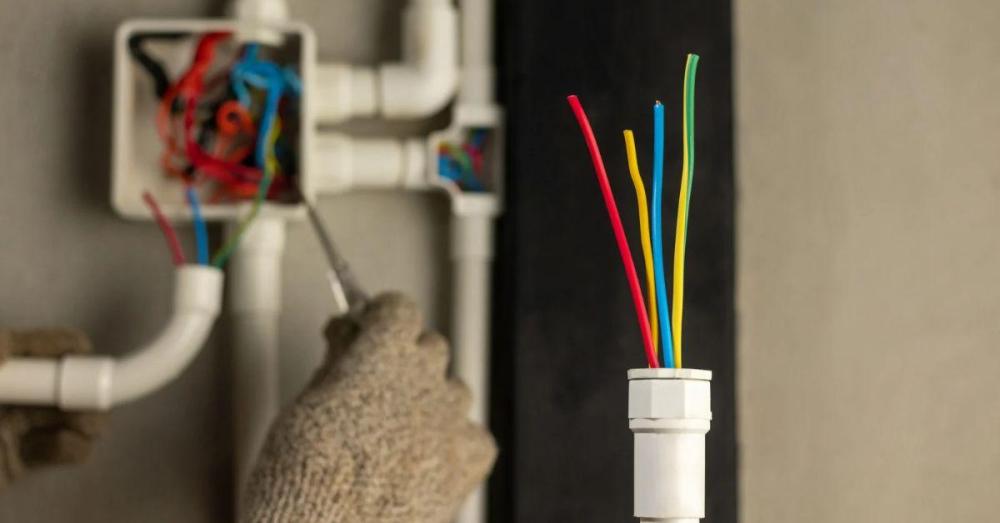
Supplied in standard 3m lengths, rigid round PVC handles a straight surface run across workshops, utility rooms, car parks and the back of house in commercial premises. It also works very cleanly in stud walls and in suspended ceilings where you do have a need for structured routing.
- 20mm round conduit: ideal for domestic lighting circuits, single radials and light socket runs with a relatively low number of conductors.
- 25mm round conduit: the smarter option for multi-cable runs, for thicker conductors or for a commercial refit where you're leaving space for future circuits.
Oval PVC Conduit (23mm Super Oval) for Recessed Plaster Drops
When you're burying vertical drops down to the switches and plug sockets you find that the round tubing forces you to chase right down into the brick or blockwork. A 23mm super oval conduit deals with that perfectly with its flatter cross section which just sits nicely beneath the standard plaster depth. You end up with shallower chasing which is good for the wall, the cables are all still shielded and it makes it far easier to replace the twin and earth later on.
Flexible PVC Conduit (32mm Black) for Awkward Routes and Final Connections
Tight corners and structural beams can turn rigid bending into a very slow process. Spiral or corrugated flexible PVC conduit is ideal for awkward transitions and will take up any movement at the final connection to a motor, pump, HVAC unit or piece of plant machinery. It's very common to see a short length of flexible drop used in conjunction with rigid containment when you're going into a control enclosure or working around a tight exterior bend.
When Should You Switch from Plastic Conduit to Steel Conduit?
PVC is the material of choice in damp, coastal or chemical environments as it simply won't corrode. It does have its limitations though and in heavy industrial areas, in areas where vandalism is a real possibility, in high temperature areas and in any situation where you need EMI shielding you'd be better off with galvanised steel conduit.
How Do Conduit Gauge, Diameter, and LSF Ratings Impact Performance?
Heavy Gauge vs. Light Gauge PVC Conduit: Matching Strength to Environment
Wall thickness determines how much punishment a run can take once the building goes live. The two options look identical from across the room, but they have very different roles.
| Feature | Heavy Gauge PVC | Light Gauge PVC |
|---|---|---|
| Wall Thickness | Thicker wall for higher impact and crush resistance | Thinner wall, lighter weight, lower cost |
| Best Locations | Exposed surface runs, workshops, commercial corridors | Concealed voids or low-risk protected areas |
| Bending Spring | Requires dedicated heavy gauge spring | Requires dedicated light gauge spring |
Choose heavy gauge conduit as your default for any exposed wall run where ladders, trolleys or tools could knock the pipe. Light gauge conduit is to be used only in concealed or protected areas where there is a very low risk of impact.
Be aware that the wall thickness will have a bearing on the internal bore of the pipe and this in turn will determine what size bending tool you can fit inside.
Selecting the Right Diameter Using Published Cable and Conduit Factors
Sizing containment by eye is a very easy trap to fall into. Overpacked tubes will retain heat, will increase the pulling friction and can nick the cable insulation on a tight sweep. Instead use the published cable factors and conduit factors in the IET On-Site Guide in conjunction with the BS 7671 space factor principles taking into account run length and number of bends.
As a field rule if your calculation is just about to hit the 20mm limit then going up to 25mm adds very little in terms of material and will speed up the pull.
Why Specify Low Smoke and Fume (LSF) Conduit in Commercial Buildings?
Standard PVC will give off quite dense smoke and acidic fumes in a fire. LSF (Low Smoke and Fume) conduit or LSZH (Low Smoke Zero Halogen) formulations are the way to go if you're looking to limit the amount of toxic emissions and maintain visibility along the evacuation routes. That's why facilities managers and consultants will usually specify LSF containment.
- Schools, universities, and healthcare buildings
- High-occupancy offices and retail malls
- Protected corridors, stairwells, and public escape routes
What Fittings and Installation Practices Keep PVC Conduit Compliant?
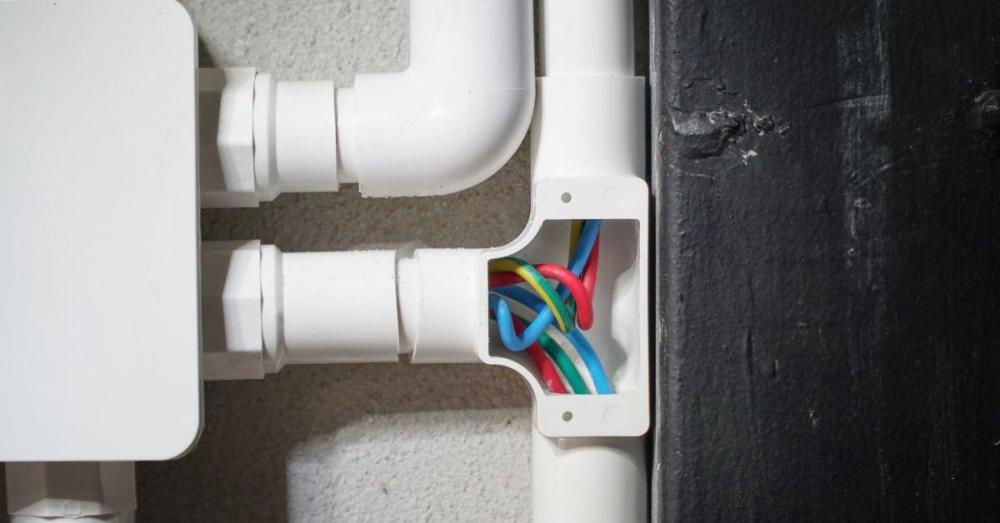
Every item on your order sheet must match the exact outside diameter of your tubing (20mm or 25mm). Getting the right conduit fittings in stock will keep your run neat and compliant.
- Circular conduit boxes: through, tee, angle, U, Y and intersection boxes for direction changes, branching and draw in access.
- Inspection bends and tees: removable lids allow you to guide the cable around the corner without having to strip the run apart.
- Saddles and space bar saddles: the hold surface runs true along walls and ceilings. In escape routes and in overhead areas remember the BS 7671 rules on non-combustible fixings to prevent premature collapse in a fire.
- Female adaptors and socket boxes: terminate conduit neatly into switchgear, enclosures and into the appropriate size of PVC or galvanised socket box.
Matching Bending Springs to Conduit Gauge for Kink-Free Bends
One classic first-fix mistake is sliding a light-gauge spring into heavy gauge conduit. Because the spring sits too loosely inside the narrower bore, it fails to support the thicker wall and leaves you with flat spots or kinks. Follow these steps for clean manual bends:
- Keep dedicated heavy-gauge and light-gauge bending springs (such as Deligo or Decoduct models) on the van, matched precisely to light gauge conduit or heavy gauge tubing.
- Warm the bend zone gently with your hands in cold weather rather than using an open flame, which weakens PVC.
- Bend slightly past your target angle (over-bending by a few degrees) to allow for natural spring-back.
- Twist the spring anticlockwise to contract the coils slightly before withdrawing it smoothly.
Draw-In Points, Support Spacing, and Thermal Expansion on Long Runs
Did you know that a 10-metre run of rigid PVC can expand by roughly 15mm to 20mm across a 30°C temperature swing, which is enough to bow a straight wall run if you skip expansion couplers? Good site habits stop those headaches before handover:
- Draw-in access: Plan an accessible circular box or inspection fitting at least every two bends, keeping sweeps gentle.
- Support centres: Fix saddles at manufacturer-recommended intervals and right beside boxes or bends to prevent sagging.
- Thermal movement: Fit expansion couplers and non-restrictive saddles on long straight runs or sunlit facades.
- Dedicated earthing: Remember that plastic conduit is non-conductive and cannot act as an earth. Always draw a separate Circuit Protective Conductor (CPC) inside the run.
Source: Ctube Official
Which Plastic Conduit Products Should You Specify for Your Next Installation?
Sourcing matched tubing and accessories from one Plastic Conduit range cuts down on site compatibility headaches. Here is a quick comparison of four dependable trade options:
| Product | Size / Length | Profile / Rating | Ideal Application |
|---|---|---|---|
| Univolt Heavy White LSF | 25mm / 3m | Rigid Heavy Gauge LSF | Exposed commercial & public surface runs |
| PVC Super Oval | 23mm / 3m | Low-Profile Oval | Plastered drops to switches & sockets |
| Decoduct Black Flexible | 32mm / 25m coil | Spiral Flexible PVC | Tight bends & final plant connections |
| Decoduct Space Bar Saddles | 25mm / Pack of 50 | High-Impact White PVC | Wall-fixing 25mm rigid surface runs |
1. Univolt 25mm Conduit Heavy White LSF (3m)
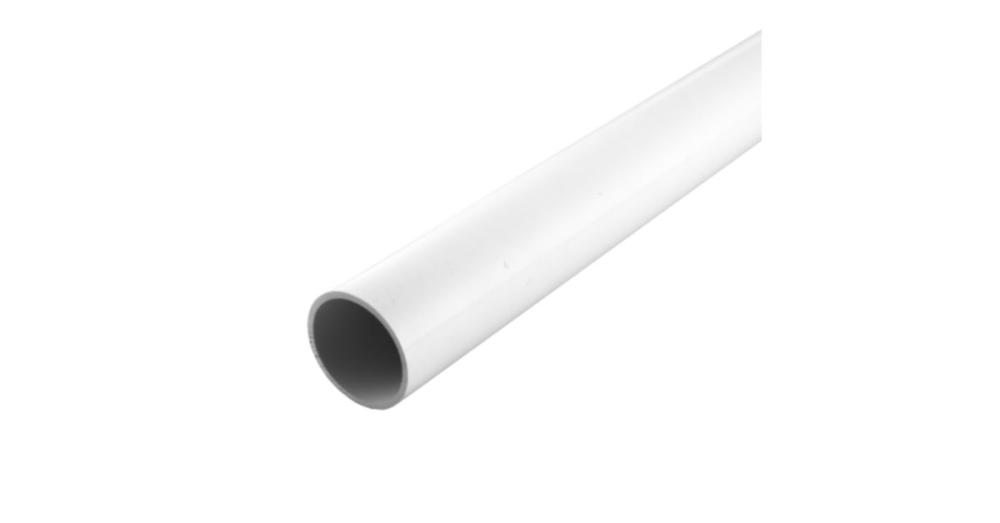
- Heavy-gauge 25mm rigid PVC in 3-metre lengths (White, RAL 9010).
- Low Smoke and Fume, non-flame propagating, and UV-stabilised compound.
- Class 3 compressive and impact strength rated from -5°C to +60°C.
Shop Univolt 25mm Heavy Gauge White LSF Conduit at Meteor Electrical
2. 23mm PVC Super Oval Conduit (3m)
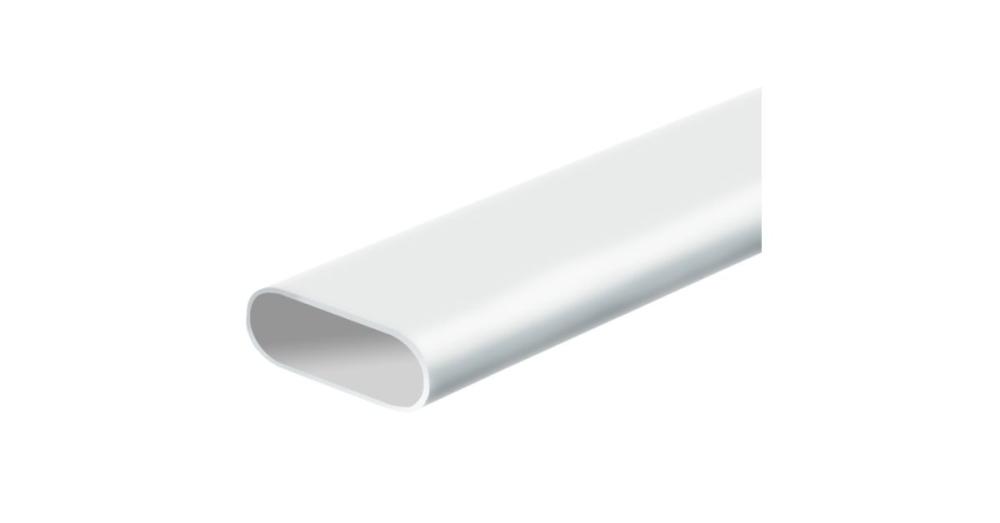
- Low-profile 23mm super oval conduit reduces chasing depth while shielding twin-and-earth cables.
- Lightweight, corrosion-free PVC in standard 3-metre lengths.
- Quick to cut and fix during first-fix domestic or commercial refurbs.
3. Decoduct 32mm Black Flexible PVC Conduit (25m)
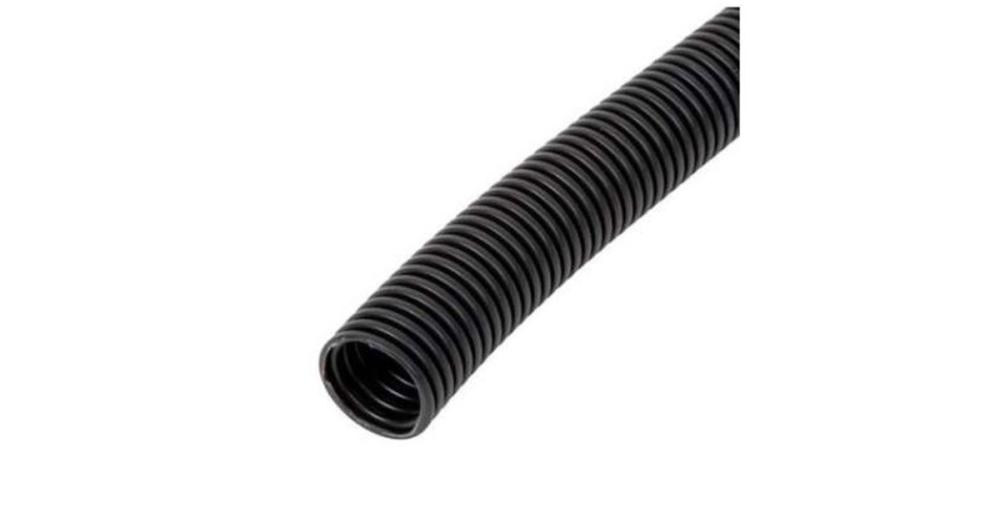
- 32mm high-impact spiral flexible PVC conduit in a trade-sized 25-metre coil.
- Bends cleanly by hand around structural obstacles without springs.
- Built to BS 4607 and EN 61386 standards in a neat black finish.
4. Decoduct 25mm PVC Space Bar Saddles (Pack of 50)
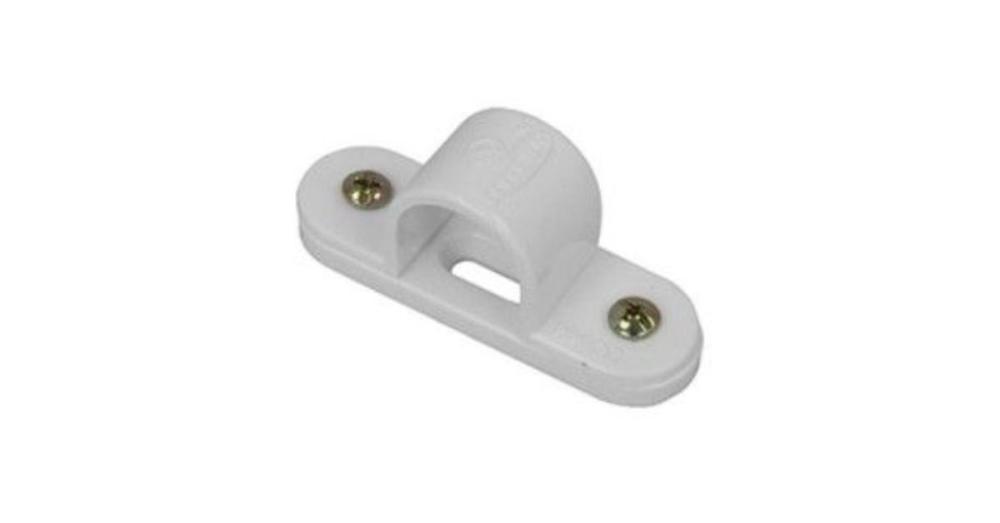
- High-impact white PVC space bar saddles sized for 25mm round systems.
- ASTA BEAB approved and made to British and European standards.
- Pack of 50 for full corridor runs, ready to pair with matching circular boxes, adaptors, and Deligo or Decoduct springs.
Key Takeaways
- Choose rigid round PVC conduit for straight surface runs, oval conduit for concealed wiring beneath plaster and flexible conduit for tight bends and equipment connections.
- Select 20mm or 25mm plastic conduit based on cable capacity, wiring requirements, route length and the number of bends, following published cable and conduit factors.
- Use heavy-gauge PVC conduit in exposed areas requiring greater impact resistance and light-gauge conduit in concealed or protected locations.
- Specify Low Smoke and Fume (LSF) conduit where required in commercial buildings, public spaces and escape routes to reduce smoke and harmful emissions during a fire.
- Match conduit fittings, saddles, adaptors and bending springs to the correct conduit diameter and gauge to prevent installation issues and cable damage.
- Follow recommended installation practices, including proper support spacing, accessible draw-in points, thermal expansion allowance and dedicated earthing, for safe and reliable electrical cable containment.
Conclusion: Specify Trade-Rated Plastic Conduit for Your Next Electrical Project
Specifying plastic conduit cleanly comes down to four checks: match the profile (round, oval, or flexible) to the route, pick heavy gauge and LSF conduit where impact or public safety requires it, calculate capacity properly, and order matching-diameter boxes, saddles, and springs from the start.
When you need reliable stock without delays, Meteor Electrical supports electricians and facilities managers across the UK and Northern Ireland. Enjoy competitive trade account pricing and next-working-day delivery across NI and ROI on in-stock orders placed before the 5 PM weekday cut-off.
Keep your next first-fix running on schedule: browse the full Plastic Conduit & Fittings Collection at Meteor Electrical.
Explore Plastic Conduit & Fittings at Meteor Electrical
Browse trade-rated PVC conduit, accessories and cable containment solutions for your next electrical installation.
Frequently Asked Questions (FAQs) About Plastic Electrical Conduits
1) Can you use a light gauge bending spring inside heavy gauge PVC conduit?
No. Heavy gauge PVC has thicker walls and a narrower bore, so a light-gauge spring sits loosely and can cause the pipe to kink or flatten during bending.
2) What is the difference between 20mm and 25mm plastic conduit for electrical wiring?
20mm conduit suits smaller domestic lighting and socket runs, whereas 25mm offers extra internal capacity for grouped circuits, larger cables, and simpler future upgrades.
3) When should electricians choose oval conduit instead of round PVC conduit?
Pick oval conduit when burying drops to switches and sockets under plaster, as its flatter shape needs shallower chasing than round pipe while still protecting the cable.
4) Does plastic electrical conduit require expansion couplers on long runs?
Yes. PVC expands and contracts noticeably with temperature changes, so fitting expansion couplers and allowing slight movement at saddles helps prevent bowing or pulled joints.
5) Can plastic PVC conduit be used as a protective earth (CPC) conductor?
No. PVC is an electrical insulator rather than a conductor, so you must always draw a dedicated Circuit Protective Conductor (CPC) inside plastic conduit runs.