
Information
How Do Overdoor and Downflow Heaters Work? A Complete Guide for UK Homeowners
Quick Answer: Overdoor units mount above entrances, pushing a warm air curtain downwards to help keep cold draughts outside. Downflow models sit high on bathroom or cloakroom walls, draw in cool room air and force heated airflow straight down for rapid, targeted warmth.
Open an external door in winter and indoor warmth can be lost very quickly. Porches, shops, cafés and office lobbies lose heat throughout the day, while cold bathrooms can leave people waiting for wet radiators to warm up. Two electric heater styles are designed to address these problems. Overdoor heaters sit above the doorway to help reduce draughts, while downflow heaters are mounted high on the wall to provide immediate room heat.
This guide explains how both types work, how they compare, what to check before buying, UK installation considerations and recommended models for overdoor and downflow heating.
- How Do Overdoor and Downflow Heaters Actually Work?
- What Is the Difference Between Overdoor and Downflow Heaters?
- What Should You Check Before Buying an Overdoor or Downflow Heater?
- How Are Overdoor and Downflow Heaters Installed Safely in the UK?
- Which Are the Best Overdoor and Downflow Heaters for Your Project?
- Key Takeaways
- Conclusion
- Frequently Asked Questions
How Do Overdoor and Downflow Heaters Actually Work?
How the Air Curtain Mechanism Works in Overdoor Heaters
Walk into a warm shop on a frosty morning and feel heated air hit your shoulders. That is an overdoor heater operating. Rather than heating the pavement outside, the unit forms an invisible thermal barrier across the opening:
- An internal fan pulls indoor air through the grille.
- Airflow crosses an electric element and warms quickly.
- Vents push heated air down across the threshold.
Slowing draughts can reduce the pressure on your main heating system. Fan-only cool modes also keep air moving in summer.
How Wall-Mounted Downflow Fan Heaters Deliver Instant Warmth
Forced convection explains how downflow heaters work. Their high wall position lets the fan draw cool air in, warm it over an element and direct the heat downwards. Wet radiators can be slow to warm a room during a quick wash. Downflow heaters provide heat in seconds, using electronic thermostats and dual safety cut-outs — a self-resetting thermostat and thermal fuse — to help prevent overheating.
What Is the Difference Between Overdoor and Downflow Heaters?
Choosing by Format and Placement Rather Than Wattage Alone
Buyers comparing overdoor and downflow heaters often shop strictly by wattage. However, a 3kW entrance unit will not suit a steamy bathroom, and a compact fan heater cannot provide the same draught control across a windy shopfront. Match the heater format to the space first.
Best Domestic and Commercial Applications Compared
- Overdoor heaters: Domestic porches, shops, cafés, receptions and busy office entrances.
- Downflow heaters: Bathrooms, en-suites, cloakrooms, utility rooms and compact commercial washrooms.
| Feature | Overdoor Heaters | Downflow Heaters |
|---|---|---|
| Role | Blocks draughts with a downward sheet of warm air | Provides quick indoor spot heat |
| Mounting | Horizontally above the door frame | High on an interior wall |
| Best spaces | Porches, shops, cafés and offices | Bathrooms, cloakrooms and washrooms |
| Controls | Remote, heat switch and volt-free contacts | Pull-cord and thermostat |
| IP rating | IP20 for dry areas | IP22 for permitted bathroom zones |
What Should You Check Before Buying an Overdoor or Downflow Heater?
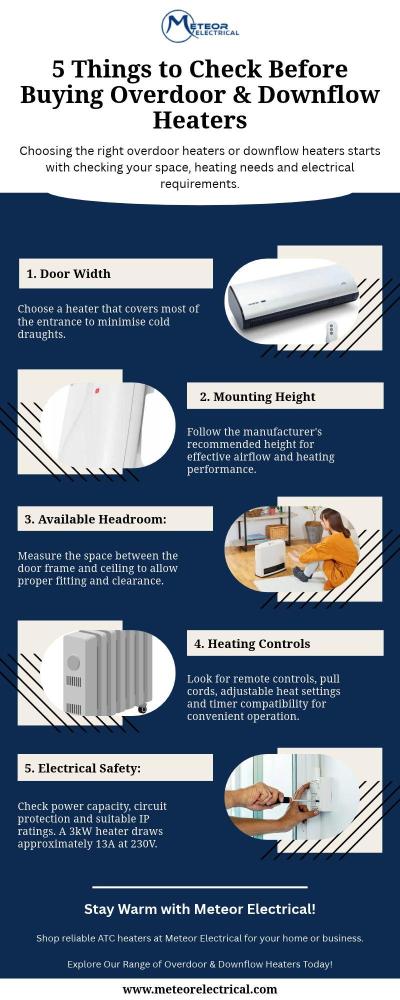
Door Width, Mounting Height and Physical Clearances
- Door width: Choose a heater that covers most of the opening to help prevent cold air entering through gaps at the sides.
- Mounting height: Stay within the manufacturer's stated height limits, as airflow speed reduces with distance.
- Headroom: Measure the space between the lintel and ceiling. Tight porches may require a particularly slim casing.
Control Options and Building Management Integration
Nobody wants to use a ladder just to adjust the settings. Infrared remotes are convenient for doorways, while pull cords are commonly used for bathroom switching. Multi-stage modes — such as Cool, 1.5kW and 3kW, or 1kW and 2kW — allow users to select a suitable output. Volt-free contacts on commercial overdoor heaters can allow direct connection to timers, door switches or occupancy sensors.
Quick tip: Check lintel headroom and the manufacturer's required air-intake clearance before ordering, so ceiling joists do not restrict airflow.
Electrical Supply Capacity, IP Ratings and Bathroom Zones
A 3kW unit draws roughly 13A on a 230V UK mains supply. Dry porches can use IP20 models, while bathroom downflow heaters need suitable moisture protection and must be installed only in permitted bathroom zones, in accordance with the product instructions and applicable wiring requirements.
For larger wet rooms, it may also be worth comparing dedicated bathroom heating options.
How Are Overdoor and Downflow Heaters Installed Safely in the UK?
Hard-Wiring, Local Isolation and Cable Sizing
Fixed heaters should be hard-wired as specified by the manufacturer, not plugged into trailing extension leads. Qualified electricians carrying out a 3kW overdoor heater installation or wiring a bathroom unit should consider four main steps:
- Assess the load: Confirm the supply capacity for roughly 13A (3kW) or 9A (2kW).
- Add isolation: Fit an accessible double-pole switched fused connection unit where required by the design and manufacturer's instructions.
- Size the cable: Select Twin and Earth (T&E) cable rated for the load, run length and any insulation derating.
- Terminate and test: Complete the hard-wiring, check clearances and carry out the required safety tests.
Circuit Protection, RCBOs and BS 7671 Compliance
Heater circuits may require an RCBO (Residual Current Breaker with Overcurrent protection), providing both overcurrent and earth-fault protection. All electrical work must comply with the current BS 7671 wiring regulations and the relevant product-manual requirements, including those covering bathroom zones and water outlets. Installation should be carried out by a suitably qualified electrician.
Source: Dimplex UK
Which Are the Best Overdoor and Downflow Heaters for Your Project?
1. ATC 3kW Over Door Heater with Remote Control (WEL3000)
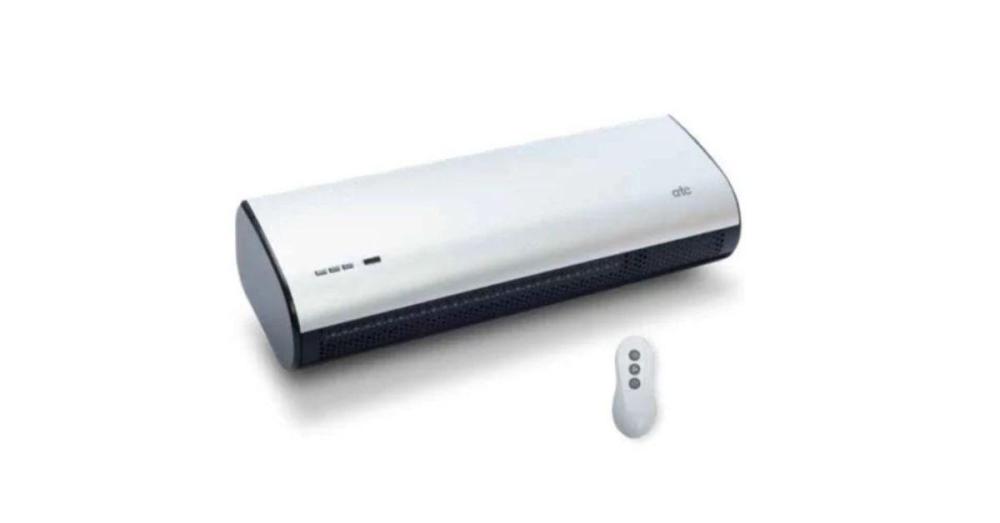
Designed for shops, cafés, offices and domestic porches, this compact horizontal heater pushes warm air downwards to help reduce draughts and fit into tight lintel spaces.
- 3kW output: Cool (fan-only), Half Heat (1.5kW) and Full Heat (3kW).
- Airflow: 300m³/h on a 230V single-phase supply.
- Controls: Infrared remote plus volt-free contact for timers, sensors or door switches.
- Dimensions and rating: Pre-wired 1m cable, 600 x 140 x 200mm, IP20 rated, with a 2-year warranty.
Shop the ATC 3kW Over Door Heater with Remote Control at Meteor Electrical.
2. ATC Bavaro 2kW Bathroom Downflow Heater (DF2000 / DFH2KW)
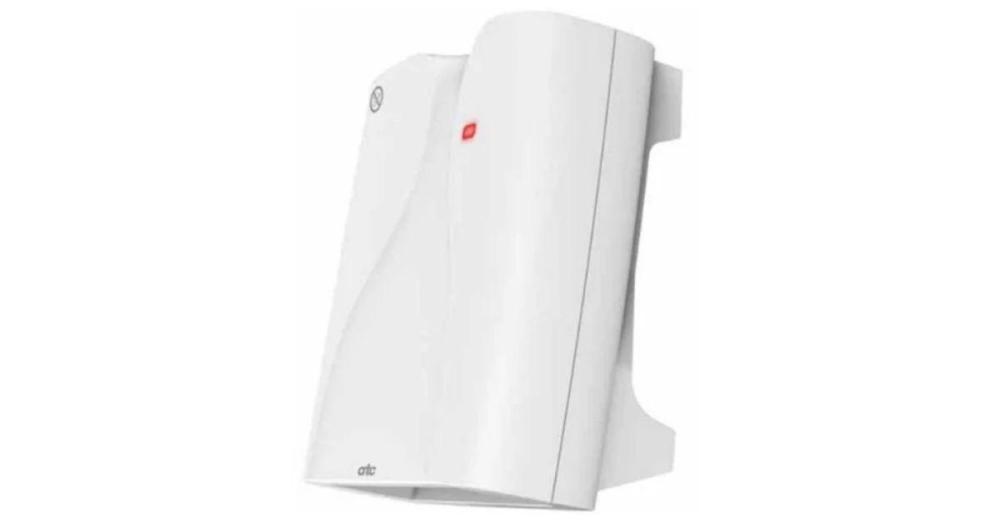
Designed for domestic bathrooms, en-suites, cloakrooms and washrooms, this maintenance-free bathroom downflow heater provides fast, directed heat with pull-cord operation.
- Heat settings: 1kW and 2kW modes via pull-cord switch, with a three-colour neon indicator.
- Thermostat: Electronic thermostat set to 30°C (1kW) and 45°C (2kW).
- Safety: Dual overheat cut-outs — a self-resetting high-level thermostat and thermal fuse.
- Dimensions and rating: IP22 rated, 265 x 255 x 133mm, with a 1-year warranty.
Shop the ATC Bavaro 2kW Downflow Heater at Meteor Electrical.
Key Takeaways
- Overdoor heaters create a downward curtain of warm air above entrances, helping reduce cold draughts and maintain comfortable indoor temperatures.
- Downflow heaters provide quick, targeted warmth in bathrooms, cloakrooms and washrooms by directing heated air downwards from a high wall position.
- Choosing the right heater depends on room size, mounting height, door width and heating requirements, rather than wattage alone.
- Features such as adjustable heat settings, thermostats, remote controls and pull-cord switches make everyday operation more convenient.
- Safe installation requires checking electrical load, circuit protection, IP ratings and bathroom zones, with all wiring following UK BS 7671 regulations.
- Meteor Electrical offers ATC overdoor and downflow heaters, including the 3kW WEL3000 and 2kW Bavaro models, for domestic and commercial heating needs.
Conclusion
Choosing the right unit becomes simpler once you match the heater format to the room. Install overdoor heaters above draughty porches and shop entrances to create a warm air barrier. Use suitably IP-rated downflow heaters where bathrooms or cloakrooms need quick bursts of heat. Checking door width, height limits, circuit load, RCBO protection and bathroom zones helps support a safe and compliant installation.
Looking for electric heating products for your next project?
Meteor Electrical stocks ATC overdoor and downflow heaters, with trade pricing and delivery options for customers across the UK, Northern Ireland and the Republic of Ireland.
Beat the Chill with Overdoor and Downflow Heaters
Explore electric heating options at Meteor Electrical for draughty entrances, bathrooms, cloakrooms and commercial spaces.
Frequently Asked Questions (FAQs) About Overdoor and Downflow Heaters
1. Does a 3kW overdoor heater need its own dedicated circuit?
Drawing roughly 13A on a 230V mains supply, a 3kW heater may be connected through a dedicated radial circuit or a suitably designed switched fused spur, with local isolation and appropriate RCBO protection. The electrician must assess the installation and follow BS 7671.
2. Where can you safely install an IP22 downflow heater in a UK bathroom?
IP22 protection is intended for permitted locations and does not make a heater suitable for every bathroom zone. Keep it outside Zones 0 and 1 and follow the manufacturer's instructions, bathroom-zone requirements and BS 7671.
3. How high above a doorway should an overdoor heater be mounted?
Mount it horizontally near the top of the door frame and within the manufacturer's stated height limit. Some 3kW models specify a mounting range around 2.0m to 2.3m, so always check the individual product manual.
4. Can overdoor heaters be used during warm summer weather?
Yes. Models with a fan-only cool mode can circulate air without switching on the heating element, making this setting useful during warmer weather.
5. Are overdoor and downflow heaters expensive to run?
Running costs depend on the heater's wattage, electricity tariff and operating time. Using lower heat settings, thermostats and suitable door-switch controls can help limit unnecessary energy use.