
Information
A Complete Guide to Electrical Box Sizes: Junction Boxes, Back Boxes and Enclosures
A Complete Guide to Electrical Box Sizes: Junction Boxes, Back Boxes and Enclosures
The right electrical box is one that gives your cables enough space, suits the spot where it's going, and can still be reached later. Going a size up is usually the safer bet, since cramped wiring runs warm and is a problem to inspect. If you need somewhere to start, we at Meteor Electrical stock junction boxes, back boxes and enclosures in plenty of sizes and protection ratings. Below, we cover how the boxes differ, how sizes are read, cable counts, IP ratings, six real products and a few fitting tips.
What Are You Actually Buying?
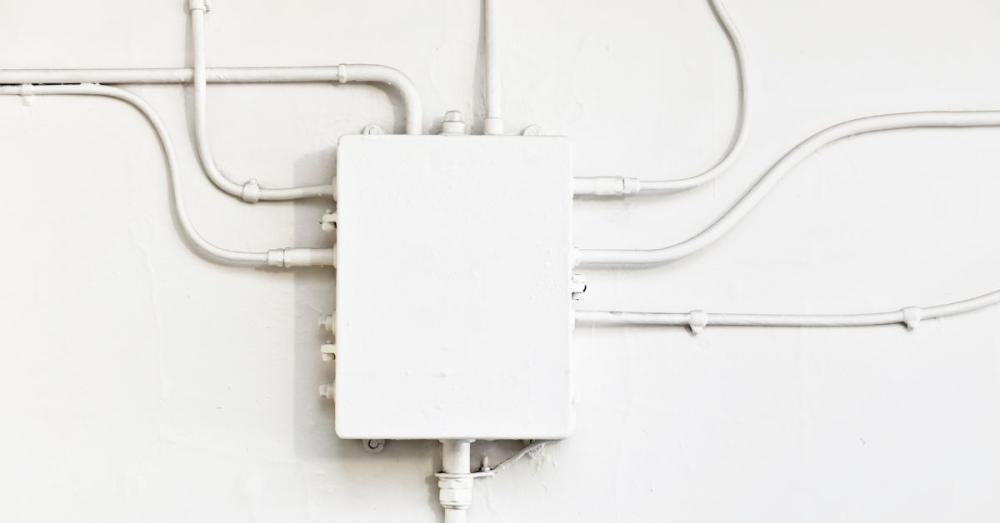
People often use these names as if they mean the same thing, but each box has its own job. Sorting them out early saves a lot of head-scratching when you're choosing a size.
- Junction boxes: These hold cable joints and connections, keeping them tidy, protected and easy to check whenever you need to look inside.
- Back boxes: These sit behind switches and sockets, and you can get surface-mounted versions or flush ones that sink into the wall.
- Enclosures: These are bigger housings for terminals, controls or protective devices, so they give you far more internal space to work with.
- Weatherproof boxes: These are sealed to keep dust and water out, which makes them the natural pick for outdoor or damp locations.
- Adaptable boxes: These usually have several entry points, so they cope well when cable routes change from one job to the next.
Reading the Numbers on a Box
Sizes are normally given as length x width x depth in millimetres. Round boxes are listed as diameter x depth instead. It's worth checking the usable space inside too, because thick walls and lid seals take up more room than you'd think.
Depth is the number that catches people out. A shallow box looks neat on the wall, but it leaves little space for bending cable or fitting connectors. Take the round boxes we stock: a 65mm x 35mm box suits a couple of conductors, while a 190mm x 140mm x 70mm rectangular box has room for far bigger connections.
Matching the Box to Your Cables
Once you know the dimensions, think about what has to fit inside. Every cable, connector and bend eats into the space, so plan around the whole job rather than the cables alone.
- Count every cable: Tally up each cable entering the box, including any that only pass through, because they all need space and a proper way in.
- Check your connectors: Chunky terminal blocks take much more room than small connectors, so choose the size with your actual fittings in mind.
- Allow for gentle bends: Cables shouldn't be forced round tight corners, since that strains the insulation and makes the lid awkward to close.
- Leave spare room: Extra space makes future changes or an added circuit far easier, and it saves you replacing the whole box later.
- Match the entries: The knockouts, grommets or glands must suit your cable or conduit size; otherwise you'll struggle to keep the box sealed.
A crowded box means heat build-up and tricky inspections. If you're stuck between two sizes, take the bigger one.
Source - eFIXX
Why IP Ratings Matter as Much as Size
Size gets the cables in, but the IP rating decides whether the box survives its surroundings. It tells you how well the box resists dust and water, so it needs to fit the location.
- IP44: Copes with splashing water, so it suits sheltered or indoor spots.
- IP55: Resists dust and water jets, which works for plenty of outdoor jobs.
- IP56: Handles powerful water jets, so it's a good choice for exposed positions.
Ratings also let you compare weatherproof boxes fairly. Two boxes of the same size can behave very differently once the rain arrives.

Six Junction Boxes Worth a Closer Look
Here's how size, rating and materials come together in real products. Each of these six suits a different kind of job, from small domestic joints to larger connection points.
1. Deligo Plain Junction Box 190mm x 140mm x 70mm
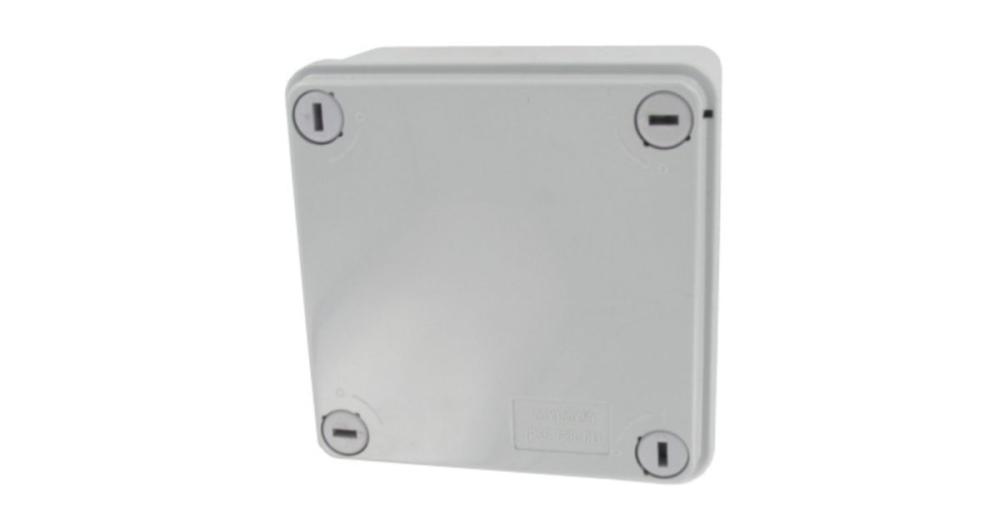
A roomy box with a quarter-turn fast lock, made from self-extinguishing ABS plastic. The lid flips open, so you can work inside without taking it off completely. It has positioning compensation for secure fixing and an IP56 rating against dust and water.
2. Round Junction Box with Grommets IP44 80mm x 40mm
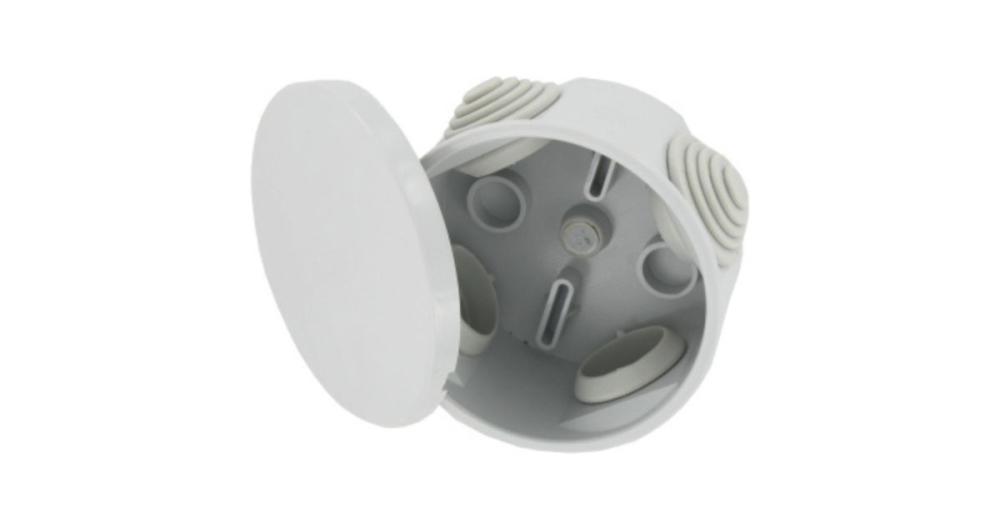
A neat round box in self-extinguishing ABS, with snap-on lids and grommets for tidy cable entry. It meets IEC 60670 and EN 60439-1, so it's a dependable option for sheltered spots needing simple, clean connections.
3. Plastic Junction Box 86 x 44 x 41mm RAL 7035
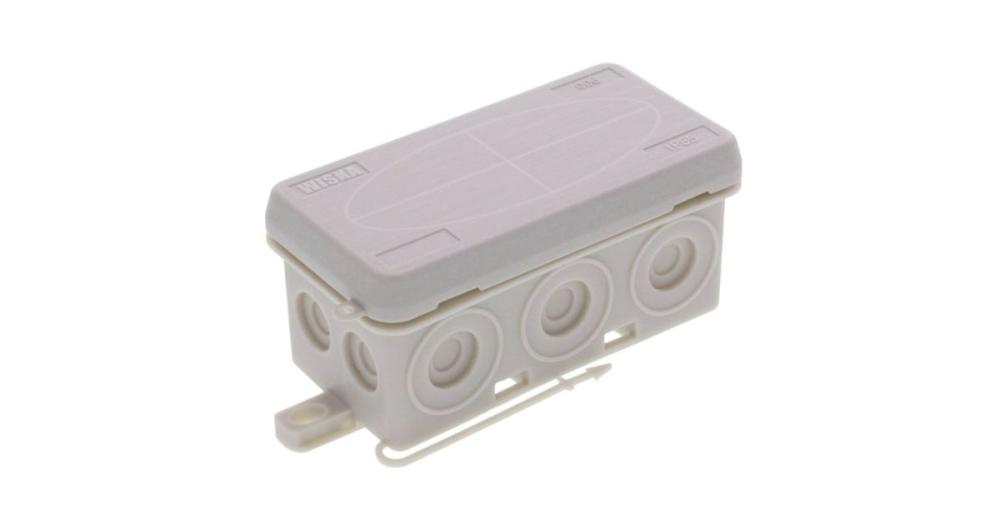
A compact box in light grey RAL 7035, made from polyethylene and polypropylene. It's IP55 rated, works from -30°C to 60°C and handles 400V, which makes it handy for small joints in tougher conditions.
4. Round Junction Box 65mm x 35mm
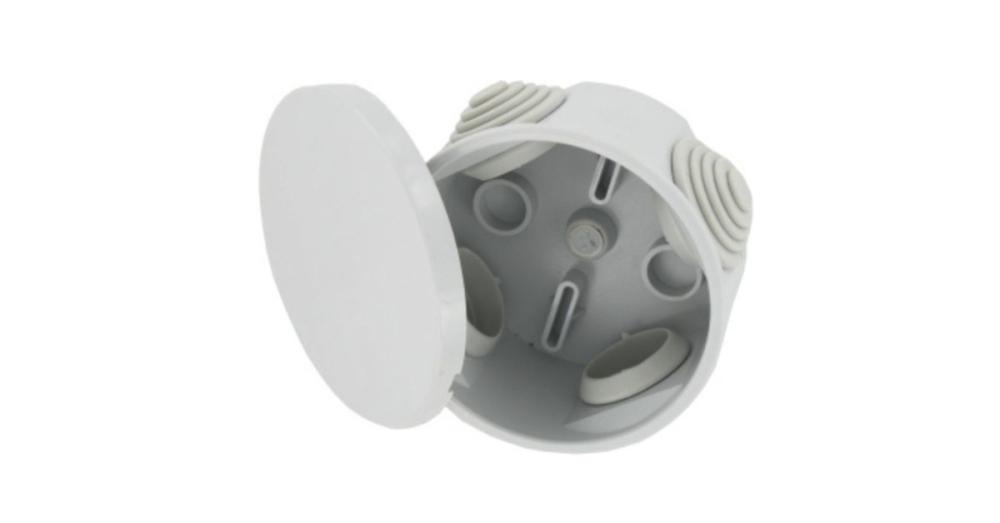
The smallest round box here, with snap-on lids and self-extinguishing ABS construction. It's IP44 rated and meets IEC 60670 and EN 60439-1, so it works well where space is tight and only a few conductors need joining.
5. Wiska KA 012 LG Junction Box IP55
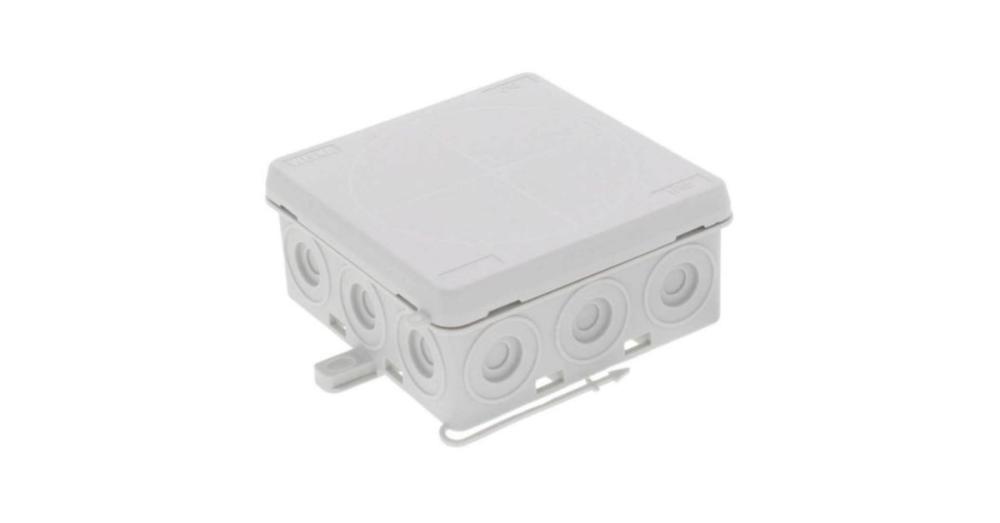
Made from polyethylene and polypropylene, this box gives IP55 protection and runs between -30°C and 60°C at up to 400V. It's a hard-wearing pick for outdoor jobs where temperature swings and damp are likely.
6. Junction Box c/w 5 Way Connector 111 x 111 x 60mm Grey
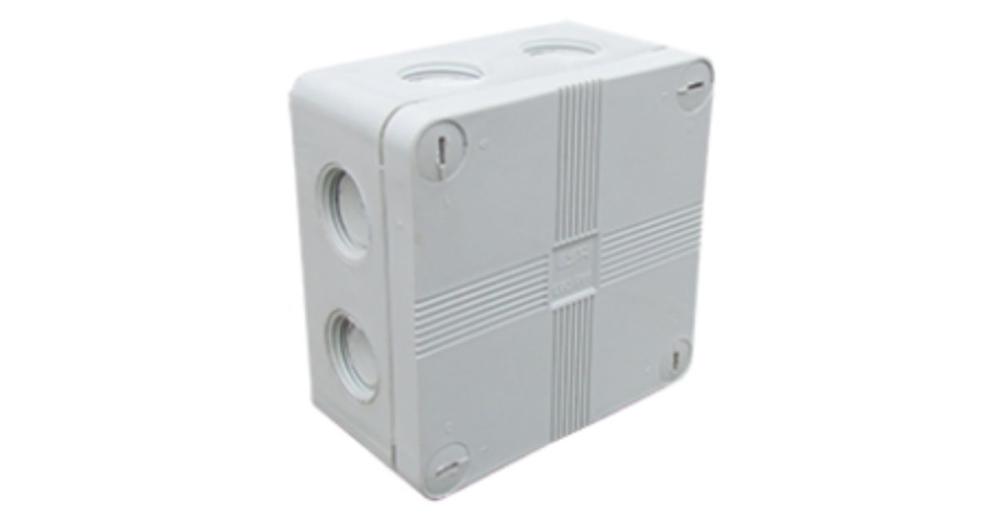
A grey box with M20 threaded knockouts, a captive quarter-turn screw and a soft sealing entry membrane. An external fixing bracket keeps it firmly mounted, and two flexible conduit glands on each side make conduit connections simple and reliable.
Fitting Weatherproof Boxes Properly
Even a well-chosen box can let you down if it's fitted badly. A few simple habits make the finished job safer and tidier.
- Pick a flat surface: Mounting on firm, even ground lets the seal sit properly, which matters most for outdoor weatherproof boxes.
- Seal what you don't use: Unused entries should stay closed, and any cable entries need suitable glands or grommets to keep moisture out.
- Strip cables neatly: Clean stripping and relaxed connections mean less strain on the terminals, and they make later checks much easier.
- Keep it reachable: Joints shouldn't disappear behind plaster or fixed finishes, because someone will need to inspect them eventually.
- Think about the setting: Choose the material and IP rating for the environment, not just the size that happens to fit.
Final Thoughts:
A good electrical box fits your cables comfortably, suits its location and stays reachable for future checks. Size, depth and IP rating work best when you think of them together. When you're ready to buy, Meteor Electrical has a dependable range of junction boxes, back boxes and enclosures, plus friendly advice if you're unsure. Browse our products and check the delivery availability. Get free delivery on orders over £30!
FAQs
Q1. How do you choose a junction box size?
Count your cables and connectors first, then pick a box with room to spare. Leave space for bends and future changes rather than choosing the tightest fit.
Q2. What size junction box do I need for multiple cables?
Go bigger. Several cables need space for glands, connectors and gentle bends, so choose a box with extra internal room and enough entries for every cable.
Q3. Can you put too many cables in a junction box?
Yes, you can. Overfilling causes cramped wiring, heat build-up and damaged insulation, so always leave space for connectors and a lid that closes without pressure.
Q4. What is the difference between a junction box and an adaptable box?
A junction box mainly joins and protects connections. An adaptable box is usually deeper with several entries, so it copes better with varied cable routes.
Q5. Can junction boxes be used outdoors?
Yes, if the IP rating suits the spot. Choose a weatherproof box with sealed entries and a secure lid, so rain, dust and spray stay away from the connections.
Q6. What IP rating should an outdoor junction box have?
IP44 handles splashes, while IP55 or IP56 suits exposed sites with water jets and dust. Match the rating to how exposed the spot really is outdoors.
Q7. Do junction boxes need to remain accessible?
Yes. Junctions need to be inspectable, so never bury them behind plaster or fixed finishes. Pick a box whose lid you can reach easily for future testing.