
Information
What Is a Smart Plug? How It Works, Uses and What Not to Plug In
Updated October 2026 · Meteor Electrical guides · 11 min read
Quick answer: A smart plug is an adaptor that fits into a standard UK 13A socket and lets you switch whatever is plugged into it from a phone app, a voice assistant or a schedule. A relay inside turns the power on and off, and many plugs also monitor energy use. It is the simplest way to make an ordinary lamp or appliance “smart” without any wiring.
Smart plugs are often the first smart home device people buy, because they are cheap, need no installation and work with most non-smart appliances. This guide explains what a smart plug is, how it connects (Wi-Fi, Zigbee or Matter), what you can control with one, the 13A load limit, and what you should never plug into one.
In this guide
- What is a smart plug?
- How do smart plugs work?
- What can a smart plug do?
- How do you set up a smart plug?
- What is the maximum load of a smart plug?
- What should you not plug into a smart plug?
- Can you use a smart plug with an extension lead?
- Can a smart plug turn on a TV?
- Are smart plugs safe and secure?
- Smart plug or smart socket?
- FAQs
What is a smart plug?
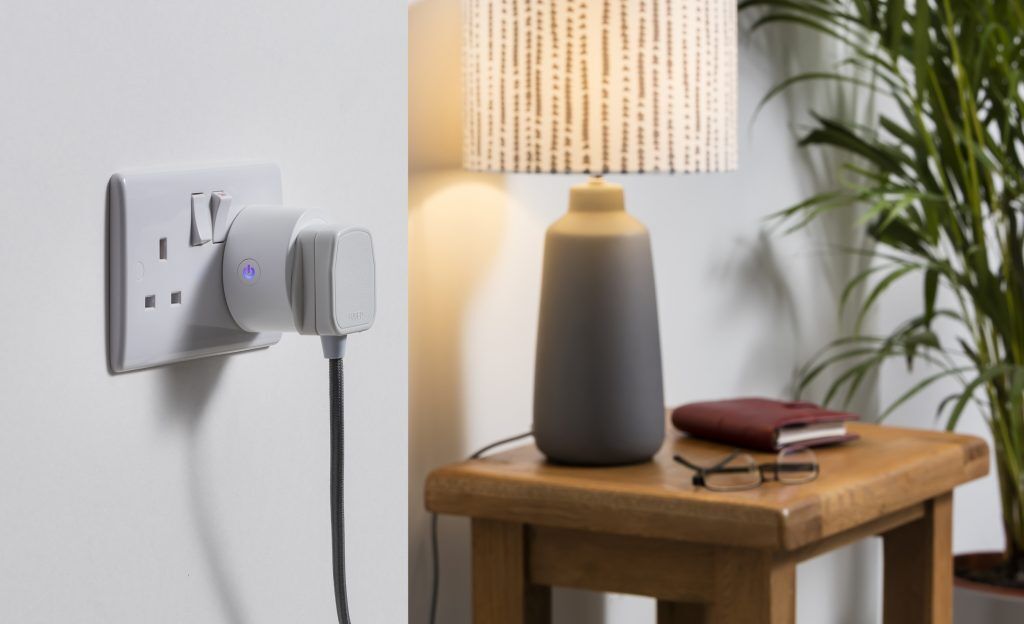
A smart plug is a small adaptor that sits between a wall socket and an appliance. You plug it into the socket, plug your lamp, fan or other device into the front of it, and then control the power to that device remotely.
The appliance itself does not need to be smart. The smart plug simply switches its power supply on or off, so it works best with devices that start working as soon as they get power, such as lamps with their switch left on, fans and decorative lights.
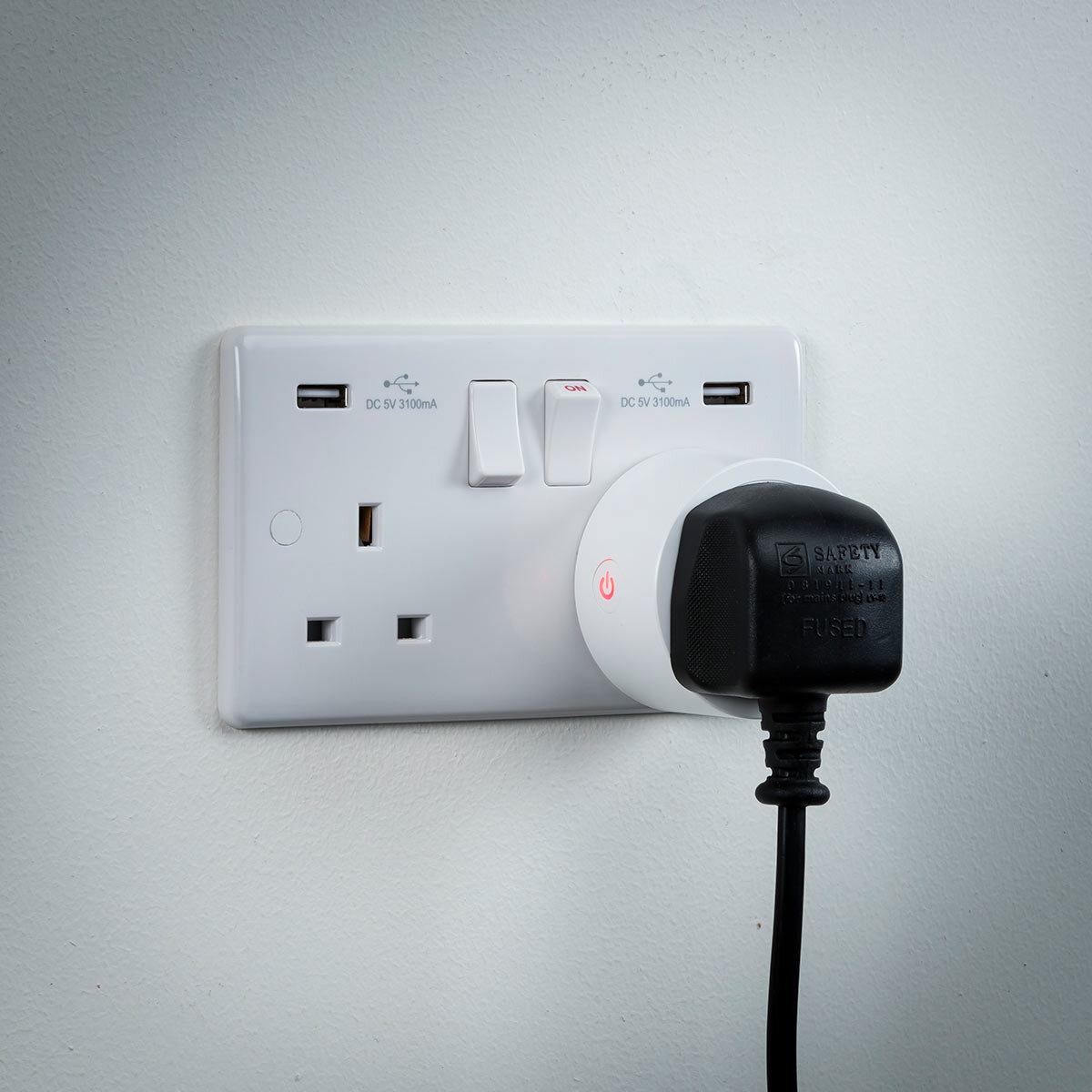
In the UK and Ireland, smart plugs use the standard three-pin BS 1363 plug and socket, so they fit any normal 13A socket. You can browse our range of smart switches and sockets, including the plug-in Knightsbridge smart plug.
How do smart plugs work?
Inside every smart plug is a relay (an electrically operated switch), a small power supply and a wireless radio. When you tap a button in the app, ask a voice assistant or reach a scheduled time, a signal reaches the plug and the relay opens or closes to switch the appliance.
How that signal gets to the plug depends on the type of connection:
| Connection type | How it works | Needs a hub? | Good for |
|---|---|---|---|
| Wi-Fi (2.4GHz) | Joins your home router and is controlled by the maker's app | No | One or two plugs, simple setup |
| Zigbee | Low-power mesh network between devices | Yes, a Zigbee hub or compatible smart speaker | Larger systems with many devices |
| Matter (over Wi-Fi or Thread) | Common standard that works across Alexa, Google Home and Apple Home | Thread plugs need a Thread border router | Mixing brands and platforms |
| Bluetooth | Talks directly to your phone at short range | No | Control from the same room only |
Most plug-in smart plugs for UK homes are Wi-Fi models that work with Amazon Alexa and Google Assistant through the maker's app, with no hub needed. If you already have a smart home hub, a Zigbee or Matter plug may fit in better. Check which systems a plug supports before you buy.
Pro tip: Most Wi-Fi smart plugs only work on the 2.4GHz band. If your router combines 2.4GHz and 5GHz under one network name and setup fails, stand nearer the router or temporarily separate the bands.
Video: Knightsbridge smart switches and sockets. Credit: Meteor Electrical.
What can a smart plug do?
Once an appliance is connected through a smart plug, you gain several controls it did not have before:
- Remote control: switch it on or off from your phone, at home or away.
- Schedules and timers: set it to switch at fixed times, or turn off after a set period.
- Voice control: link the plug to Alexa, Google Assistant or, for Matter or HomeKit plugs, Siri.
- Away or holiday mode: some apps switch lamps on and off at varied times so the house looks occupied.
- Scenes and routines: group several plugs to switch together, such as all the living room lamps.
- Energy monitoring: many plugs show how many watts the appliance draws and how many kWh it uses over time.
Energy monitoring
Energy monitoring is the most useful extra for many households. It shows exactly what an appliance uses when running and on standby, so you can see which devices cost the most and which are worth switching off. Our guide do smart plugs save energy? explains how to turn those readings into a realistic saving.
How do you set up a smart plug?
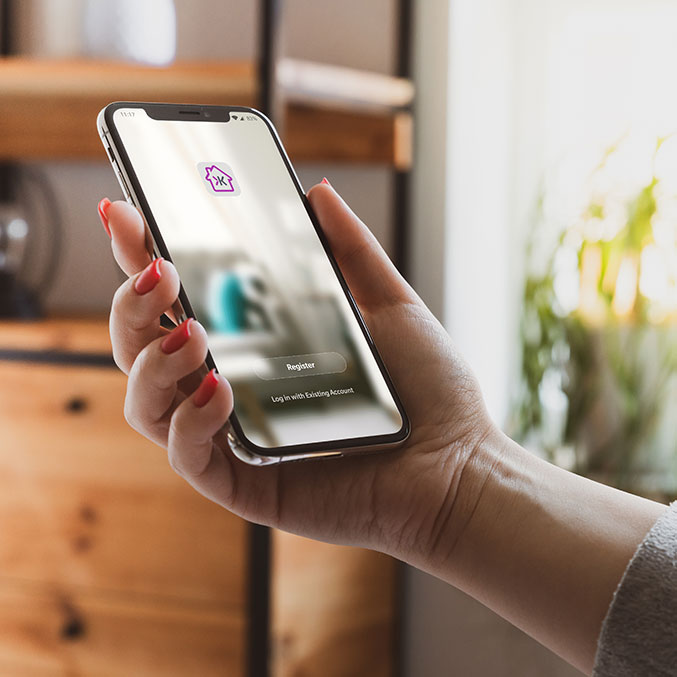
Setup varies slightly between brands, so always follow the manufacturer's instructions. The usual steps are:
- Make sure your phone is on your home Wi-Fi network, using the 2.4GHz band if the plug requires it.
- Download the manufacturer's app, or the app for your smart home system, and create or sign in to your account.
- Plug the smart plug into a wall socket. Its light will usually flash to show it is ready to pair.
- Add the device in the app and follow the prompts to connect it to your Wi-Fi or hub.
- Give the plug a clear name, such as “Living room lamp”, so voice commands are easy.
- Plug in the appliance, switch its own switch on, and test the plug from the app.
- Set up schedules or routines, and link the plug to Alexa or Google Home if you want voice control.
What is the maximum load of a smart plug?
A UK plug and socket is limited to 13A. At 230V that is just under 3kW (13A × 230V ≈ 2,990W). A plug-in smart plug can never safely supply more than this, even if the relay inside is rated higher, because the socket and the fuse in the appliance plug are the limit.
- Check the maximum current or wattage printed on the smart plug. Some are rated at 10A (about 2.3kW) rather than 13A.
- Add up the wattage of everything connected through it, including anything on an extension lead.
- Leave a margin for appliances that run at high power for long periods, such as heaters, which put the most strain on the plug's relay and contacts.
- If a smart plug or socket feels hot, smells or discolours, stop using it.
Safety: Never use a smart plug to exceed the rating of the socket, the plug or any extension lead. Overloaded plugs and adaptors are a common cause of electrical fires. Electrical Safety First has advice on safe socket use.
What should you not plug into a smart plug?
Smart plugs are ideal for low and moderate loads that are safe to switch on and off remotely. Some appliances are not suitable:
| Appliance | Smart plug suitable? | Why |
|---|---|---|
| Table and floor lamps | Yes | Low load; ideal for schedules and away mode |
| Christmas and decorative lights | Yes (outdoor-rated plug or socket outside) | Easy timers for evenings only |
| TV, soundbar, games console | Yes, to cut power overnight | Removes standby draw; let updates run first |
| Kettle, toaster, coffee machine | Use with care | High load; check the plug rating and the appliance instructions |
| Portable electric heaters | Only if both heater and plug allow it | High continuous load; many heater manuals forbid timers |
| Fridge, freezer | No | Must stay on; switching off risks spoiled food |
| Medical or safety equipment | No | Must never lose power unexpectedly |
Why heaters need extra care
Portable heaters draw close to the full 13A for hours at a time, and a heater switching on remotely while covered, or near curtains or clothing, is a fire risk. Many heater instructions say not to use them with a timer or programmer. Only use a smart plug with a heater if its manual allows it and the plug is rated for the full load. A purpose-built smart heater with its own app and safety cut-outs is usually the better choice.
Can you use a smart plug with an extension lead?
Yes, with care. You can plug a smart plug into the wall and an extension lead into the smart plug to switch several low-power devices together, such as a TV, soundbar and games console. Everything on the lead then shares the smart plug's rating.
- Keep the total load within the lowest rating in the chain, whether that is the smart plug or the lead.
- Plug the smart plug directly into a wall socket where you can. Do not chain adaptors or extension leads.
- Use indoor plugs indoors only. Outdoors, use an outdoor-rated product such as a smart IP66 outdoor socket.
- If you want each outlet switched separately, a smart extension lead with individually controlled sockets is a tidier option.
Can a smart plug turn on a TV?
Usually not fully. When power comes back, most TVs go into standby rather than switching on, so you still need the remote. A smart plug is more useful for cutting power to the TV and its accessories overnight or when you go away, which removes their standby use.
If you do this, let the TV and set-top box stay on standby at times when they install updates or record programmes. For voice control of the TV itself, use its built-in smart features or a streaming stick.
Are smart plugs safe and secure?
Electrically, smart plugs from reputable manufacturers are as safe as any plug-in adaptor when used within their rating. They should be UKCA or CE marked and bought from a trusted supplier.
For security, treat a smart plug like any connected device:
- Use a strong, unique password for your Wi-Fi and the plug's app account.
- Install firmware and app updates when they are offered.
- Only use the manufacturer's official app or a well-known smart home platform.
- Remove plugs from your account before you give them away or sell them.
Smart plug or smart socket: which should you choose?
A plug-in smart plug needs no wiring and can be moved between rooms. A smart wall socket replaces an existing socket faceplate, so it looks neater and leaves both outlets free, such as a Knightsbridge 13A smart 2-gang switched socket.
Fitting a smart socket means working on the fixed wiring, so it should be done by a competent person or a qualified electrician, in line with current wiring regulations. For switching lights rather than sockets, look at smart lighting, or see our kinetic wireless switches guide for a no-wiring alternative.
Key takeaways
- A smart plug fits a standard UK 13A socket and switches the appliance plugged into it by app, voice or schedule.
- Most use 2.4GHz Wi-Fi with no hub; Zigbee and Thread plugs need a hub or compatible speaker.
- The maximum load is 13A (about 3kW), and some plugs are rated lower, so check the label.
- Do not use smart plugs with fridges, freezers or medical equipment, and only use them with heaters if both allow it.
- Energy monitoring plugs show what each appliance really uses, which helps you cut standby waste.
Is a smart plug worth it?
For most homes, yes. A smart plug is an inexpensive way to schedule lamps, switch off standby devices and control appliances by voice, with no wiring needed. Choose one that works with your smart home system, check its load rating, and keep high-power and always-on appliances off it. For more ideas, see our top smart home devices guide.
Shop smart plugs and sockets
Smart plugs, smart switched sockets and smart extension leads that work with Alexa and Google Assistant. Trade prices, next working day delivery across NI & ROI on in-stock orders before 5pm.
Shop smart switches & sockets Shop smart homeNeed help choosing? Call our team on 028 8675 1515 (048 from ROI), Monday to Friday, 8am–5pm.
FAQs
What is a smart plug?
A smart plug is an adaptor that fits into a standard UK 13A socket. You plug an appliance into it, and a small relay inside switches the power on or off when you tell it to through a phone app, a voice assistant or a schedule. Many also measure how much energy the appliance uses.
Do smart plugs need Wi-Fi?
Most smart plugs sold for UK homes connect directly to your 2.4GHz Wi-Fi and are controlled through the maker's app. Zigbee and Thread plugs do not use Wi-Fi themselves but need a compatible hub or smart speaker. Without a connection, most plugs can still be switched with the button on the front.
What is the maximum load for a smart plug?
A plug-in smart plug in a UK socket is limited to 13A, which is about 3kW at 230V, whatever its internal rating. Some plugs are rated lower, such as 10A. Check the rating on the plug and stay well within it for appliances that run at high power for long periods.
Can I use a smart plug with a heater?
Only if the heater's instructions allow remote or timer control and the smart plug is rated for the heater's full load. Many portable heaters warn against use with timers because they could switch on while covered or unattended. If in doubt, choose a heater with built-in smart controls instead.
Can a smart plug turn on a TV?
A smart plug can restore power to a TV, but most TVs return to standby rather than switching fully on, so you usually still need the remote. A smart plug is more useful for cutting power to the TV and its accessories overnight. For voice control, use the TV's own smart features.
Are smart plugs safe?
Smart plugs from reputable manufacturers are safe when used within their rating. Plug them directly into a wall socket, never chain them with adaptors, do not use indoor plugs outdoors, and keep the app and firmware up to date. Use a strong Wi-Fi password and the maker's official app.