
LED Floodlights Buying Guide — PIR vs Photocell: A Trade Spec Checklist
LED Floodlights Buying Guide — PIR vs Photocell: A Trade Spec Checklist
Implementing the correct outdoor lighting serves as the frontline defence for commercial and residential security. Reliable outdoor LED floodlights are perfect for adding essential security to these spaces, actively helping to keep intruders away from your property. Choosing the appropriate sensor technology and wattage is absolutely critical. Selecting the wrong unit can lead to frustrating false triggers, unnecessary energy waste, and premature failures in harsh weather conditions.
We understand that for electricians and facilities managers, time on site is money. This guide serves as a rapid trade specification checklist to help professionals compare sensor types, understand cabling requirements, and evaluate top-tier product lines before quoting their next job.
PIR vs. Photocell Sensors - Understanding the Core Differences
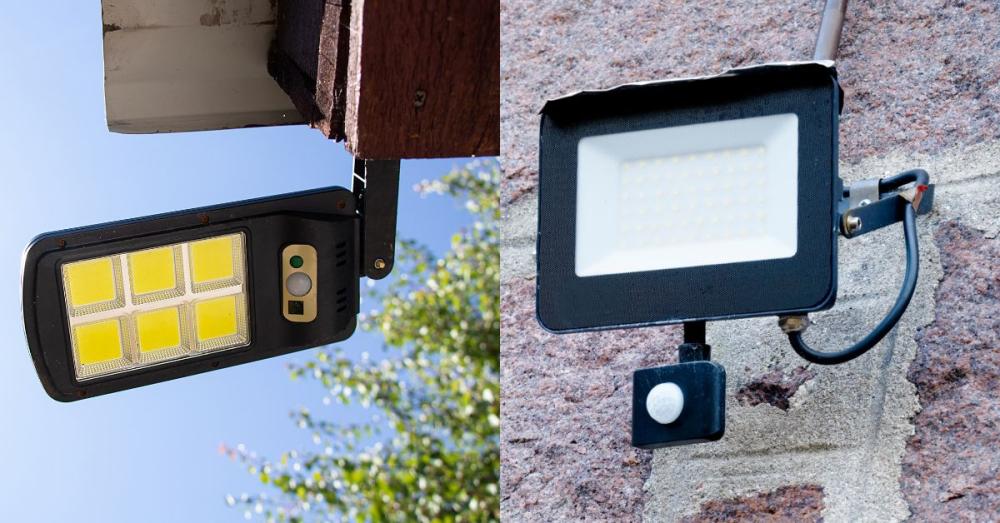
To make an informed purchasing decision, it helps to break down how these two primary sensor types operate in the field.
How PIR (Passive Infrared) Sensors Work
A PIR sensor functions by detecting infrared energy, specifically the body heat radiating from living beings as they cross the detection zone.
The Advantages - These units offer a completely hands-free option when it comes to operation. Because there is no manual procedure needed to switch them on, they provide ultimate energy efficiency. Furthermore, sudden illumination acts as a proven deterrent, helping to scare away intruders or vandals targeting a building.
How Photocell (Dusk-to-Dawn) Sensors Work
Instead of looking for heat, a photocell uses a sensor to detect the level of ambient lighting available outside. According to the information it receives, the fixture turns on automatically when the environment becomes too dark.
The Advantages - This technology allows for complete dusk to dawn operation. It is the ideal solution for providing consistent, all-night illumination in expansive spaces like car parks, secure facility perimeters, or when highlighting promotional billboards.
Essential Technical Specs for Facilities Managers & Electricians
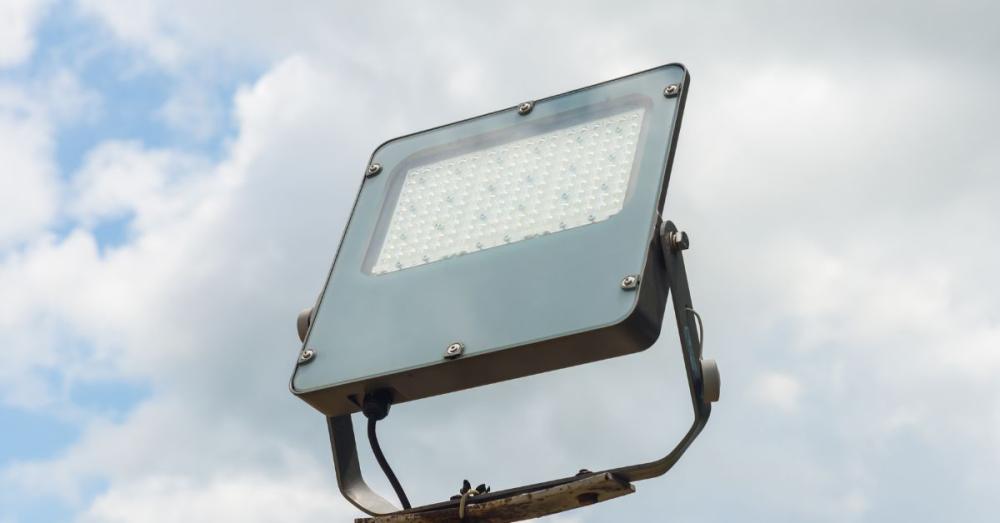
Before you begin mounting fixtures, you need to ensure the core specifications match the demands of the site.
Wattage vs. Lumen Output
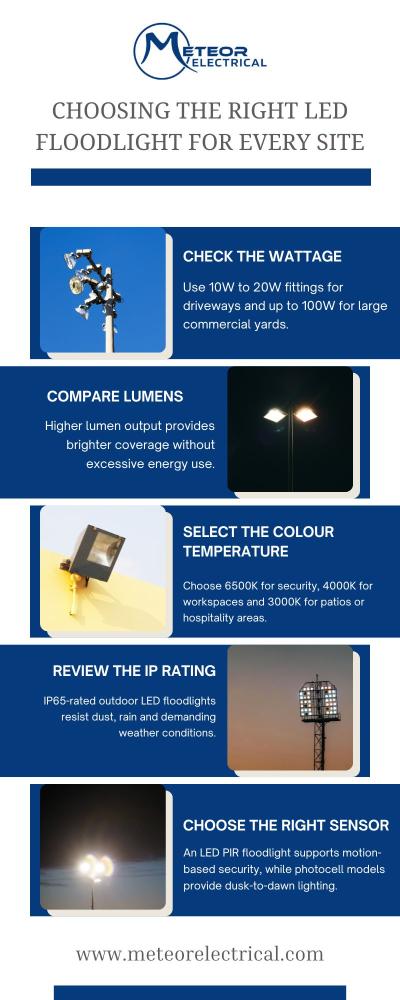
Modern units are highly efficient, producing a high lumen output against a remarkably low wattage. A standard 10W to 20W fixture is usually sufficient for residential driveways, whereas you might need up to a 100W unit to properly illuminate large commercial yards.
Selecting the Right Colour Temperature (Kelvin)
The colour temperature drastically alters the visibility and mood of an outdoor space.
- 6500K (Cool White) - This projects a cool white illumination that imitates daytime environments, making it the most common option for high-level security.
- 4000K (Natural White) - This provides a natural coloured light that works best within professional outdoor workspaces where task visibility is essential.
- 3000K (Warm White) - This warm colour of LED light is primarily used in places like hospitality venues or residential patios where creating an ambient atmosphere is a priority.
IP Ratings and Durability
Any exterior fitting must be capable of surviving the elements. High-quality fixtures are IP65 rated, meaning they are fully protected against dust and water ingress. This durability, combined with a long LED lifespan, ensures very few maintenance costs over the years.
Floodlight Installation Best Practices - Cabling, Placement, and Mounting
Positioning these devices in the right way is very important because a poorly placed sensor will become a nuisance if it constantly triggers at the wrong moment.
Optimal Sensor Placement & Detection Zones
Always verify your detection distance and angle. While some sensors offer a full 360-degree radius, others only pick up movements within an area of 120 degrees. Standard detection distances sit around 8 meters, but advanced units can reach up to 16 meters if necessary.
Did you know - Pointing a PIR sensor slightly downwards not only prevents nuisance tripping from passing cars but also protects the sensor lens from direct UV degradation?
Cabling Tips and the 4th Wire Override
The standard cabling setup for built-in sensors requires a 3 wire cable of 1.5mm2. You simply connect the phase, neutral, and grounding wires in the standard manner. However, some modern fixtures come with an integrated 4th wire.
This crucial addition enables a straightforward method for the user to manually override the PIR, keeping the light switched on continuously when required.
Standard Mounting Options
Different projects require different mounting accessories to ensure optimal light distribution.
- Extruded Arm: This is an L-shaped base used to mount the device upon a wall fixture to light a fixed area.
- Slip Fitter Mount: This option attaches the unit directly to a pole, providing broad lighting across large open areas.
- Knuckle Mount: An adjustable option that acts similarly to a spotlight, allowing you to point the illumination up or down.
Source - eFIXX
Product Focus: Top Trade-Rated LED Floodlights for Your Next Job
Choosing dependable hardware saves time on site. Here are several top-tier options to consider for your next installation.
1. Rhine III 30W LED CCT Switchable Floodlight Black | RHI330-SCT Kosnic
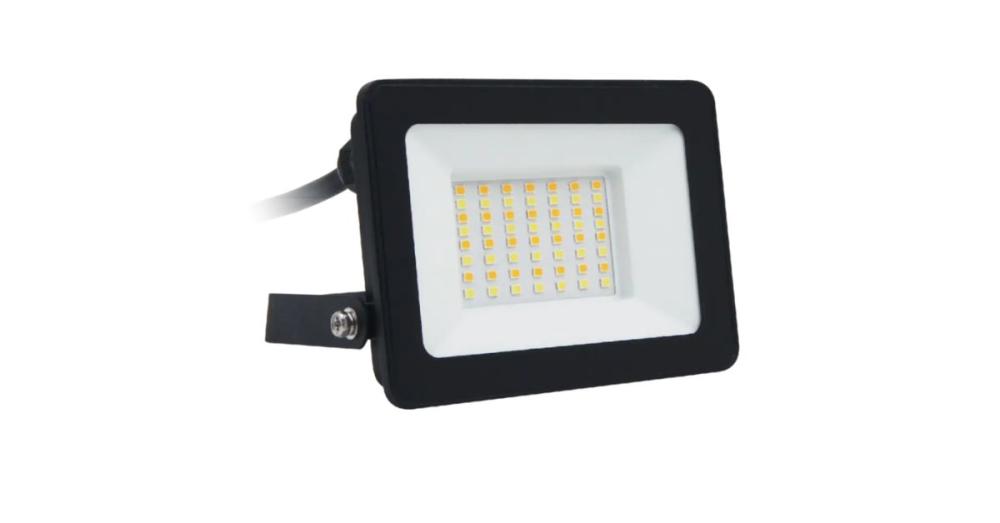
The Kosnic Rhine III 30W delivers powerful, energy-efficient lighting in a slim, modern design ideal for residential, commercial, and security applications. Designed as a high-performance replacement for halogen lights, the Rhine III provides consistent illumination with exceptional energy savings. Featuring CCT switchable technology, you can easily select between 3000K, 4000K, or 6500K to create the perfect lighting tone. Built to last, the die-cast aluminium body ensures excellent heat dissipation and durability.
- CCT Switchable: Easily switch between 3000K, 4000K, and 6500K for customised lighting.
- Long Life Performance: L70 rated lifespan up to 132,000 hours for dependable operation.
- 1m Pre-wired Cable: H05RN-F 3 x 1mm2 cable for easy connection.
- Wide 110-Degree Beam Angle: Provides broad, effective light coverage for outdoor areas.
Shop Rhine III 30W LED CCT Switchable Floodlight Black
2. Comet 50W LED Floodlight with PIR Red Arrow
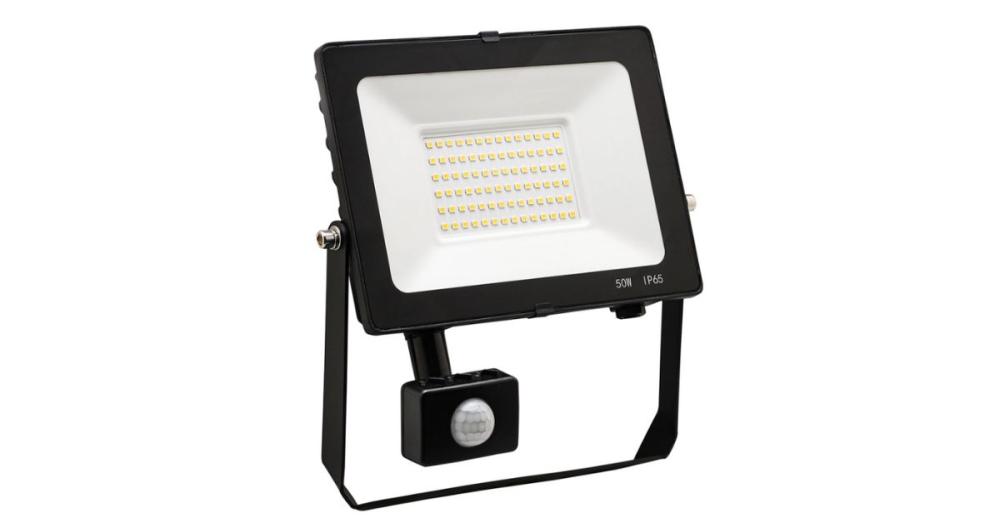
The Comet range offers incredible versatility for high-output applications. It comes equipped with optional PIR and Photocell features, a pre-wired cable, and a U-shaped mounting bracket for rapid installation. This LED PIR floodlight acts as an incredibly robust security measure for large premises.
- Colour Temperature: 4000K
- Lumens: 5000lm
- Body: Aluminium construction for maximum durability.
- Efficacy: 100 lm/W
Shop Comet 50W LED Floodlight with PIR Red Arrow
3. Prowler LED 10W PIR 4000K Floodlight Prelux.
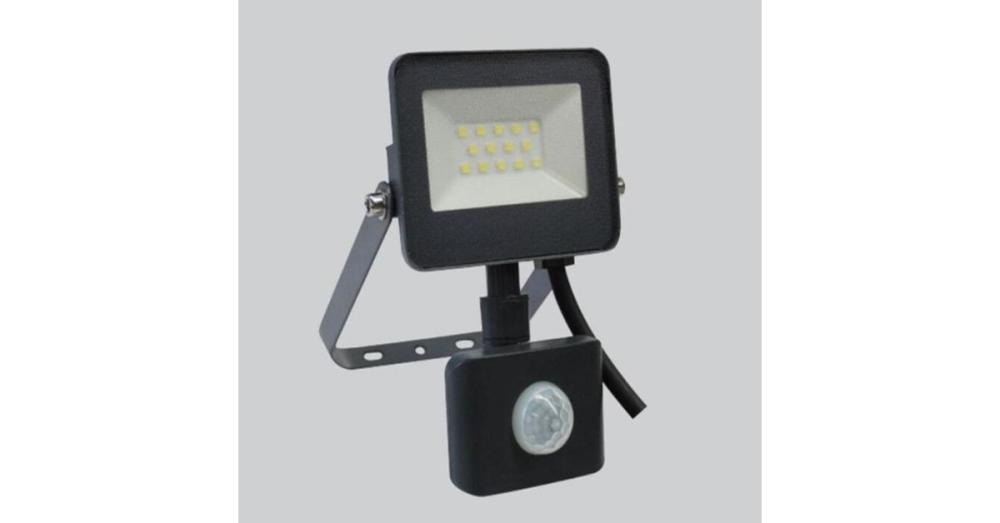
The Prelux Prowler 10W is a broad-beamed lighting fixture adept at projecting high-intensity artificial light. This unit is an energy-efficient solution that conserves power adequately, making it highly cost-efficient over the long term. Free from toxic elements like mercury, it is safe to handle and perfectly suited for domestic driveways or small commercial yards.
- Luminous Flux: 850lm
- Beam Angle: 110 degrees
- Life Time: 20,000 hours
- Protection Level: IP44 rating for reliable outdoor performance.
Shop Prowler LED 10W PIR 4000K Floodlight Prelux
4. Minitommy Spike LED Floodlight Fumagalli Black
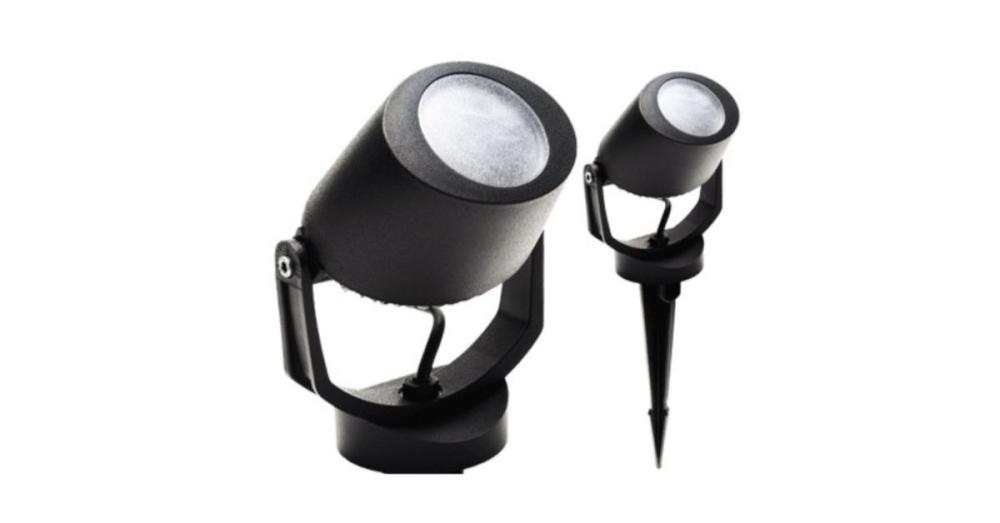
This specialised fixture is manufactured from shockproof resin material, UV-ray stabilized, and entirely resistant to rust and corrosion. It is fully adjustable, allowing for easy tilting and turning to direct the light precisely where it is needed. Suitable for versatile indoor and outdoor installations, it can be mounted on walls, ceilings, or set directly into the ground on spikes.
- Dimensions: Width 125mm, Height 130mm
- Materials: Shockproof Resin body with Polycarbonate diffuser.
- Protection Rating: IP66 ensuring exceptional durability in wet conditions.
Shop Minitommy Spike LED Floodlight Fumagalli
Key Takeaways
- PIR floodlights detect heat and movement, making them ideal for driveways, entrances and security areas.
- Photocell floodlights switch on at dusk, providing reliable all-night lighting for yards, car parks and commercial sites.
- Match the wattage and lumen output to the area, using lower wattages for homes and higher outputs for large spaces.
- Choose suitable colour temperatures and IP ratings for visibility, ambience and weather protection.
- Correct sensor placement, detection angles and cabling help prevent false triggers, light pollution and callbacks.
- Select durable, trade-rated fittings with suitable mounting options and manual override where needed.
Top Purchasing Pitfalls to Dodge on Your Next Project
Even seasoned professionals can occasionally overlook minor specifications that lead to frustrating callbacks. Keep these common mistakes in mind before finalising your material order:
- Ignoring the IP rating requirements for highly exposed coastal or industrial sites
- Purchasing an overly powerful wattage for a small residential garden, causing severe light pollution for neighbours
- Failing to check if the fixture supports a 4th wire override when the client explicitly requested manual control
- Placing a photocell-controlled unit directly beneath a streetlamp, which prevents the sensor from ever turning on
- Forgetting to account for the exact cable entry points, leading to awkward and untidy external junction boxes
Conclusion
Matching the right sensor technology (PIR for motion-based security, Photocell for dusk-to-dawn visibility) and respecting proper installation heights and cabling methods ensures a flawless, callback-free job. The success of your outdoor security lighting ultimately depends on the quality of the materials you specify.
When you are quoting your next outdoor lighting project, you need a wholesale partner you can rely on. Meteor Electrical serves as one of the largest online electrical wholesalers operating in the UK and Ireland. Stocking a vast range of top-tier brands like Kosnic, Red Arrow, and ECI Lighting, we provide the exact specifications you need to get the job done right.
Ready to upgrade your outdoor security — shop our complete range of high-performance LED Floodlights today to secure your site with free delivery, free returns, and rapid same-day dispatch!
FAQs About LED Floodlights
1) Can you use a photocell and a PIR sensor on the same LED floodlight?
Yes, some advanced security lights combine both technologies; the photocell ensures the fixture only operates after dark, while the PIR triggers the actual illumination upon detecting motion.
2) What is the best colour temperature for outdoor security floodlights?
For maximum security and visibility, 6500K (Cool White) is strongly recommended because it closely mimics daylight, providing sharp contrast to easily identify intruders.
3) How high should an outdoor PIR LED floodlight be mounted for optimal detection?
For standard residential and commercial fixtures, a mounting height of 2.5 to 4 meters is ideal, preventing tampering while allowing the sensor to accurately detect human-sized heat signatures.
4) What is the benefit of a 4th wire in a PIR floodlight?
A 4th wire allows the installer to wire a manual override switch, letting the user bypass the motion sensor and keep the light switched on continuously when required.
5) Why is my LED PIR floodlight flashing on and off?
This is typically caused by the light reflecting off a nearby surface back into its own photocell, or the motion sensor detecting a fluctuating heat source like an exhaust vent.