
Information
Can I Install Dimmer Switches in My Home? A UK Guide for LEDs
Updated October 2026 · Meteor Electrical guides · 9 min read
Quick answer: Yes. In most UK and Irish homes you can replace a standard light switch with a dimmer switch, as long as the bulbs are marked dimmable, the total load sits within the dimmer's minimum and maximum LED rating, and the back box is deep enough. A like-for-like switch change is not usually notifiable outside special locations such as bathrooms, but you must isolate the circuit first.
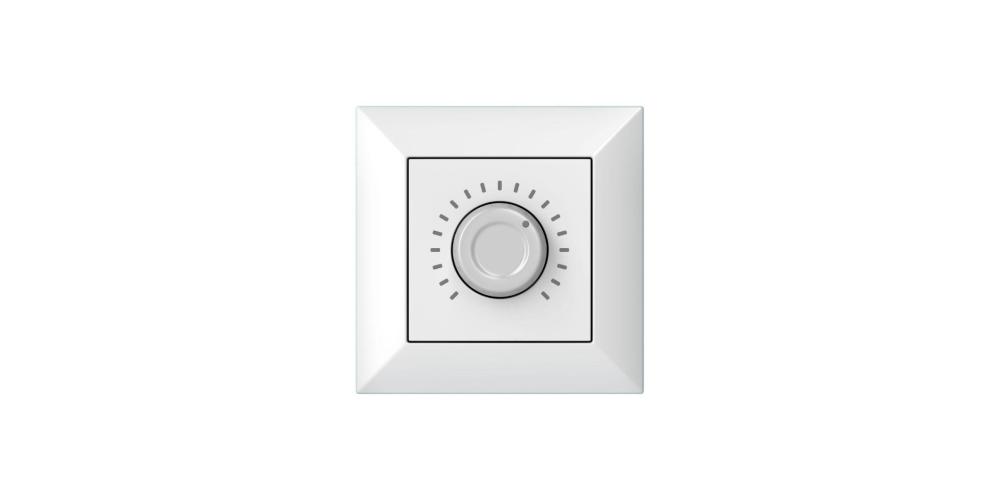
A dimmer lets you set the right light level for each room, from bright task lighting to a soft evening glow. This guide covers what to check before you install a dimmer switch: bulb compatibility, leading versus trailing edge dimmers, LED loads, back box depth, 2-way and multi-gang dimming, flicker fixes and who can do the work.
In this guide
- Can I install a dimmer switch in my home?
- Which lights work with dimmer switches?
- Leading edge vs trailing edge dimmers: which do you need?
- How many LED bulbs can I put on a dimmer?
- How deep does the back box need to be for a dimmer?
- Can you fit a 2-way, 2 gang or 3 gang dimmer switch?
- How do you install a dimmer switch?
- Why do LED lights flicker on a dimmer, and how do you fix it?
- Do I need an electrician to fit a dimmer switch?
- Which dimmer switch should you choose?
- FAQs
Can I install a dimmer switch in my home?
In most cases, yes. A dimmer fits where a normal light switch goes and uses the same switched live wiring, so it is a straightforward upgrade for most lighting circuits. It must suit three things:
- The lamps: every bulb on that switch must be dimmable.
- The load: the total wattage must sit between the dimmer's minimum and maximum LED ratings.
- The back box: it must be deep enough for the dimmer's body, which is bulkier than a plain switch.
If those line up, fitting a dimmer is a quick job for a competent person or a qualified electrician.
Which lights work with dimmer switches?
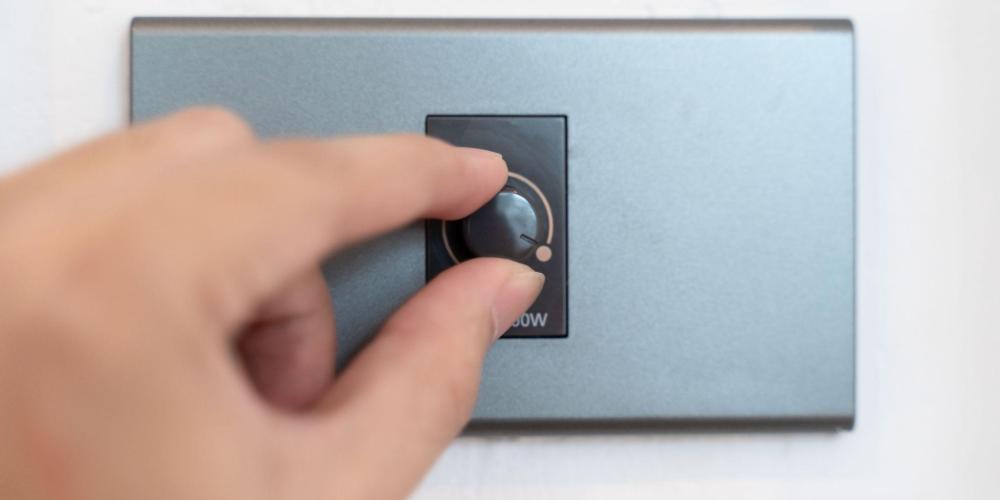
Not every lamp can be dimmed. Check the packaging or data sheet for the word "dimmable" before you buy. Our range of LED light bulbs includes dimmable GU10, candle and GLS lamps.
| Light type | Works with a dimmer? | Notes |
|---|---|---|
| Dimmable LED lamps | Yes | Must be marked "dimmable". Usually best on a trailing edge or LED dimmer. |
| Non-dimmable LED lamps | No | Likely to flicker, buzz or fail early on a dimmer. |
| Mains halogen (such as GU10) | Yes | Works with most dimmers, including leading edge. |
| Low-voltage halogen (12 V) | Sometimes | The transformer must be dimmable and suit the dimmer type. |
| Incandescent | Yes | Naturally dimmable, though now rarely sold. |
| Compact fluorescent (CFL) | Rarely | Only lamps marked dimmable, and results are often poor. |
| Fluorescent tubes | Not with a wall dimmer | Need a dimmable ballast or driver and a matching control. |
| Smart bulbs | Not usually | They dim through an app, so keep them on a standard switch. |
Pro tip: Use the same make and model of dimmable lamp on one dimmer. LED drivers respond differently to dimming, and mixing them is a common cause of uneven light and flicker.
Video credit: eFIXX.
Leading edge vs trailing edge dimmers: which do you need?
Dimmers lower the brightness by chopping out part of each mains cycle. The way they do it decides which lamps they suit.
| Leading edge dimmer | Trailing edge dimmer | |
|---|---|---|
| How it works | Cuts the start of each mains half-cycle (usually a TRIAC) | Cuts the end of each half-cycle (usually a MOSFET) |
| Best for | Incandescent, mains halogen and wire-wound transformers | Dimmable LED lamps and electronic transformers |
| Minimum load | Often quite high | Usually lower, so it suits small LED loads |
| With LEDs | More likely to buzz, flicker or limit the dimming range | Smoother, quieter dimming in most cases |
| Typical marking | "Leading edge", "TRIAC" or "RL" | "Trailing edge", "LED dimmer" or "RC" |
For a modern home with dimmable LED lamps, a trailing edge or purpose-made LED dimmer is usually the right choice. Some universal dimmers can switch between modes. Where the lamp maker publishes a list of compatible dimmers, follow it.
How many LED bulbs can I put on a dimmer?
Every dimmer has a minimum and a maximum load. LED lamps use far less power than halogen, so it is easy to drop below the minimum, which causes flicker, or to overload an older dimmer with the start-up surge from LED drivers.
Check the minimum load
Add up the wattage of every lamp on the switch. For example, six 5 W LED GU10s come to 30 W. That total must be at or above the dimmer's stated minimum LED load, or the lights may flicker, flash or glow when switched off.
Check the maximum load
Many dimmers carry a headline rating such as 400 W, but that usually applies to incandescent or halogen lamps. The LED rating is much lower. A common rule of thumb is that an older dimmer handles only around 10% of its incandescent rating in LEDs.
Treat any rule of thumb as a rough guide. The manufacturer's data for the dimmer, and the lamp maker's compatibility information, always take priority.
How deep does the back box need to be for a dimmer?
Dimmers have electronics behind the plate, so they need more room than a standard switch. Many need a back box of at least 25 mm and some need 35 mm or more. A shallow 16 mm box, common in older homes and on plasterboard walls, often will not take a standard dimmer.
- Check the required box depth on the dimmer's data sheet before you buy.
- Fit a deeper box where needed. Browse our back boxes for flush, surface and dry lining types.
- Never force a dimmer into a tight box. Squashed cables can be damaged, and dimmers need space to shed heat.
Can you fit a 2-way, 2 gang or 3 gang dimmer switch?
Yes. Dimmers come in the same layouts as ordinary light switches, so you can usually match what is already on the wall.
| Option | What it does | What to check |
|---|---|---|
| 1 gang dimmer | One dimmer controlling one light or group of lights | LED minimum and maximum load, box depth |
| 2 gang dimmer | Two independent dimmers on one plate | Load rating per gang, which is often lower than a single dimmer |
| 3 gang dimmer | Three independent dimmers, for example kitchen, dining and island lights | Per-gang LED rating, total heat in the box, a deeper box |
| 2-way dimmer | Dims a light that is also switched from a second position | That the dimmer is marked 2-way and the strappers are identified |
| Slimline dimmer | A low-profile front plate that sits closer to the wall | Box depth on the data sheet, as a slim plate does not always mean a shallow body |
2-way dimming
Where two switches control one light, such as at the top and bottom of the stairs, you can replace one of them with a 2-way dimmer. The dimmer sets the level and the other position, a normal 2-way switch, turns the light on and off. To dim from both positions, you need a master and slave dimmer system from the same range.
Keep the existing strappers, the wires that link the two switches, and follow the dimmer's wiring diagram. Our guide to 3 core and earth cable for 2-way lighting explains how these circuits are wired.
3 gang and multi-gang dimmers
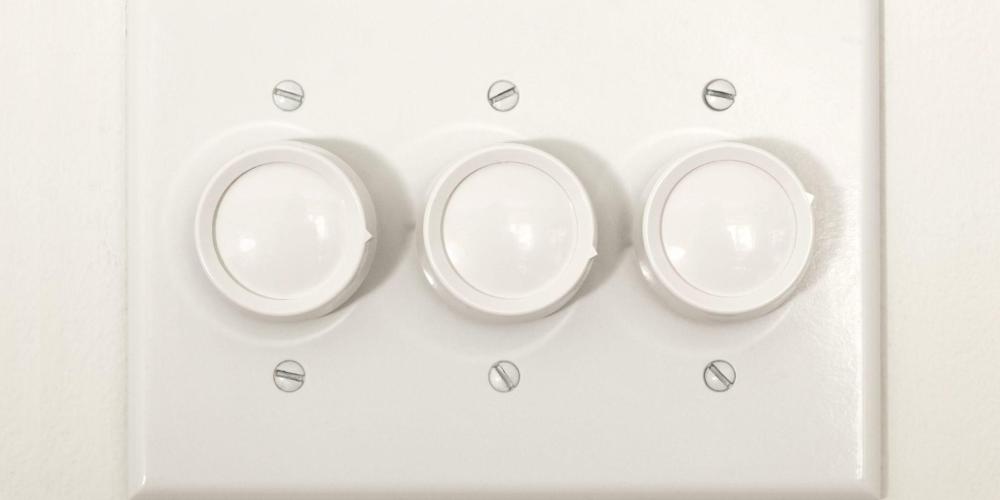
On 2 gang and 3 gang dimmers, the maximum load per gang is often lower than on a single dimmer, because the modules share heat in one box. Check the per-gang LED rating, especially on a 3 gang LED dimmer switch, and allow for a deeper back box.
Slimline dimmer switches
A slimline dimmer has a low-profile front plate for a neater look. Slimline describes the plate, not always the depth of the body behind it, so still check the required box depth.
How do you install a dimmer switch?
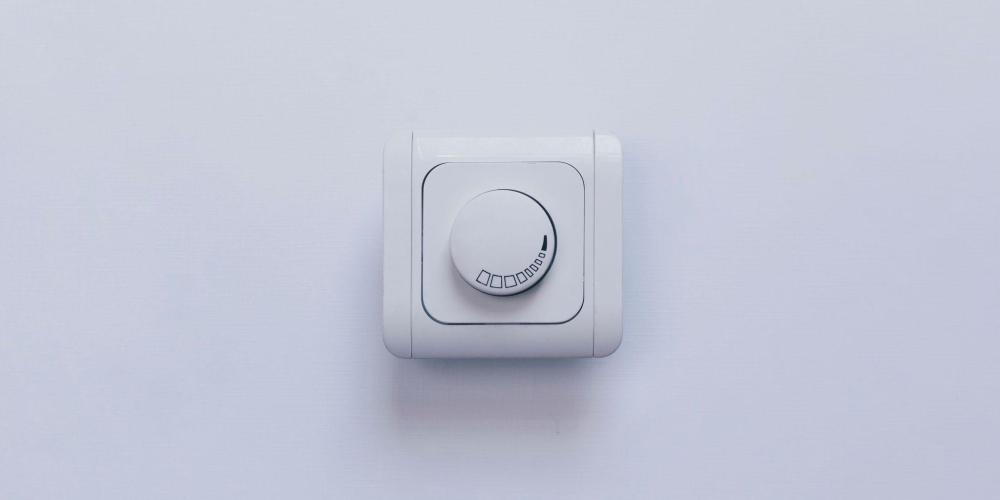
If you are competent with electrical work, swapping a switch for a dimmer follows the same steps as replacing any light switch. If not, ask a qualified electrician.
- Isolate the circuit. Switch off the lighting circuit at the consumer unit and lock it off or tape over it so no one can switch it back on.
- Prove it is dead. Test with an approved voltage indicator, checking the tester on a known live source before and after.
- Remove the old switch. Unscrew the plate, photograph which wire goes to which terminal, then disconnect it.
- Check the box and cables. Make sure the box is deep enough and the cables are sound, with no damaged insulation.
- Connect the dimmer. Wire it as the manufacturer's diagram shows. Connect the earth to the box terminal or metal plate, and sleeve any bare earth conductors in green and yellow.
- Fit and test. Fit the dimmer without trapping cables, restore the power and test the full dimming range.
Safety: Never work on a circuit you have not proved dead. If the wiring looks old, there is no earth, or anything is scorched or loose, stop and call a qualified electrician.
Why do LED lights flicker on a dimmer, and how do you fix it?
Flicker, buzzing and lights that glow when switched off are the most common LED dimmer problems. Work through these fixes in order:
- Check the lamps are dimmable. Non-dimmable LEDs will never dim properly.
- Check the minimum load. If the total is below the dimmer's minimum, add lamps or fit a dimmer with a lower minimum.
- Use a trailing edge dimmer. Replacing an old leading edge dimmer with an LED dimmer fixes most problems.
- Adjust the minimum setting. Many LED dimmers have a small trim adjuster that sets the lowest level and stops flicker at the bottom of the range.
- Do not mix lamps. Use the same make and model throughout.
- Check the connections. A loose terminal can cause flicker and heat, so get it checked.
For more detail, read our guide on why LED lights flicker with a dimmer switch.
Do I need an electrician to fit a dimmer switch?
Replacing an existing light switch with a dimmer, like-for-like on the same circuit, is not usually notifiable work outside special locations. In England and Wales, notifiable work under Part P mainly covers new circuits, consumer unit replacements and work in special locations such as bathrooms. Scotland, Northern Ireland and the Republic of Ireland have their own rules, so check what applies where you live.
Not notifiable does not mean anyone should do it. The work must still meet BS 7671 (I.S. 10101 in the Republic of Ireland). Mains light switches, including dimmers, must not be fitted within the zones around a bath or shower, which is why bathroom lights usually use a pull-cord or a switch outside the room.
Which dimmer switch should you choose?
Once you know the load and box depth, choose the style and number of gangs to suit the room. Rotary dimmers are simple and reliable, push-on/off dimmers remember their last level, and smart dimmers add app or voice control, though many need a neutral at the switch.
Popular LED dimmer switches
- Zahler 1 Gang LED Dimmer Switch
- Zahler 2 Gang LED Dimmer Switch
- Zahler 3 Gang LED Dimmer Switch
- 1 Gang LED Dimmer Switch, Square Edge
- 2 Gang 2 Way Dimmer Switch, Slimline
Pair them with dimmable LED lamps for smooth results, or browse our full range of light switches and sockets to match the rest of the room.
Key takeaways
- You can replace most light switches with a dimmer if the lamps are dimmable, the load suits the dimmer and the back box is deep enough.
- Use a trailing edge or LED dimmer for dimmable LEDs. Leading edge dimmers suit halogen and incandescent lamps.
- Keep the total LED wattage within the dimmer's LED load range, and check per-gang ratings on 2 gang and 3 gang dimmers. Always follow the manufacturer's data.
- A 2-way dimmer can replace one switch on a 2-way circuit. Slimline plates still need the right box depth.
- A like-for-like switch change is not usually notifiable outside special locations, but always isolate and prove dead first.
Installing dimmer switches in your home
So, can you install dimmer switches in your home? In most rooms, yes. Check the lamps are dimmable, match the dimmer type and load to your LEDs, make sure the back box is deep enough, and isolate the circuit before you start. If in doubt, a qualified electrician can fit a dimmer switch quickly and safely.
Shop dimmer switches and dimmable LED lamps
Dimmer switches in 1, 2 and 3 gang layouts, plus dimmable LED lamps to match. Trade prices, next working day delivery across NI & ROI on in-stock orders before 5pm.
Shop switches and dimmers Shop dimmable LED lampsNeed help choosing? Call our team on 028 8675 1515 (048 from ROI), Monday to Friday, 8am–5pm.
FAQs
Can I replace a light switch with a dimmer switch?
Yes, in most cases. A dimmer uses the same wiring as a standard switch. Check that the lamps are marked dimmable, the total wattage sits within the dimmer's minimum and maximum load, and the back box is deep enough. Always isolate the circuit and prove it dead before you start.
Is fitting a dimmer switch notifiable?
Replacing an existing switch with a dimmer, like-for-like, is not usually notifiable outside special locations such as bathrooms. Rules differ between England and Wales, Scotland, Northern Ireland and the Republic of Ireland. The work must still meet BS 7671, so use a qualified electrician if you are not competent.
Can I use a dimmer switch with LED bulbs?
Yes, if the LED bulbs are marked dimmable and the dimmer is designed for LEDs. A trailing edge or LED dimmer usually gives the smoothest results. Never use non-dimmable LEDs on a dimmer, as they can flicker, buzz or fail early.
What is the difference between leading edge and trailing edge dimmers?
Leading edge dimmers cut the start of each mains half-cycle and suit incandescent and halogen lamps. Trailing edge dimmers cut the end of each half-cycle, run more quietly and usually have lower minimum loads, which makes them better for dimmable LED lamps and electronic transformers.
Why do my LED lights flicker when dimmed?
Common causes are non-dimmable lamps, a total load below the dimmer's minimum, an old leading edge dimmer or mixed lamp brands. Try a trailing edge LED dimmer, adjust its minimum trim setting, add lamps to reach the minimum load, or use matching dimmable lamps throughout.
Can you get a 3 gang LED dimmer switch?
Yes. A 3 gang LED dimmer has three independent dimmers on one plate, each controlling its own lights. The maximum LED load per gang is often lower than on a single dimmer, and the body is bulkier, so check the per-gang rating and fit a deep enough back box.
Can you have a dimmer on a 2-way switch?
Yes. Replace one of the two switches with a 2-way dimmer and keep a standard 2-way switch at the other position. The dimmer sets the level and both positions switch the light on and off. To dim from both positions, use a master and slave dimmer system.