
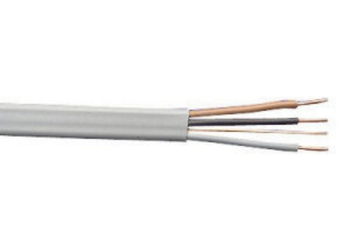
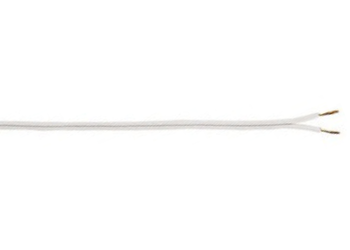
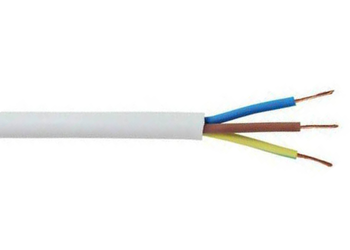
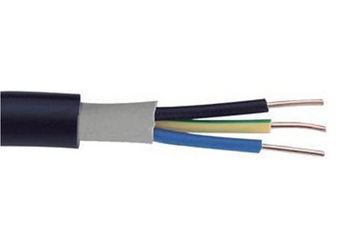

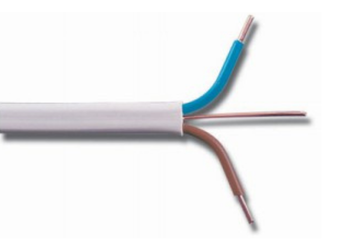

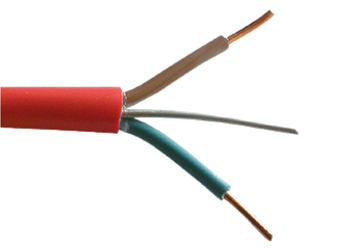
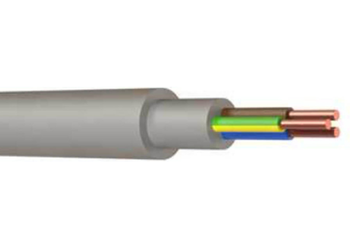
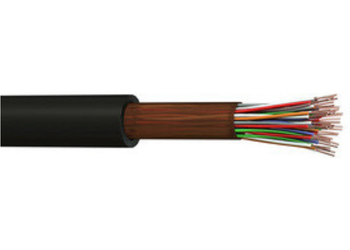
Electrical cable carries power, signals or data between a supply and the equipment it serves, and the right type depends on voltage, environment and installation method. This section brings together fixed-wiring cables such as 6242Y twin and earth, NYM-J LSF and SWA armoured cable, alongside flexible cord, single core, fire resistant and communication cables.
Most lines are sold on coils, drums or cut by the metre. Trade customers get trade prices, and in-stock cable ordered by 5pm Mon–Fri arrives the next working day throughout Northern Ireland and the Republic of Ireland.
At a glance
- 170+ cable lines including twin and earth, SWA, flex, data and fire resistant
- Coils, drums and cut lengths for domestic, commercial and industrial jobs
- Matching glands, clips and connectors from the cable management range
- Next working day delivery across NI and ROI on orders by 5pm Mon–Fri
Finding the right electrical cable for the job
Every cable type in this section is designed for a particular combination of voltage, environment and installation method. Use the overview below to narrow down which range you need, then check sizes and ratings against current wiring regulations and the manufacturer's data.
Power cables for fixed wiring
- Twin and earth cable – flat cable for domestic lighting, socket and cooker circuits, in PVC and LSF versions.
- 3 core and earth – for two-way lighting, fan isolators and heating controls.
- NYM-J LSF and NYY-J – round multicore cables in 3, 4 and 5 core versions, widely used in Irish installations.
- SWA armoured cable – for buried runs, outbuilding supplies and submains needing mechanical protection.
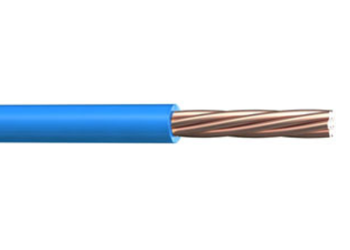
- Single core cable – for conduit and trunking systems, earth bonding and meter tails.
Flexible and special-purpose cables
Flexible cable connects appliances, luminaires and portable equipment, and includes heat resistant, rubber and Arctic grades. Fire resistant cable is used for fire alarm and emergency lighting circuits that must keep working during a fire.
Communication and data cables
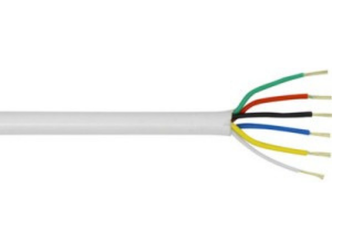
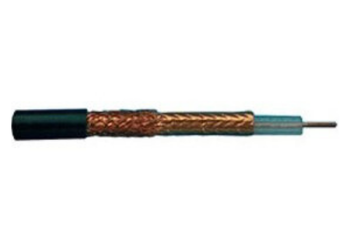
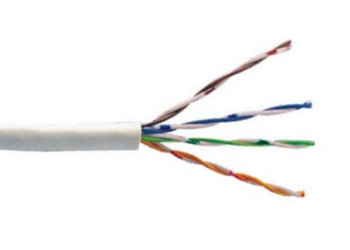
Our communication cable range covers CAT5e and CAT6 network cable, coaxial TV and satellite cable, alarm, telephone, speaker and bell wire. Keep these separate from mains cables as required by the regulations and the equipment manufacturer.
Key points when choosing
Start with the circuit's design current and the protective device, then factor in run length (voltage drop), grouping with other cables, ambient temperature and how the cable will be installed. Consider whether low smoke or halogen-free sheathing is needed for escape routes and public buildings, and whether the cable will be exposed to sunlight, moisture or impact.
From our 200,000 sq ft warehouse in Cookstown and depots in Cashel and Saggart, we keep a large range of cable ready to ship. Delivery is free over £30 / €35 ex VAT, credit accounts are available subject to approval, and our team is on 028 8675 1515 (048 from ROI) weekdays 8am–5pm.
Popular in Electrical Cable
- Twin & earth
- SWA armoured cable
- Flexible cable
- Single core cable
- Fire resistant cable
- Network cable
- 3 core & earth
- NYM-J LSF cable
Popular brands
Related departments
Frequently asked questions
What is the difference between fixed wiring cable and flexible cable?
Fixed wiring cable, such as twin and earth or NYM-J, has solid or few-stranded conductors and is installed permanently in walls, ceilings and containment. Flexible cable has many fine strands so it can bend repeatedly, making it suitable for appliance leads, pendants and portable equipment. Each should only be used for the purpose its manufacturer specifies.
How do I choose the correct cable size?
Cable size is chosen from the circuit's design current, the protective device rating, the installation method, grouping, ambient temperature and voltage drop over the run length. Use the current-carrying tables in current wiring regulations (BS 7671) or the manufacturer's data, and get a qualified electrician to design anything beyond simple like-for-like replacement.
What does LSF or LSZH mean on a cable?
LSF stands for low smoke and fume, and LSZH for low smoke zero halogen. Both describe sheathing that gives off less dense smoke and fewer harmful gases than standard PVC when burned. They are often specified for escape routes, public buildings and enclosed spaces; check the project specification for which is required.
Which cable should I use for an underground supply?
Buried supplies are commonly run in steel wire armoured (SWA) cable, which provides mechanical protection and an earth path through the armour. Depth, route marking and any additional ducting should follow current wiring regulations and site requirements. Size the cable for load and run length, and use suitable glands at each end.
Can I buy electrical cable by the metre?
Yes, several lines are sold as metre cuttings, including some twin and earth, single core, NYY-J and SWA sizes. Others are supplied on 100m coils, 305m boxes or larger drums. The product title shows how each item is sold, so you can match the quantity to the job.
Can I get next day delivery on cable to the Republic of Ireland?
Yes. Order in-stock cable by 5pm Monday to Friday and it will be delivered the next working day across both Northern Ireland and the Republic of Ireland, using our own vans and DPD. Orders over €35 ex VAT ship free, and England, Scotland and Wales deliveries take 3–5 working days.
What size cable do I need for a cooker or electric shower?
It depends on the appliance rating, the circuit length, the installation method and the protective device. Cookers commonly use 6mm² or 10mm² twin and earth, and electric showers often need 10mm² or larger, but these are only typical figures. The cable must be sized by calculation to current wiring regulations, so have a competent electrician confirm it.
What is the difference between 6242Y and 6242B cable?
6242Y is standard PVC-sheathed twin and earth cable used in most domestic wiring. 6242B is the low smoke, halogen-free (LSF or LSZH) version, which gives off less smoke and toxic gas if it burns. LSF cable is often specified for escape routes, public buildings and commercial projects. Both are used for fixed wiring of lighting and socket circuits.
Can twin and earth cable be used outdoors?
Standard twin and earth is designed for indoor fixed wiring and is not suitable for burying or long-term outdoor exposure. For outdoor and underground supplies, steel wire armoured (SWA) cable is the usual choice, terminated with the correct glands. Where a short outdoor run is protected, such as inside conduit, check that the cable and installation method meet current wiring regulations.
What is the difference between Cat5e and Cat6 network cable?
Cat6 cable supports higher bandwidth and is better at reducing interference than Cat5e, making it a common choice for new installations and faster networks. Cat5e is still widely used for standard home and office connections. Both use the same RJ45 connectors, but the whole link, including patch panels and outlets, should match the cable category.