
What Is an Overload Relay and How Does It Protect Electric Motors? The Complete Buyer’s Guide

What Is an Overload Relay and How Does It Protect Electric Motors? The Complete Buyer’s Guide
Electric motors act as the beating heart of commercial and industrial facilities, but continuous operation leaves them highly vulnerable to overheating, phase drops, and mechanical jams. For electricians and facilities managers, selecting and properly sizing the right overload relay motor protection safeguards expensive machinery, drastically reduces operational downtime, and prevents catastrophic electrical fires.
Whether you are wiring a massive industrial conveyor belt or a commercial HVAC system, understanding the exact specifications of thermal protection ensures your installations are safe, compliant, and callback-free. Clients and property owners often ask, "What is an overload relay and how does it protect commercial electric motors?" This comprehensive guide will walk you through everything you need to know about these essential components, from core mechanics to professional installation tips.
What is an Overload Relay and How Does It Work?
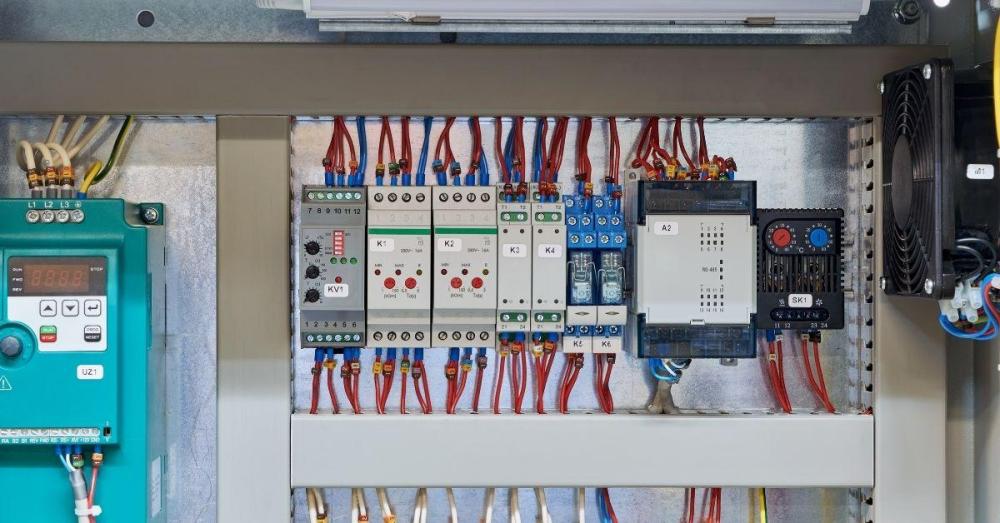
The Core Function of Motor Protection
An overload relay is a vital electromechanical safeguard designed specifically to monitor the current drawn by an electric motor. If the motor draws excessive current for a sustained period, the overload relay trips the control circuit, causing the contactor to disconnect the motor and helping prevent damage to the windings. Unlike standard fuses that blow and require immediate replacement, relays offer a resettable solution that provides ongoing, reliable defence for your electrical control panel.
Identifying Overload Conditions
When understanding the overload relay working principle, it is important to clarify the exact faults it detects. If you are wondering how an overload relay works in a real-world scenario, the answer lies in its sensitivity to heat. It actively reacts to prolonged overcurrents caused by mechanical binding, extended starting times, and voltage imbalances that cause excess heat to build up inside the motor casing.
Source - Automatedo
Overload Relay vs Circuit Breaker: Understanding the Difference
Continuous Heat Protection vs. Instantaneous Tripping
Installers frequently encounter the critical overload relay vs circuit breaker debate on site. A circuit breaker acts instantly to interrupt massive, sudden short circuits. Conversely, an overload relay features a calculated time delay mapped to a specific tripping curve. This intelligent delay allows for normal, temporary inrush currents during motor startup while remaining highly vigilant against sustained, low-level overcurrents that cause long-term overheating.
Why You Need Both in a Motor Starter Circuit
A complete motor protection relay setup requires both components working in tandem alongside a contactor. The breaker handles the sudden, catastrophic short circuits, while the overload relay manages the gradual thermal heat buildup.
Exploring the Main Types of Overload Relays
Understanding the variations in relay technology helps you specify the correct hardware for your electrical control panel.
Bimetallic Thermal Overload Relays
A thermal overload relay is the industry standard for most basic motor applications.
- The Mechanism: It uses two distinct metals fused together into a bimetallic strip.
- The Reaction: These metals expand at different rates when heated by excess current.
- The Result: The strip eventually bends to physically trip the circuit mechanism and halt the power supply.
Electronic Overload Relays
Modern electronic alternatives utilise advanced microprocessors to measure current directly. They offer significantly higher precision and wider adjustment ranges without relying on physical heat generation. Did you know that upgrading to a modern electronic motor overload relay can drastically extend the lifespan of your heavy machinery by detecting minute phase imbalances before they generate damaging heat?
3 Phase Motor Overload Relays
In heavy industrial environments, a 3-phase motor overload relay is an absolute necessity. These specific relays protect heavy-duty three-phase motors against phase loss and severe phase asymmetry.
- Phase Loss Protection: Detects phase failure and causes the motor circuit to disconnect before prolonged operation damages the motor.
- Asymmetry Detection: Prevents the motor from overworking the remaining active phases.
- Longevity: Greatly reduces the risk of expensive motor burnout in continuous manufacturing processes.
Essential Sizing and Installation Guidance for Electricians
Calculating Full-Load Current (FLC)
When sizing an overload relay for motor applications, installers should match the relay’s adjustable current range to the motor’s full-load current (FLC), as stated on its rating plate and in accordance with the manufacturer’s instructions.
- Locate the motor rating plate.
- Identify the specified full-load current (FLC).
- Select an overload relay with an adjustment range suitable for the motor’s rated current.
Manual vs. Automatic Reset Modes
Professional installation tips on selecting reset modes can save your clients from serious workplace accidents.
- Manual Reset: Highly recommended for environments where automatically restarting a machine could pose a severe physical danger to operators.
- Automatic Reset: Ideal for remote, inaccessible pumps or fans where a manual reset would be highly impractical and costly in terms of maintenance time.
Top Trade-Rated Overload Relays for Your Next Project
Secure your heavy-duty motor installations with these highly accurate, trade-trusted overload relays from Meteor Electrical:
1. 17-25A Overload Relay
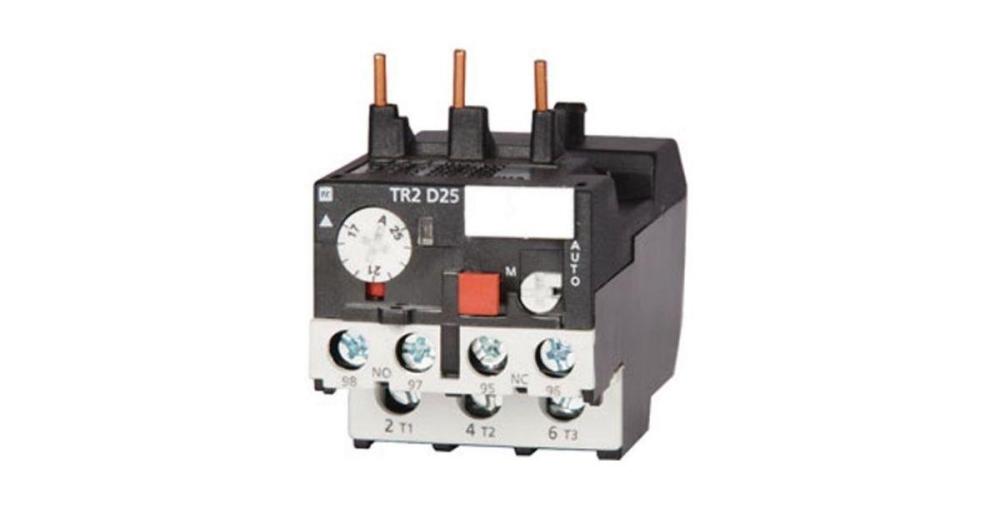
Product Information: A heavy-duty thermal overload relay built for demanding commercial and industrial motor applications. Engineered to provide highly precise thermal protection, this unit safeguards larger motors against sustained overcurrents and phase failures.
Key Features:
- • Adjustable current setting range of 17 to 25 Amps.
• Integrated phase failure sensitivity.
• Selectable manual and automatic reset functions.
• Seamless integration with standard industrial contactors.
2. 9-13A Overload Relay
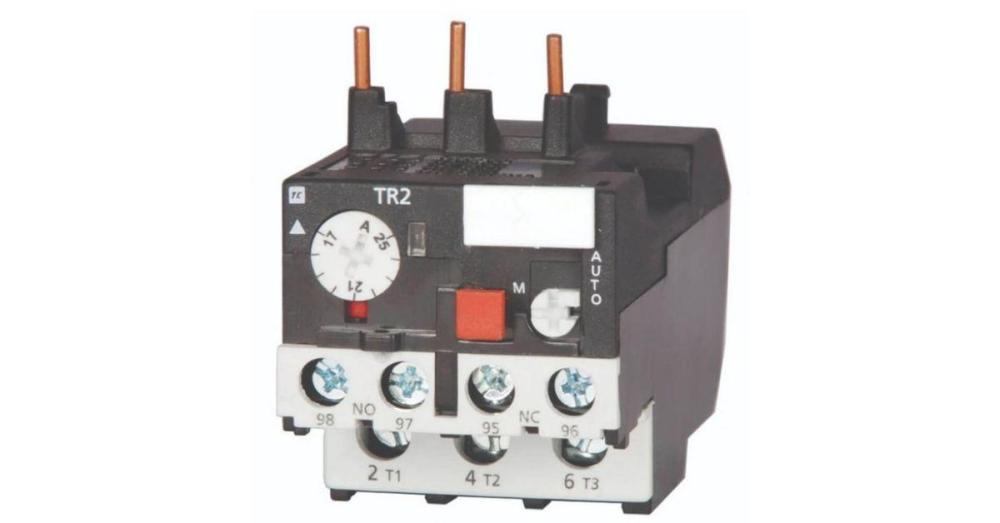
The ideal motor protection solution for mid-range applications. This highly reliable relay offers accurate thermal monitoring to prevent expensive burnouts, minimising operational downtime in standard commercial HVAC and pump setups.
Key Features:
- Adjustable current setting range of 9 to 13 Amps.
- Compact, easy-to-install design for panel mounting.
- Built-in test function for safe commissioning.
- High resistance to environmental shock and vibration.
Key Takeaways
- Overload relays act as a vital safeguard to protect electric motors from gradual overheating caused by prolonged overcurrents, mechanical jams, or voltage imbalances.
- Unlike circuit breakers that trip instantly for short circuits, overload relays use a time delay to allow normal startup surges while stopping sustained heat buildup.
- You must always align the relay’s adjustable dial directly with the motor’s Full Load Amperage on the factory nameplate rather than the circuit breaker size.
- Deploying 3-phase overload relays in heavy industrial setups is strictly necessary to defend valuable machinery against phase loss and severe electrical asymmetry.
- It is best practice to use manual resets for machinery to prevent dangerous unexpected restarts and reserve automatic resets for remote or inaccessible equipment.
- Upgrading your control circuits with trade-trusted hardware significantly reduces operational downtime and prevents catastrophic machinery failure.
Conclusion
Selecting a correctly sized thermal or electronic overload relay is an important part of protecting electric motors from the damaging effects of continuous overcurrents and phase imbalances. Taking the time to calculate full-load current and understand the specific demands of your client's machinery guarantees a professional, safe, and highly durable installation.
When you are sourcing materials for your next industrial control panel or commercial motor circuit, you need a wholesale supplier that understands the demands of the trade. At Meteor Electrical, we stock a comprehensive range of premium distribution and control products built for uncompromising safety and long-term durability. We are a leading wholesale electrical supplier for the UK and European markets, proudly serving electrical contractors in the region.
Shop our full range of motor control gear and overload relays online to secure your site with rapid delivery and trade-trusted quality!
Frequently Asked Questions (FAQs) About Overload Relays
1) What causes a motor overload relay to trip constantly?
Frequent tripping is typically caused by mechanical binding within the motor, a seized bearing, a dropped electrical phase, or the relay dial being set incorrectly below the motor's actual full-load current.
2) Can I use an overload relay instead of a circuit breaker?
No, because an overload relay only protects against gradual overheating from continuous overcurrent. You still require suitable short-circuit and overcurrent protection, such as a circuit breaker or fuse, to protect the circuit against fault currents.
3) How do you test a thermal overload relay to ensure it works?
Most modern relays feature a built-in test button on the faceplate. Pressing this physically simulates an overload trip, allowing electricians to verify that the auxiliary contacts open and drop the contactor out safely.
4) What is the difference between a Class 10 and Class 20 overload relay?
The class number indicates the maximum time, in seconds, the relay takes to trip at 600% of its full load rating. Class 10 trips in 10 seconds for standard motors, while Class 20 takes 20 seconds for heavy loads requiring longer startup times.
5) How do I adjust the current setting on a motor overload relay?
You can adjust the setting using the rotary dial on the front of the relay. The relay should be set according to the motor’s rated current, as stated on its rating plate, and in line with the manufacturer’s instructions.