
Information
The Best Twin & Earth Cables for a Full House Rewire: A Complete Sizing and Installation Guide
The Best Twin & Earth Cables for a Full House Rewire: A Complete Sizing and Installation Guide
A full house rewire is one of the most critical and heavily scrutinised jobs an electrical contractor can undertake. Using the wrong cable size or routing it improperly can lead to immediate inspection failures or worse, long-term fire hazards. The undisputed backbone of domestic UK fixed wiring is the twin and earth cable. Consisting of a live wire, a neutral wire, and a bare Circuit Protective Conductor (CPC) - it is essential for everything from simple LED lighting circuits to high-draw electric showers.
This twin & earth cable guide provides electricians and facilities managers with authoritative buying and installation guidance. Mapping out the correct cable sizes for every room, navigating voltage drop and avoiding common site mistakes are exactly what you need to specify and install a compliant residential rewire.
What Is Inside a Twin and Earth Cable and How Does It Work?
Understanding the Core Conductors
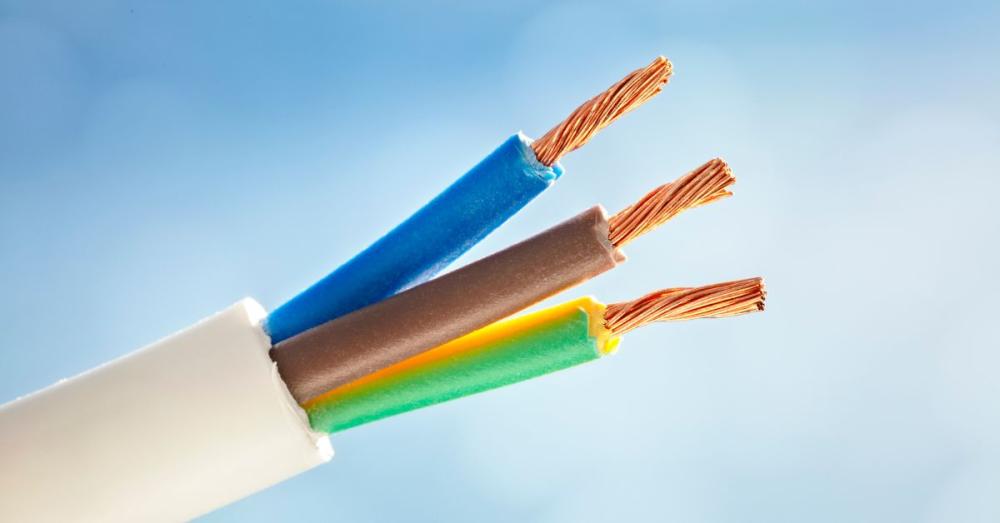
Every reliable installation starts with knowing your materials. The internal construction features two insulated current-carrying conductors, colour-coded brown for live and blue for neutral, alongside one uninsulated circuit protective conductor. Smaller gauges ranging between 1mm and 2.5mm typically use solid copper conductors for structural rigidity inside walls.
Larger variations spanning 4mm to 16mm utilise 7-strand copper conductors to provide the necessary flexibility required to route thicker cables.
The PVC Outer Sheathing and UV Vulnerability
The outer layer features a protective grey polyvinyl chloride (PVC) sheath. While it provides robust mechanical protection for indoor fixed wiring, standard grey PVC outer sheathing degrades rapidly under direct UV sunlight. The material breakdown makes unprotected outdoor use strictly prohibited.
Installers must always plan interior routes carefully to avoid long-term environmental damage.
What Are the Right Twin & Earth Cable Sizes for Every Circuit?
1. 1.5mm Cables for Domestic Lighting Circuits
A 1.5mm² twin and earth cable acts as the industry standard for residential lighting. It possesses the capacity to safely transmit up to 14A when enclosed within an insulated wall. Such capacity easily handles modern LED arrays and standard bulb fixtures without risking excess heat. Twin and earth cables UK regulations dictate that these smaller gauges remain perfectly suited for ceiling voids.
2. 2.5mm Cables for Standard Sockets and Ring Mains
The 2.5mm² variation stands as the go-to size for standard residential plug sockets and ring final circuits. It offers the perfect balance of flexibility for flush clipping and current-carrying capacity to support everyday household appliances. Proper load distribution remains essential to avoid overloading a single leg of the ring.
3. 6mm and 10mm Cables for High-Demand Appliances
Heavy-draw appliances require dedicated radial circuits. A 6mm² cable is explicitly built for domestic cookers and induction hobs rated at around 40A. Conversely, 10mm² or 16mm² cables are required for powerful electric showers exceeding 10.5kW and main consumer unit feeds.
How Do Installation Methods and Voltage Drop Affect Amp Ratings?
The Impact of Thermal Insulation on Amperage
A crucial relationship exists between current volume, resistance, and heat generation. How you route your wiring directly throttles its carrying capacity. A standard 6mm cable can safely carry up to 47A when clipped directly to a masonry surface. That capacity drops to roughly 32A if enclosed in an insulated wall. It plummets to just 23A if wrapped tightly in thermal loft insulation.
Did You Know - Trapping cables in thick thermal loft insulation can cut their safe carrying capacity in half, making proper heat management absolutely crucial for preventing electrical fires?
Calculating Voltage Drop for Long Cable Runs
Installers must factor in continuous load duty cycles, ambient temperature, and the total length of the cable run. These variables heavily impact the overall amp rating and subsequent voltage drop. We strongly advise sizing up the cable thickness for exceptionally long runs across large properties to prevent excess heat buildup and mitigate severe fire risks.
Proper sizing must strictly follow the latest BS 7671 wiring regulations.
Source - eFIXX
What Are the Most Common Site Mistakes to Avoid During a House Rewire?
Ignoring Safe Bending Radii
Flat cables should never be bent sharply at a 90-degree angle. Bending a cable tighter than three to four times its overall diameter compromises the internal copper and stretches the PVC sheath. Such physical stress creates high-resistance pinch points that can dangerously overheat under heavy electrical loads. Gentle shaping along the flat edge protects the structural integrity of the copper.
Forgetting Green and Yellow Earth Sleeving
The bare CPC inside standard twin and earth cables for domestic wiring UK is entirely uninsulated. It remains a strict UK regulatory requirement to slide green and yellow earth sleeving over the bare copper before terminating it into a socket or switch. Failing to do so violates basic safety protocols and allows potential live terminal contact.
Leaving Cables Unprotected Outdoors
Standard grey T&E sheathing remains highly prone to UV assault. Any circuit routing outside the property must be shielded by durable conduit, painted with UV-protective paint, or swapped entirely for Steel Wire Armoured (SWA) cable.
The Best Twin & Earth Cables for Your Next Rewiring Project
Choosing trade-trusted suppliers guarantees regulatory compliance and long-term safety for your clients. A broad range of BASEC-approved Twin & Earth cables built for durability and rapid installation makes all the difference on site.
Here are the top recommendations for a full house rewire:
1. 1.5mm Twin & Earth Cable (100m Coil)
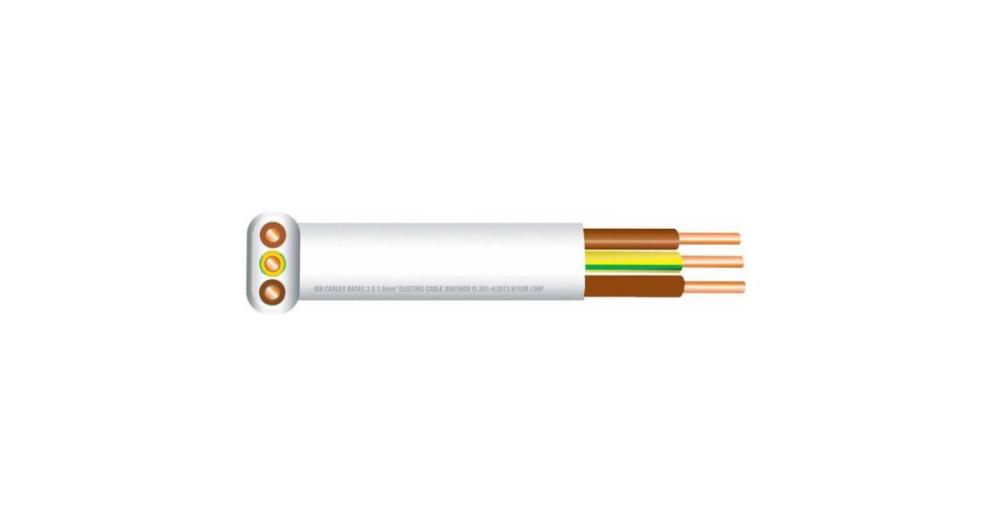
Best For - Residential lighting circuits throughout the house.
Key Features:
- Easy-strip PVC sheath.
- Highly flexible solid copper cores.
- Perfect for embedding in plaster or running neatly through ceiling voids.
2. 2.5mm Twin & Earth Cable (100m Coil)
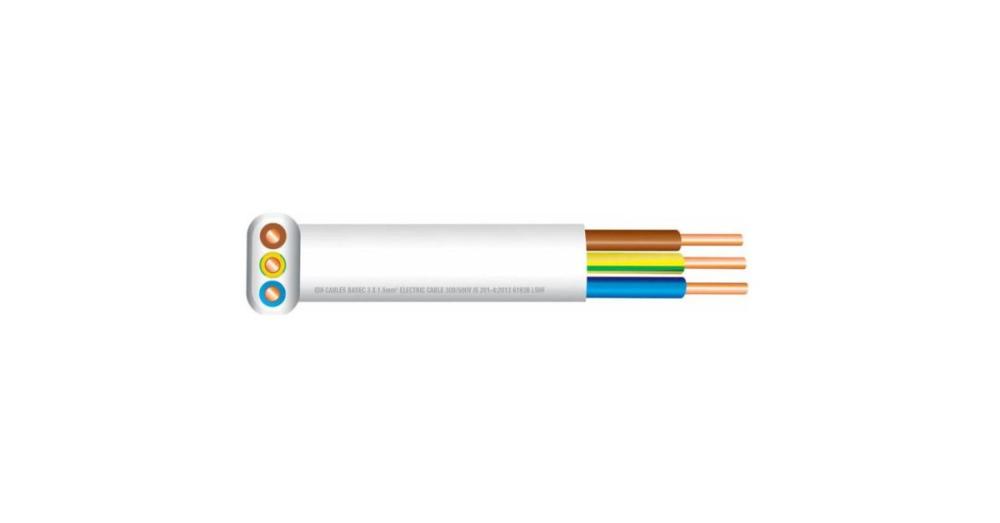
Best For - Standard ring mains and radial power circuits for bedroom and living room plug sockets.
Key Features:
- The undisputed industry standard for 230V domestic power.
- Offers excellent resistance to mechanical stress.
- Flat profile designed for flush joist clipping.
3. 6.0mm Twin & Earth Cable
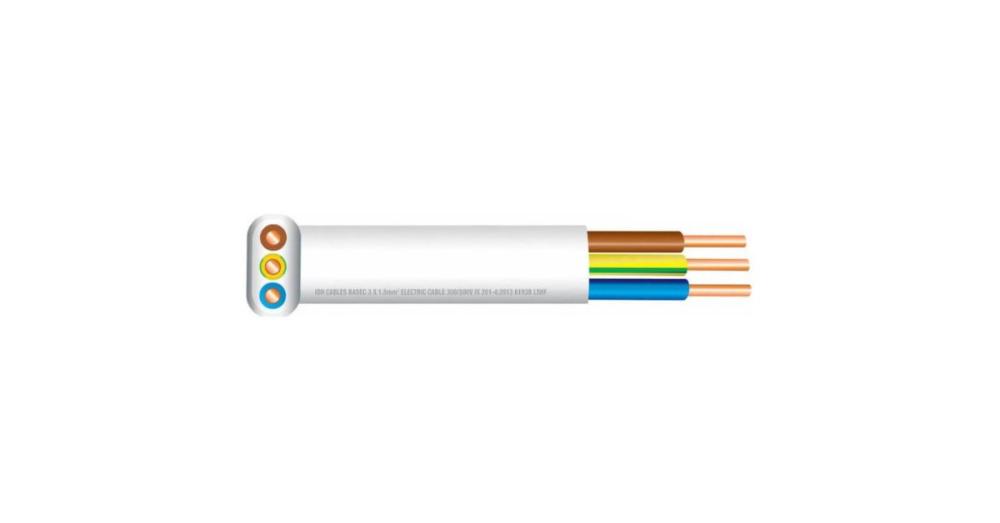
Best For - High-demand radial circuits like kitchen ovens, induction hobs, and standard electric showers.
Key Features:
- 7-strand heavy-duty copper conductors.
- Built to safely handle high-load fixed installations without overheating.
- Safely carries up to roughly 47A when clipped direct.
4. 16.0mm Twin & Earth Cable
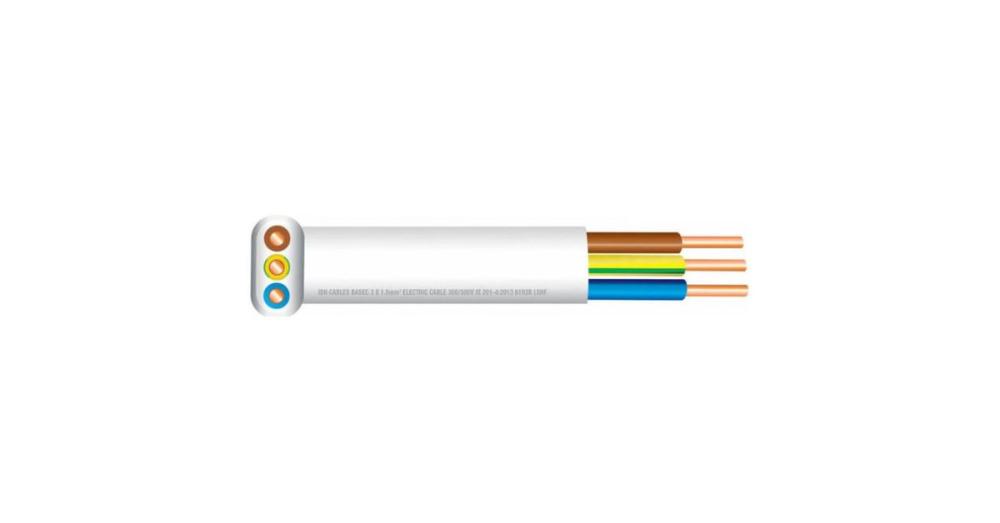
Best For - Main consumer unit feeds, heavy commercial loads, and submain distribution.
Key Features:
- Exceptional power delivery capabilities.
- Capable of conducting up to 61 amps.
- Fully BASEC and BS6004 approved.
Shop 16.0mm Twin & Earth Cable
Secure Your Full House Rewire Project with Meteor Electrical!
Sizing your cables accurately, understanding the direct impact of voltage drop, and respecting strict routing guidelines are matters of fundamental safety. A fully compliant twin and earth installation guarantees long-term safety and drastically reduces the risk of electrical faults over the lifespan of the property.
Equip your team with top-tier, compliant full house rewire electrical products — twin and earth cables, back boxes, switches & sockets, ceiling roses and cable clips. Meteor Electrical is your premier wholesale partner for trade-grade electrical supplies across the UK and Ireland.
Shop the full range of Twin & Earth Cables at Meteor Electrical today for competitive trade prices and rapid next-day delivery!
Frequently Asked Questions (FAQs) About Twin & Earth Cables
1) What size twin and earth cable is required for standard household plug sockets?
A 2.5mm² twin and earth cable acts as the standard industry choice for wiring residential ring final circuits and everyday plug sockets.
2) Can I run standard twin and earth cable outside a property?
No, the grey PVC outer sheath degrades rapidly under direct UV sunlight and must be protected by conduit or replaced with armoured cable.
3) How does thermal loft insulation affect twin and earth cable ratings?
Thermal insulation traps heat generated by electrical resistance, significantly lowering the safe amp rating and often requiring a thicker wire to compensate.
4) Why must the bare earth wire in a twin and earth cable be sleeved?
The circuit protective conductor is completely uninsulated, requiring green and yellow sleeving at termination points to clearly identify it and prevent accidental live contact.
5) What size cable do I need for a 40A electric cooker or induction hob?
A 6mm² cable is explicitly built for high-power radial circuits, making it the perfect and most compliant choice for domestic cookers rated around 40A.
Key Takeaways
- Choose the Right Cable Size: 1.5mm² twin and earth cables are commonly used for lighting, 2.5mm² for socket circuits, and 6mm² to 16mm² for higher-demand applications, depending on circuit requirements.
- Follow UK Wiring Regulations: All cable sizing and installation work must comply with BS 7671, considering circuit loads, protective devices, installation methods and voltage drop.
- Consider Thermal Insulation: Cables surrounded by loft or wall insulation have reduced current-carrying capacity, making correct cable selection essential to prevent overheating.
- Avoid Common Installation Mistakes: Maintain suitable bending radii, use green and yellow earth sleeving at terminations, and protect cables from mechanical damage and UV exposure.
- Use Suitable Cables for High-Power Appliances: Electric showers, cookers and induction hobs often require dedicated circuits, with cable sizes determined by appliance demand and installation conditions.
- Choose Quality Twin & Earth Cables: Source appropriately certified cables from trusted suppliers like Meteor Electrical for reliable domestic rewiring projects across the UK and Ireland.