
PIR Sensor vs. Motion Sensor: A Complete Trade Guide and Spec Checklist
PIR Sensor vs. Motion Sensor: A Complete Trade Guide and Spec Checklist
Intelligent lighting and security systems form the absolute foundation of modern commercial and residential property management. Precise detection is critical for the success of these installations, yet a widespread point of confusion remains between the broad umbrella term "motion sensor" and the highly specific "PIR" technology. When comparing PIR sensor vs motion sensor technology, choosing the correct option prevents frustrating nuisance tripping, lowers energy costs, and ensures long-term reliability across your projects.
Electricians and facilities managers require accurate, trade-specific guidance to specify the correct hardware. Having the right knowledge at your fingertips helps reduce site callbacks and delivers flawless, fully compliant installations every single time.
What is a Motion Sensor? Understanding the Umbrella Term
Active Detection Technologies
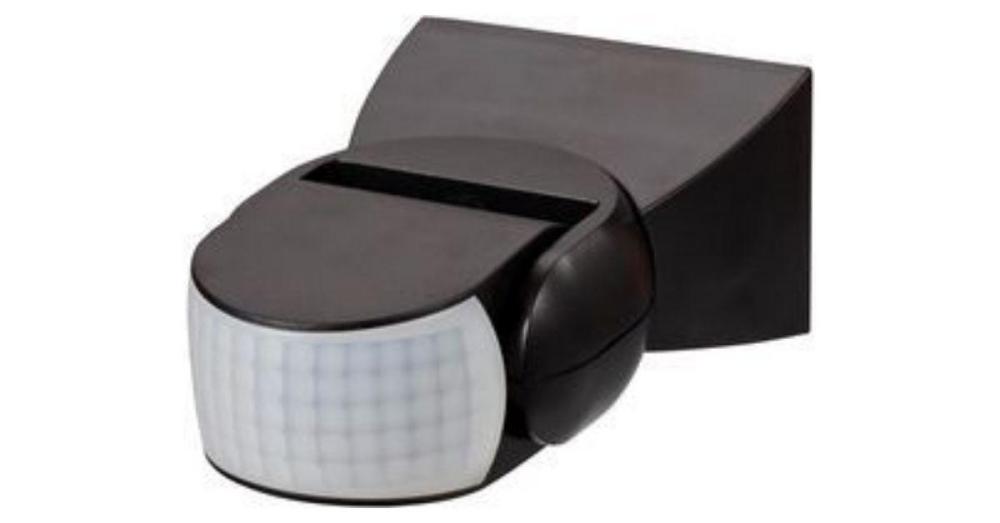
The phrase "motion sensor" actually serves as a broad category encompassing several distinct technologies. This group includes microwave, ultrasonic, and tomographic sensors. Active sensors work by continuously emitting signals, such as sound waves or microwaves, directly into a specific space. The device then measures the reflection time for these signals to bounce back, allowing it to accurately detect movement the moment that invisible pattern is disrupted.
Where Active Motion Sensors Excel
These active units hold distinct advantages in specific architectural environments where other devices might struggle.
- Microwave detectors can easily penetrate glass and thin partition walls without losing accuracy.
- They are perfectly suited for complex spaces like multi-stall commercial washrooms where direct visibility is impossible.
- Large open-plan offices with physical obstructions benefit greatly from their comprehensive, overlapping coverage.
Source - History of Simple Things
What is a PIR Sensor and How Does It Work?
The Science of Passive Infrared Detection
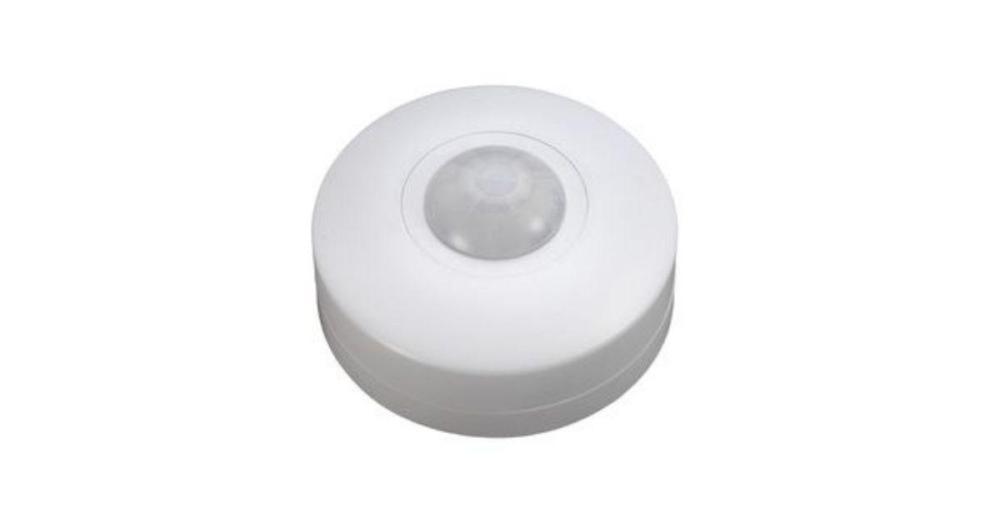
A PIR (Passive Infrared) sensor is a specific, highly popular type of motion detector technology. These devices operate completely passively by detecting infrared energy radiating from living beings as they move. As a human or animal's heat signature crosses the detection zone, the sensor registers the sudden temperature change against the background environment and immediately triggers the connected circuit.
Key Advantages of PIR Sensors
Trade installations benefit massively from this technology, making it a staple for electrical contractors.
- They offer hands-free operation for ultimate end-user convenience.
- Energy efficiency is maximised because the unit only activates when a heat signature is explicitly detected.
- The sudden shock factor of instant illumination successfully scares away intruders or vandals targeting the property.
Source - Blue Butterfly
PIR Sensor vs. Motion Sensor (Microwave): Which Should You Choose?
Line of Sight vs. Penetration Capabilities
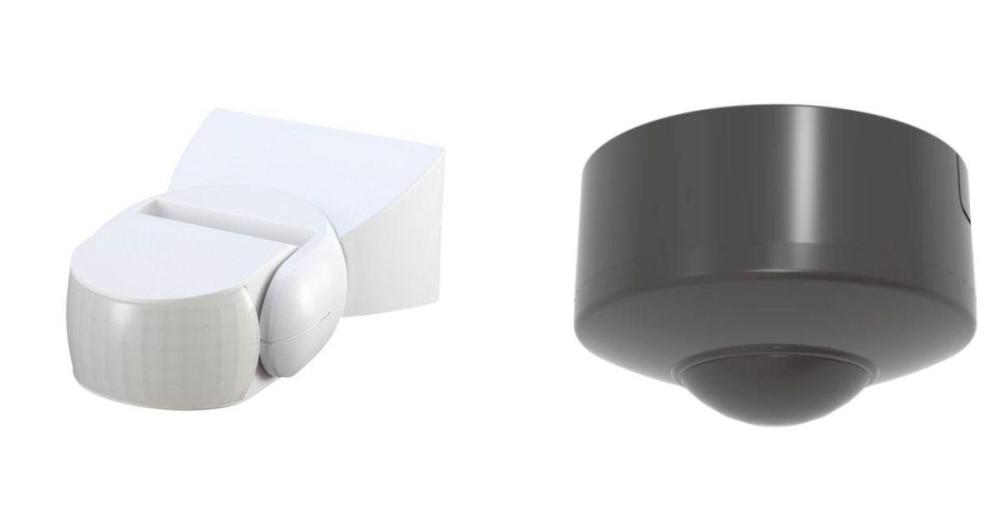
When weighing up a PIR sensor vs motion sensor setup, understanding their physical limitations is vital for a successful fit-out. A PIR sensor has a strict line-of-sight requirement, meaning it cannot monitor movement through solid obstacles.
Conversely, an active microwave unit possesses impressive wall-penetrating abilities. As a general buying guide, always specify PIR units for outdoor security and open driveways. Microwave sensors are much better suited for enclosed indoor commercial hallways where partitions block visibility.
False Triggers and Environmental Sensitivity
PIR sensors remain highly stable indoors but require careful planning outside. Sudden temperature changes or direct sunlight can trigger them if placed incorrectly on an exposed exterior wall. Microwave sensors are entirely immune to temperature fluctuations, making them structurally robust. However, they might trigger falsely from swaying trees or movement happening behind a closed door due to their highly sensitive nature.
Installation Best Practices for Facilities Managers and Electricians
Optimal Placement and Range Considerations
Verifying detection angles and distances before drilling mounting holes saves significant time on site. Standard detection distances typically range from 8 to 16 metres, while opening angles vary between tight 120-degree corridors and full 360-degree ceiling coverage. Pointing PIR lenses slightly downward prevents nuisance tripping from passing vehicles.
Furthermore, this angle protects the delicate sensor lens from direct UV degradation over the years.
Avoiding Environmental Hazards
Did You Know - Placing a passive infrared unit near a fluctuating heat source is the leading cause of erratic behaviour in newly installed security systems? Conduct a rapid site survey to avoid common placement pitfalls.
- Keep units far away from HVAC exhaust vents and active radiators.
- Avoid facing highly reflective surfaces that bounce ambient heat and confuse the lens.
- Ensure swaying tree branches or hanging signage do not obscure the primary detection radius.
Top Motion Detectors and PIR Sensors for Your Next Project
When sourcing highly reliable detection components for commercial or domestic projects, choosing a trade-trusted supplier is vital. Meteor Electrical offers a comprehensive range of motion detectors built for extreme durability and precise accuracy.
1. Kosnic Condor Pro PIR Sensor with Zhaga connector
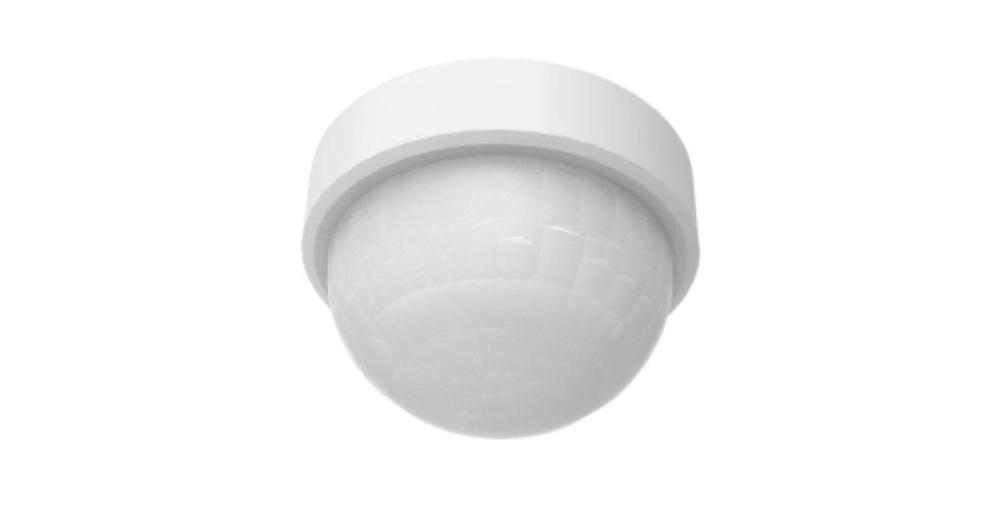
Engineered for demanding industrial high-bay applications, the Kosnic Condor Pro PIR is a plug-and-play powerhouse. Utilising a standardised Zhaga interface, it connects directly to compatible fixtures in seconds to drastically slash installation time. Built for expansive warehouses, it boasts a massive 16-metre mounting height and a broad, blind-spot-free detection footprint that can be safely configured from the ground.
- Standard Zhaga connector
- Max mounting height of 16 metres with large detection range
- Corridor function with dimming output
- Configure with Uni-Remote
Shop Kosnic Condor Pro PIR Sensor with Zhaga connector
2. Kosnic PIR sensor with Zhaga connector with ON/OFF 0-10V Dimming
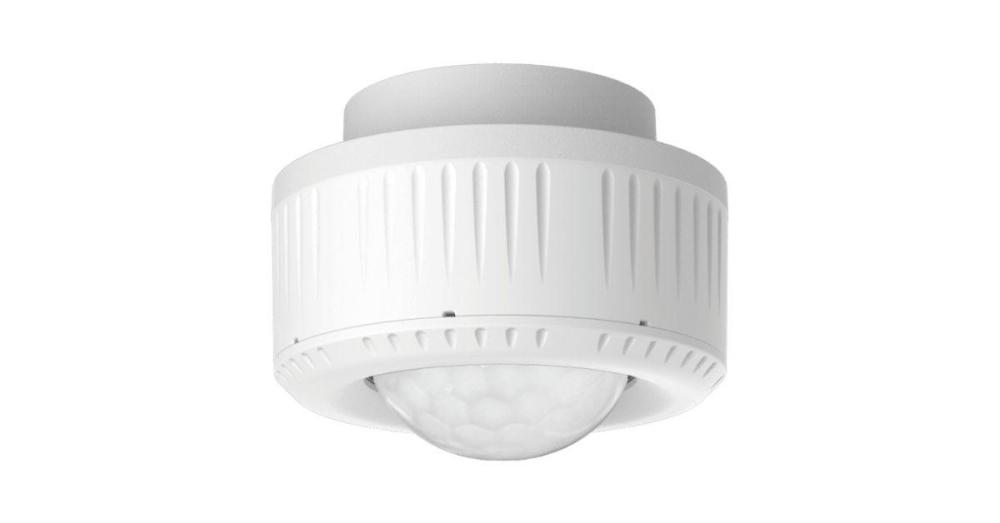
Bring intelligent automation to your next commercial lighting fit-out with this advanced dual-control Kosnic PIR Sensor. Powered directly from its luminaire via a universal Zhaga interface, it seamlessly manages standard ON/OFF switching alongside smooth 0-10V dimming. This dynamic control over both occupancy tracking and daylight harvesting maximises energy savings without sacrificing performance.
- Standard Zhaga connector
- Max. mounting height of 12m
- Corridor function with dimming output
- Configure with remote control
Shop Kosnic PIR sensor with Zhaga connector with ON/OFF 0-10V Dimming
3. Kosnic Zhaga Microwave Motion Sensor, 1-10V dim output
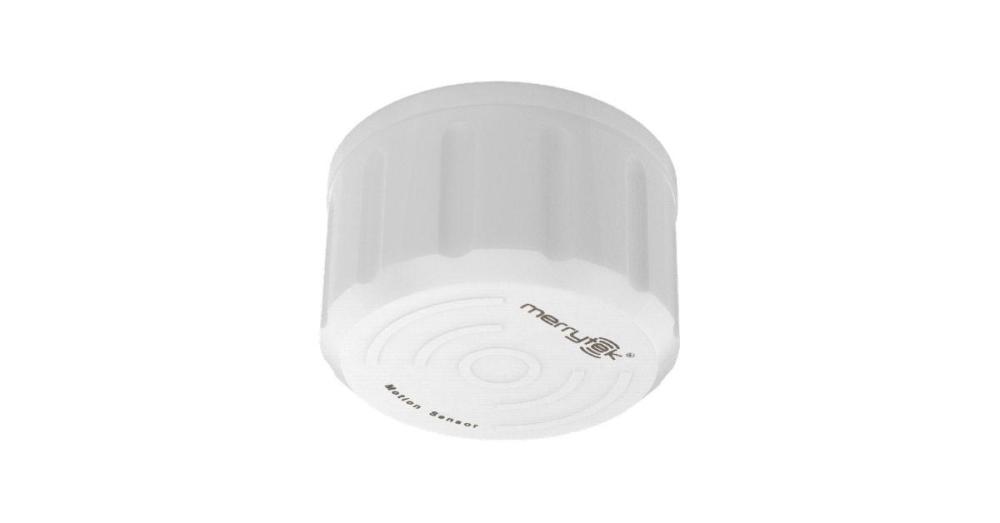
For high-ceiling commercial environments demanding flawless detection, this active microwave sensor delivers continuous, precise monitoring across complex spaces. It integrates effortlessly into high-bay luminaires via a Zhaga interface, granting installers total control over customisable hold times and sensitivity. An integrated ambient light sensor further slashes electricity costs by preventing unnecessary activation during daylight hours.
- Standard Zhaga connector
- Max mounting height of 15 metres
- Corridor function with dimming output
- Configure with required remote control (MWS-RMT)
Shop Kosnic Zhaga Microwave Motion Sensor, 1-10V dim output
4. Kosnic Sova Plug-in Microwave Motion and Daylight Sensor
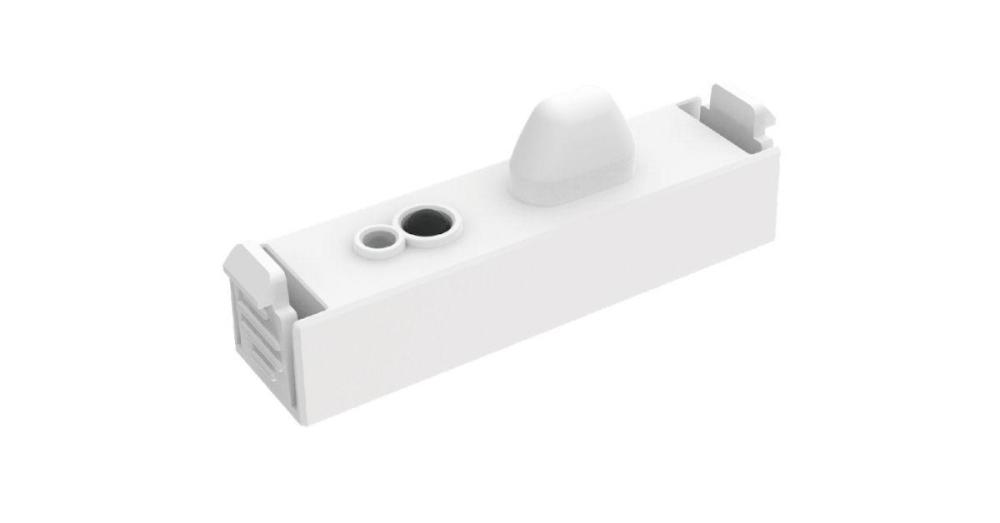
Streamline your lighting automation with this highly compact, plug-and-play microwave sensor. Connecting straight into compatible luminaires, it cuts installation time and accurately detects movement even across complex, partitioned layouts. Adjustable sensitivity and built-in daylight monitoring ensure your commercial spaces are brilliantly illuminated only when needed.
- Powered by low voltage 12V DC
- Mounting height up to 6m
- Super compact design
- Sensor setting with DIP switch
Shop Kosnic Sova Plug-in Microwave Motion and Daylight Sensor
Key Takeaways
- PIR sensors are a type of motion sensor, but not all motion sensors use PIR technology; microwave and ultrasonic sensors use active detection methods.
- PIR sensors detect changes in infrared heat, making them well suited to open areas, outdoor security, driveways and many general lighting applications.
- Microwave motion sensors detect movement using emitted signals, allowing them to work through glass and some partitions where PIR line-of-sight detection may struggle.
- False triggers depend heavily on the environment: PIR sensors can be affected by heat sources and sunlight, while microwave sensors may react to movement beyond the intended detection area.
- Correct placement, mounting height, detection angle and range are critical for reliable performance and fewer callbacks after installation.
- Choose the sensor based on the application, considering coverage, obstacles, environmental conditions, dimming requirements and the type of commercial or domestic space being monitored.
Conclusion
While all PIRs act as motion sensors, not all motion sensors utilise PIR technology. Understanding the fundamental difference between passive heat detection and active microwave signals ensures that your client gets a reliable, highly efficient system tailored to their exact environment. Choosing correctly between a PIR sensor vs motion sensor application prevents callbacks and guarantees long-lasting performance.
When you are quoting your next commercial fit-out or domestic security upgrade, you need a wholesale partner you can rely on completely. Meteor Electrical is proudly established as one of the largest online electrical wholesalers operating in the UK and Ireland. We stock a vast range of top-tier sensors and distribution equipment to help you get the job done right.
Browse our complete range of highly accurate motion detectors to secure your site with free delivery, free returns, and rapid same-day dispatch!
Frequently Asked Questions (FAQs) About Sensor Technologies
1) Can a PIR sensor detect motion through a glass window?
No, modern glass heavily insulates and blocks infrared heat signatures, meaning an active microwave motion sensor is strictly required for this application.
2) Why does my outdoor PIR sensor keep triggering during the day?
Incorrect lux sensitivity settings or facing highly reflective surfaces often causes concentrated sunlight to bounce into the lens, constantly confusing the sensor.
3) What is the difference between a PIR sensor and a photocell?
A PIR sensor triggers based on physical heat movement, whereas a photocell solely monitors ambient light levels to provide automatic dusk-to-dawn illumination.
4) Do microwave motion sensors use more electricity than PIR sensors?
Yes, because microwave units actively emit continuous signals to check for movement, they draw slightly more continuous power than passive alternatives.
5) How high should a wall-mounted PIR sensor be installed?
A mounting height of 2.5 to 4 metres is ideal for standard security applications to ensure broad coverage while preventing physical tampering.