
LED Batten Fittings Buying Guide: Lumens vs Watts, CCT, Beam Angle & Diffuser Types
LED Batten Fittings Buying Guide: Lumens vs Watts, CCT, Beam Angle & Diffuser Types
Choosing LED batten fittings is easier when you ignore marketing fluff and focus on what affects installation, appearance, and running costs. On-site, the specs that matter most are brightness (lumens), energy draw (watts), colour temperature (CCT), beam angle, diffuser type and practical fitment like conduit entry and mounting points. This guide serves electrical contractors and facilities managers who want fast comparisons and fewer callbacks.
Lumens vs Watts - Brightness, Efficiency & Real-World Performance
Lumens vs Watts for LED Battens (Stop Buying by Wattage)
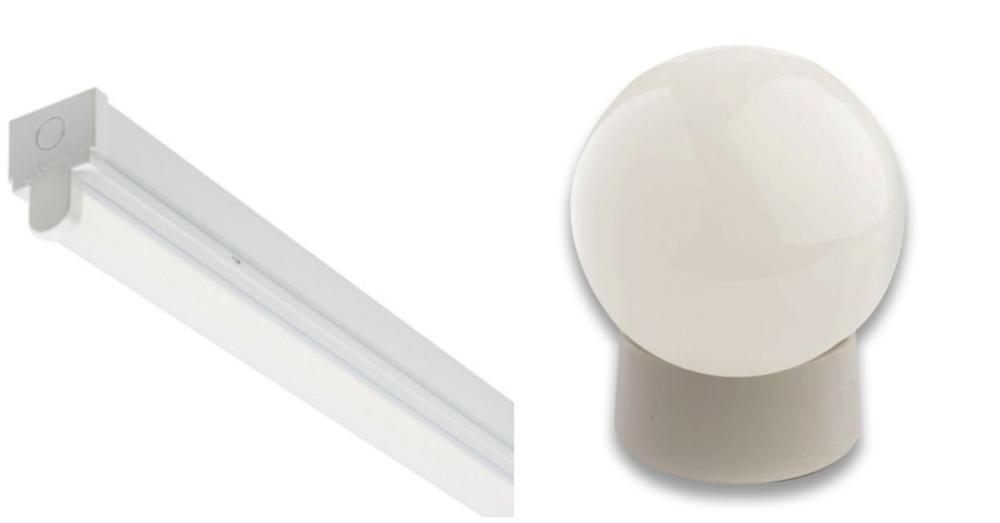
Lumens tell you how much usable light you are getting. Watts only tell you how much power the fitting consumes. Two battens can both be 27W, yet one looks noticeably brighter because it outputs more lumens and directs them more effectively.
Watts as Energy Draw - How to Estimate Running Cost and Circuit Loading
Watts matter for energy bills, but also for circuit planning and heat management in enclosed areas. When comparing brands, look at luminous efficacy, measured as lumens per watt (lm/W). Higher lm/W usually means you can hit the same light level with less energy.
A quick rule for spec sheets - compare fittings at the same CCT and similar diffuser style, otherwise you skew the results.
Real-World Usage - Application-Based Lumen Targets (Selection Cues for Buyers)
Instead of guessing, match lumen output to the space and mounting height. As a starting point:
- Corridors and back of house routes - prioritise uniformity over “punch”
- Workshops - higher output with good glare control
- Warehouses and racking aisles - optics and spacing often matter more than raw watts
Contractor checklist before you sign off:
- Driver type and flicker performance (ask if it is flicker-free for task areas)
- Power factor (PF) and total harmonic distortion (THD) for larger installs
- Rated lifetime (hours) and warranty terms
- Through-wiring or linkable capability if you are running continuous lines
- Physical install aids (BESA points, conduit entries, quick-release end caps)
CCT & Colour Quality - Choosing 3000K/4000K/6500K Plus CRI
Best CCT for LED Battens (3000K vs 4000K vs 6500K)
CCT shapes how a space feels and how well people see detail.
- 3000K warm white suits comfort-led areas like receptions, break rooms, and some retail back of house
- 4000K neutral white is the reliable commercial default for offices, corridors, schools, and general-purpose work areas
- 6500K cool daylight can improve perceived sharpness for task-heavy zones, but can feel harsh in people-first spaces
CRI Explained - When CRI 80 Is Enough Vs When You Need Higher
CRI affects colour accuracy. CRI 80 is usually fine for warehouses, plant rooms, and circulation areas. Step up when colour matching matters, such as print areas, inspection benches or certain retail and clinical tasks.
Common Project Mistake - Mixing CCTs Across Zones and How to Standardize
A classic snag is mixing 4000K and 6500K across adjacent areas, which makes spaces look inconsistent. Standardise by zone and write the chosen CCT into the schedule, especially when ordering integrated LED batten replacements in phases.
Source - Electrician U
Beam Angle & Optics - Spacing, Uniformity, Glare Control
Beam Angle for LED Battens - Wide vs Narrow for Better Coverage
Wide beam angles suit corridors and aisles as they reduce shadowing and create smoother light. Narrower optics concentrate light where you need it which helps racking aisles, higher mounting heights, and task lines.
Spacing Guidance for Installers - Avoiding Scalloping, Dark Bands, And Hotspots
If you see bright pools with dull gaps, you either need a wider beam, a different mounting height, or revised spacing. Keep consistency across a run, especially when swapping old twin-tube fittings for new integrated LED battens.
Glare Control Considerations - Diffuser Choice, Mounting Height, Line-Of-Sight
Glare complaints often come down to line of sight and diffuser choice. A prismatic diffuser can soften glare while maintaining output, whereas a heavy opal diffuser may look comfortable but can reduce perceived brightness.
Buy LED Batten Fittings - Explore Batten Light Fittings Online
The following are top options when looking to buy light fittings online.
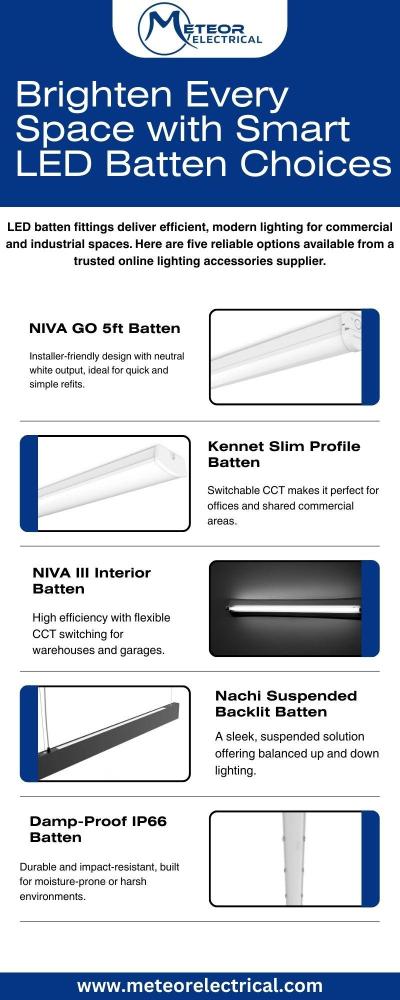
1. Niva cct 5ft Single 27W 4000K Batten Kosnic
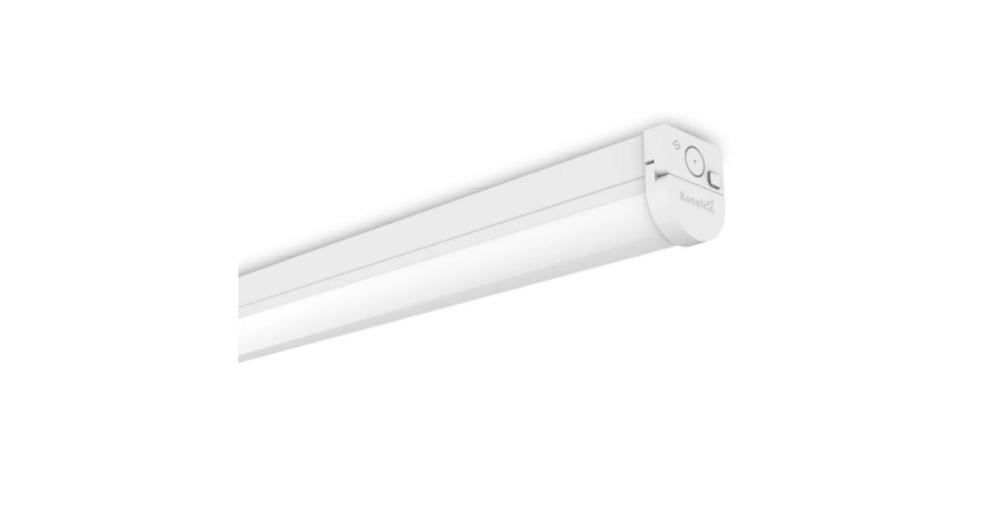
A clean, modern batten that installers like for its practical mounting points and simple access for maintenance. Ideal for straightforward refits where 4000K neutral white is the standard.
Key features:
- Up to 150 lm/W efficiency
- BESA box mounting points
- Press-and-release end caps
- 20 mm conduit entry
- 5-year warranty
2. Kennet 5ft Interior Surface Mount Slim Profile Batten Kosnic
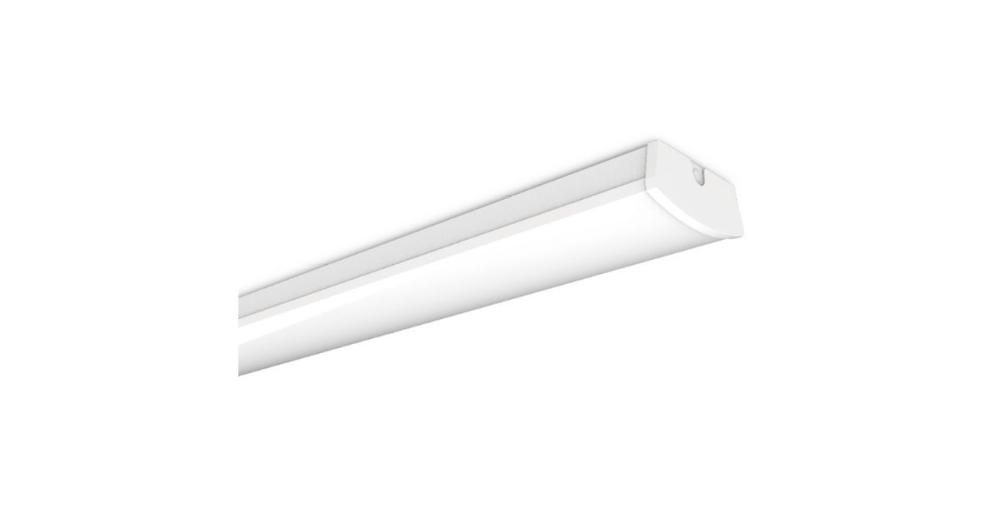
Slim-profile integrated batten with switchable CCT, useful when the client is undecided on the final look. A solid pick for offices and shared commercial spaces.
Key features:
- Switchable CCT (3000/4000/6000K)
- Flicker-free performance
- Interior surface-mount format
- Blue light hazard RG1 rating
3. NIVA III Interior Batten 5ft Single 27W CCT Switchable Kosnic
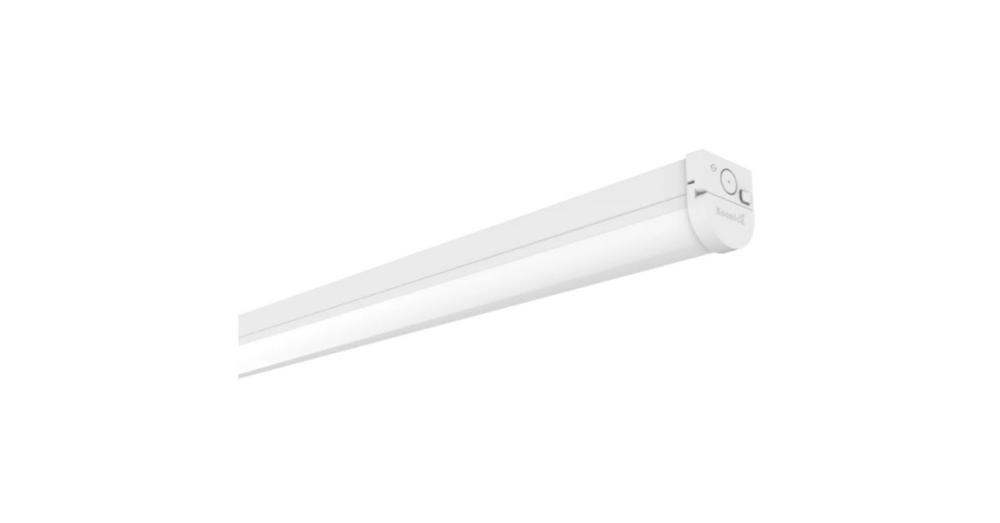
Versatile and efficient, with switchable CCT to suit warehouses, factories, and garages without changing the fitting.
Key features:
- Up to 156 lm/W efficiency
- Switchable CCT for quick standardisation
- 20 mm conduit entry
- Replaces single and twin tube battens
- Blue light hazard RG1 rating
4. Nachi Suspended Backlit Batten 5ft 42W CCT Switchable Kosnic
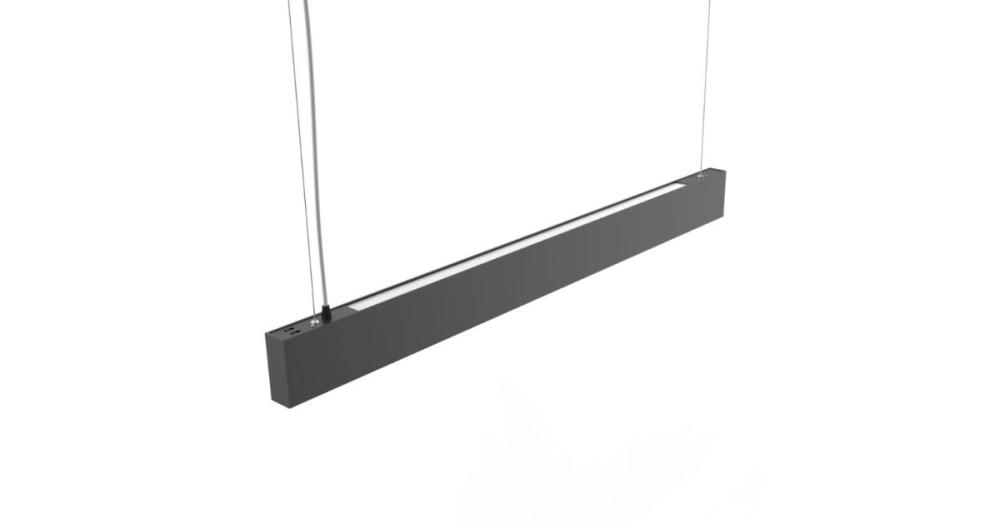
A more design-led suspended option for modern commercial spaces, with up and down lighting control for better ambience and visual comfort.
Key features:
- Ultra-slim suspended profile
- Top-mounted CCT switches
- Power factor >0.94
- Selectable 3000K/4000K/6000K
5. Damp-proof Batten 16-32W Wattage & CCT Switchable IP66 LEDVANCE
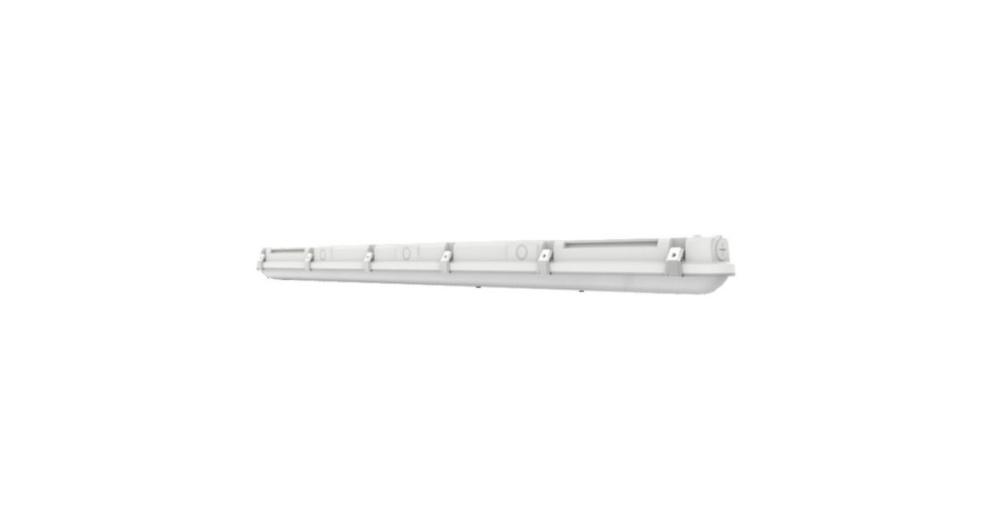
Built for tougher areas where moisture, dust, and knocks are real concerns. Great for plant rooms, service corridors, and sheltered external walkways.
Key features:
- IP66 and IK10 protection
- Up to 153 lm/W efficacy
- Up to 9,000 lumens output
- Push-wire terminal for quick connection
- Through-wiring for faster installs
Conclusion
A solid selection flow for LED batten fittings should be based on the following factors: lumens, CCT and CRI, beam angle, diffuser, environment ratings and installation features. If you also need to buy lighting accessories online or source wholesale outdoor lighting accessories, keep everything on one spec-led order list so the site team is not mixing variants.
Meteor Electrical is a leading online lighting accessories supplier in the UK, with contractor-friendly stock from trusted brands like Kosnic and LEDVANCE, plus clear specs that make ordering simpler.
Ready to upgrade your next project? Shop LED battens and fittings now at Meteor Electrical.
FAQs
1. How many lumens do I need for a corridor, office, or warehouse aisle?
Corridors need even coverage more than extreme output, offices suit balanced neutral white lighting and warehouse aisles often need higher lumens with the right optics for racking.
2. Is 4000K or 6500K better for industrial and commercial LED batten lighting?
4000K is the safest all round choice for commercial spaces, while 6500K can suit task-heavy industrial zones where a cooler look is acceptable.
3. What beam angle is best for uniform lighting in long corridors and racking aisles?
Use wider beams for corridors to reduce shadow bands and consider narrower optics for racking aisles where you want more directional light.
4. Which LED batten diffuser type should I choose and why?
Opal softens glare but may reduce perceived brightness, prismatic balances comfort and output and clear can feel brighter but may increase glare in line of sight installs.
5. What should electricians check on an LED batten spec sheet before ordering in bulk?
Confirm lumens and lm/W, CCT and CRI, IP/IK ratings, driver performance (PF and THD), wiring features and warranty.