
Information
How to Choose Emergency Lighting for Commercial Buildings: Types, Features & Safety Considerations
How to Choose Emergency Lighting for Commercial Buildings: Types, Features & Safety Considerations
The right emergency lighting for a commercial building is the kind that suits your layout, stays on for three hours, and is easy to test. So you’ll need to pick between maintained and non-maintained fittings, check the IP and IK ratings, and decide whether you want manual or self-test. Meteor Electrical stocks emergency lighting from Kosnic and SGD, which makes it easy to get everything in one place. Here, we’ll go through the main types, the features worth comparing, seven real products, and the safety checks you can’t skip.
Why Emergency Lighting Matters in Commercial Buildings
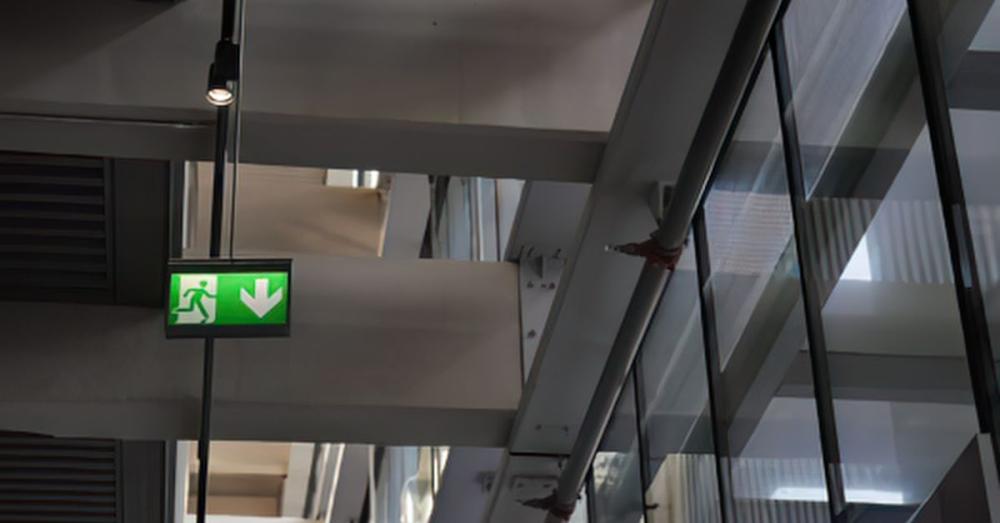
Picture a power cut at 5 pm in January. Staff are heading home, the corridors go dark, and nobody can see the exit. That’s the moment these lights are there for. UK fire safety law requires the person responsible for the building to provide escape route lighting that still works when the mains fail. BS 5266-1 is the code most people follow. The goal is plain: keep exits, stairs and turns visible until everyone’s outside.
Know the Main Types of Emergency Lighting
Most small and medium premises go for self-contained fittings. Each one has its own battery, so if one fails, the rest carry on. Here are the types you’ll come across most:
- Maintained: These stay lit whenever people are in the building. They’re a good fit for exit signs and dark spaces, because the sign is always there to be seen.
- Non-maintained: These only come on when the mains fail. They work well in offices, corridors and stairwells that already have normal lighting during the day.
- Self-contained luminaires: Each fitting carries its own battery, so wiring stays simple. That’s why they’re so popular for retrofit jobs where you can’t tear out cables.
- Exit signs and boxes: These show the arrow or running-man legend and point people to the nearest door. Put one at every exit and every change of direction.
- Emergency modules: A module turns an existing LED fitting into an emergency one. You don’t replace the light, which is handy in high bays and big commercial spaces.
Compare the Features That Matter
Type is only half the story. The spec decides how well a fitting does its job, so check these before you buy:
- Duration: Look for a three-hour rating. That’s the usual duration for most commercial premises, but check it against your own fire risk assessment.
- Protection ratings: IP65 keeps out dust and water jets, and IK10 means it can take a knock. Together they suit car parks, plant rooms and public areas.
- Testing: Manual units need someone to check them by hand. Self-test units check the battery and lamp on their own, and BS EN 62034 is the standard for automatic test systems.
- Light output and colour: Lumens and colour temperature change how clearly people see. 6500K is a crisp, cool white, while switchable models let you match the lights around them.
- Installation: Loop-in loop-out terminals, conduit entries and BESA box fixing points save time on site, and that keeps labour costs down.
Source - eFIXX
Seven Emergency Lighting Products Worth Considering
Specs are easier to judge when you see them in real products. Here are seven from Kosnic and SGD, all available from Meteor Electrical, covering signs, bulkheads, ceiling lights and modules.
1. Kosnic 5W IP65 LED Emergency Bulkhead & Sign 6500K
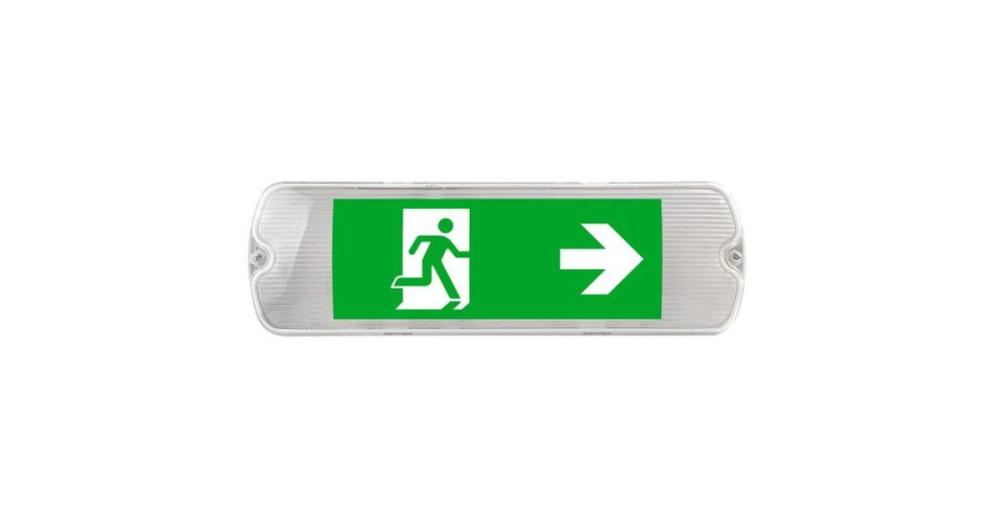
A handy 5W fitting that works with or without its self-adhesive exit graphics, so one product can be a sign or a plain emergency light. You get 190 lumens without graphics (70 with them), instant full light, a 3-hour duration and a 3-year warranty, all inside an IP65 casing.
2. Kosnic Belum LED Emergency Exit Box 1W/5W 6500K
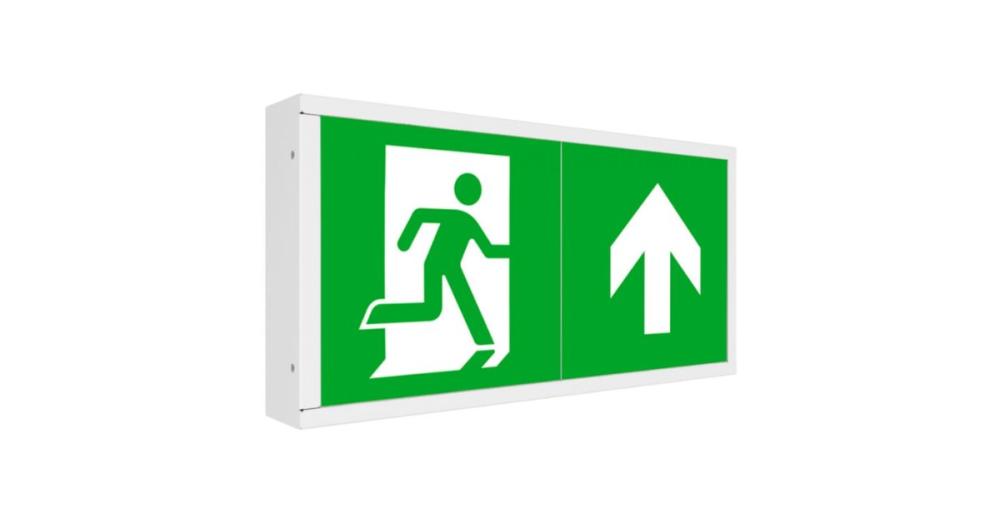
This is a slim exit box, measuring 194 x 391 x 53 mm, with a rotatable arrow and a row of LEDs along the bottom edge. It runs on maintained or non-maintained for three hours, uses a Li-ion battery and gives 140 lumens. It’s IP20, so keep it indoors, in corridors and doorways.
3. Kosnic UEM Pro 4W Universal Emergency Module (UEM04)
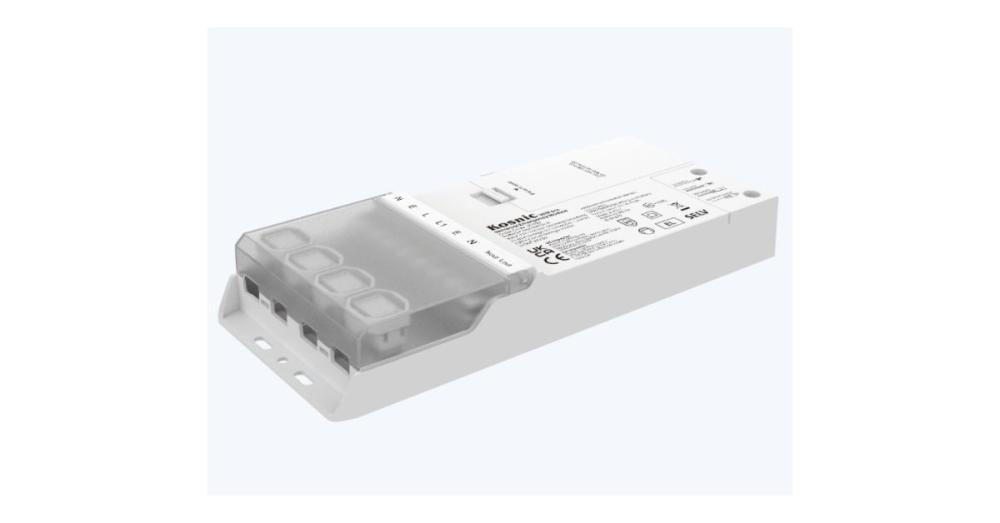
Got LED fittings you’d rather not replace? This module is made for Class III LED luminaires with an external driver. It has loop-in/loop-out terminals for two 3-core cables, a push-to-release cable clamp and easy plug-and-play battery changes. Check compatibility first, then fit it inside the luminaire or in the ceiling void.
4. SGD LED Multi-Wattage Emergency Ceiling Light
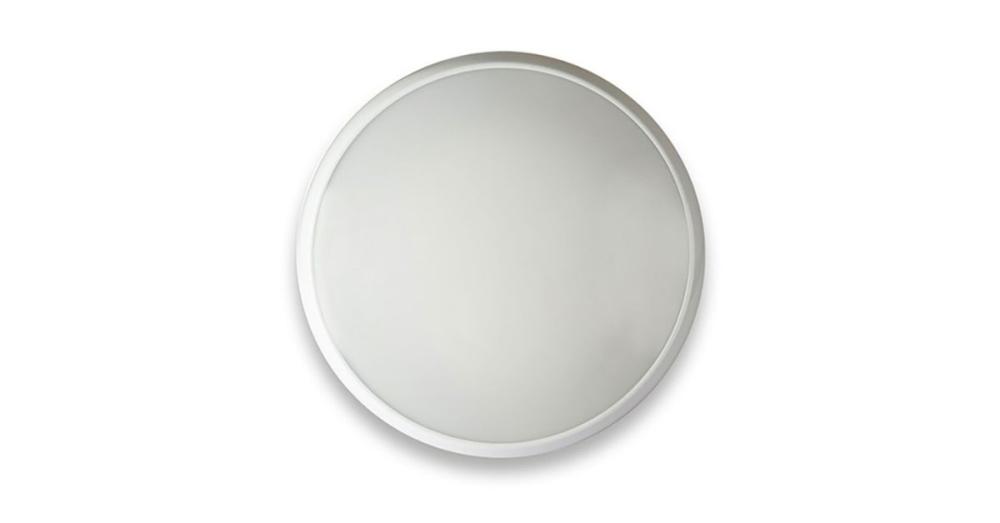
A round IP65 ceiling light where you can switch between 9W, 14W and 18W, and pick 3000K, 4000K or 6500K, so one product suits several rooms. It gives three hours of emergency light, comes with a 5-year guarantee and has a hinged LED plate that makes fitting easier. It isn’t dimmable, though.
5. Kosnic Mulu Mini Duo Emergency Bulkhead (Manual & Self-test, IP65)
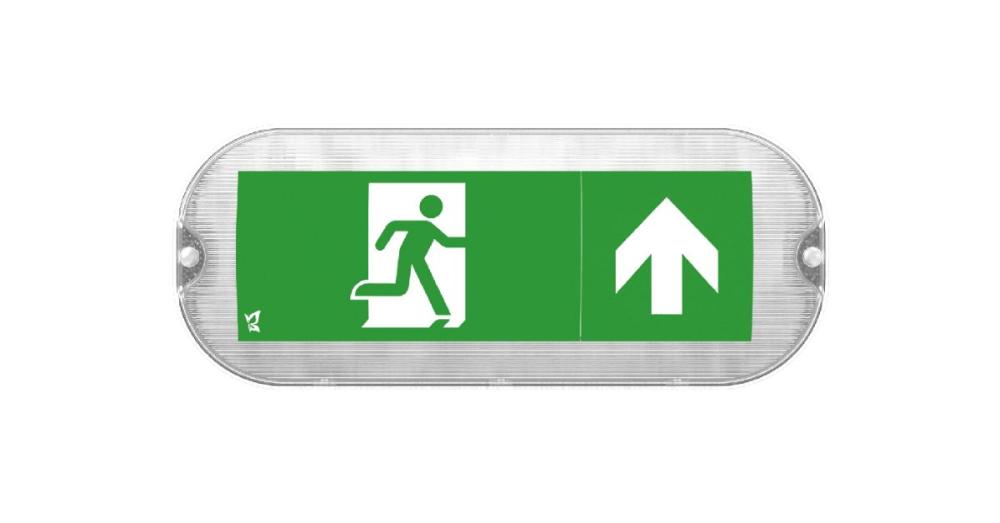
A compact 5W bulkhead you can set to manual or self-test with an internal DIP switch. The automatic testing meets BS EN 62034. It’s rated IP65 and IK10, so it works indoors and out, and the push-wire terminals, 20mm conduit entry and BESA box fixing points make wiring quicker.
6. Kosnic Manot Hilux Emergency Bulkhead 8W Manual Test 6500K
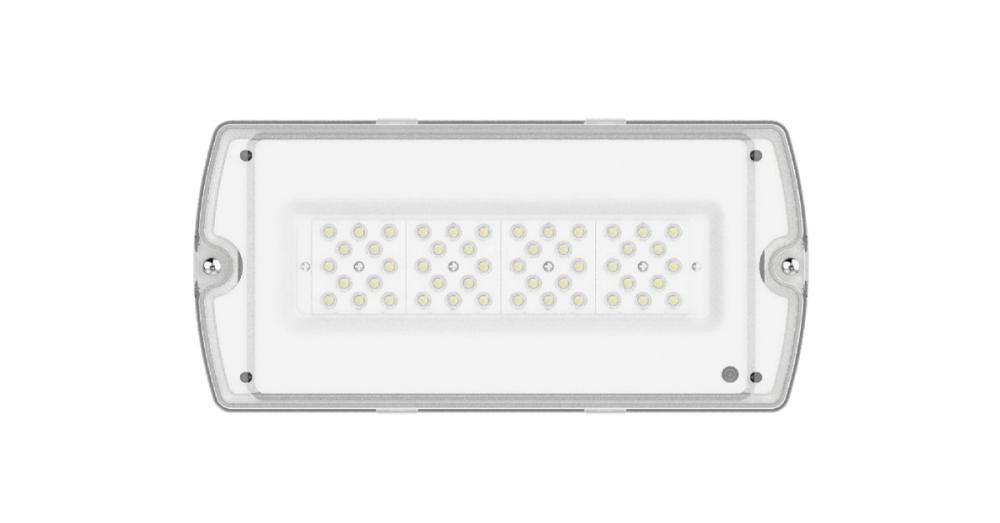
This is the powerful one, giving 1000 lumens in emergency mode. The lens spreads light at 90°, or 120° if you take it off. You can mount it on the surface or recessed, add a tilting bracket and run it maintained or non-maintained. Its IP65 and IK10 ratings cope with rougher spaces.
7. Kosnic Emergency Module Duo 5W for Kosnic Highbays
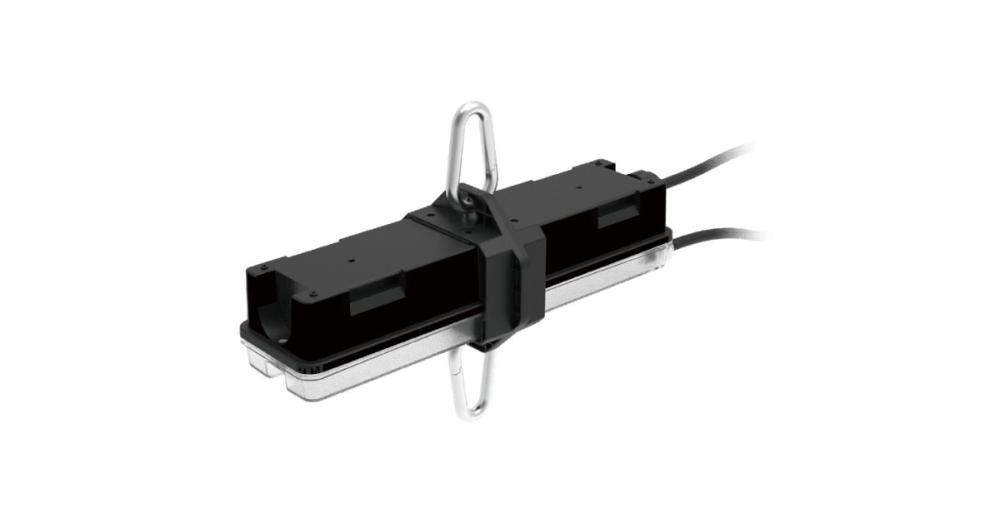
Made for selected Kosnic LED high bay and low bay luminaires, this module adds at least three hours of emergency cover. You can switch between manual and self-test; it handles a wide 30–300V output range, and the waterproof push-wire connector makes it a sensible pick for warehouses and industrial units.
Safety: Placement, Testing and Records
Even great fittings let you down if they’re in the wrong spot or nobody checks them. Here’s what to do:
- Start with a fire risk assessment - It tells you where lights and signs need to go.
- Cover the key points - Think exits, stairs, changes of direction, fire alarm call points and firefighting equipment.
- Test on a schedule - A short monthly check and a full-duration test once a year is standard practice. Self-test models take much of that off your plate.
- Keep a logbook - Write down every test, fault and repair, so you can prove you’re compliant.
- Use a competent electrician - This matters most for modules, where compatibility is key.
Closing out:
In the end, it comes down to four choices: the right type for each area, three hours of duration, a protection rating that suits the space, and a testing method you can keep up with. Begin with your fire risk assessment, then match fittings to each route and room.
When you’re ready to buy, Meteor Electrical has a range of emergency lighting for commercial buildings, with trade support, so you can choose with confidence and keep every escape route lit. Visit our website and order now, and expect delivery as early as possible. We are online 24/7, or you can reach us by phone Mon–Fri, 8 am to 5 pm!
FAQs
Q1. How long should emergency lighting last in commercial buildings?
Three hours is the usual answer for commercial premises, and it’s what the fittings above give you. Your fire risk assessment confirms the exact figure for your building.
Q2. What’s the difference between maintained and non-maintained?
Maintained lights stay on all the time and keep working in a power cut. Non-maintained lights only switch on when the mains fails, so they suit areas that are normally lit.
Q3. Do I need self-test emergency lighting in a commercial unit?
Not always, but it saves you manual checks and spots faults early. Duo models let you pick manual or self-test mode, so you can choose what works for each site.
Q4. What IP rating suits emergency lights in damp or outdoor areas?
IP65 is a safe pick. It’s dust-tight and handles water jets, which suits plant rooms, car parks and outside exits. Add IK10 if vandalism could be a problem.
Q5. Can I add an emergency module to my existing LED luminaires?
Often, yes, if they’re Class III LED fittings with an external driver. Check compatibility first, then fit a module like the Kosnic UEM04 inside the fitting or ceiling void.