
How Many Lumens Do You Need for Warehouse Lighting? A Practical Guide to Industrial LED Light Levels
How Many Lumens Do You Need for Warehouse Lighting? A Practical Guide to Industrial LED Light Levels
The warehouse lighting requirements depend on many factors. For example, the type of work being carried out, ceiling height, layout, surface reflectance, and the required lux level. A storage aisle can get away with far less than a packing bench. Simple as that. But getting it wrong isn't simple at all; it means dim corners, tired eyes, slower work, and a bigger power bill than you should be paying.
At Meteor Electrical, we help businesses work out the correct output for their warehouse lighting on a regular basis, so we thought it was worth setting out how the calculation actually works. This guide will walk you through it properly, from what a lumen even is, right through to the fittings we'd actually recommend.
Lumens vs Watts: What's the Difference?
Let's clear this up first, because it trips up a lot of people. A watt tells you how much power something pulls from the wall. A lumen tells you how much light comes out the other end. They're not the same thing, and mixing them up is how businesses end up with the wrong fittings.
- Two lights can use the same wattage and still throw out completely different amounts of light. Watts are about power draw, not brightness.
- Traditional fluorescent and discharge lighting was often compared primarily by wattage, but wattage alone does not tell you how much usable light a fitting produces.
- Good suppliers of industrial warehouse lighting now list lumens front and centre on their spec sheets. That's the number worth trusting.
- A well-designed fitting with a strong lumen output, not just a high wattage, is what actually keeps your floor evenly and safely lit.
- Once you understand lumens, you can size things properly. No dark patches, no overspending on fittings your space doesn't need.
<iframe width="560" height="315" src="https://www.youtube.com/embed/sleGSKO8mec?si=h1MZm-3ut9w9i72a" title="YouTube video player" frameborder="0" allow="accelerometer; autoplay; clipboard-write; encrypted-media; gyroscope; picture-in-picture; web-share" referrerpolicy="strict-origin-when-cross-origin" allowfullscreen></iframe>
Source - Archi notes
Working Out How Many Lumens You Actually Need
There's no single exact number here. Your ceiling height, your wall colour, and the kind of work happening on site all shift the target. Still, the maths behind it isn't complicated once you break it down.
- Start with the target lux level for the task and the area being illuminated. Multiplying the two gives you a starting point for the total light required, although a proper lighting design should also account for factors such as fitting efficiency, mounting height, spacing, and maintenance.
- Ceiling height matters more than most people expect. As mounting height increases, the required lumen output, beam distribution, and fitting spacing need to be considered carefully to maintain consistent illumination at floor level.
- Dark walls and floors soak up light instead of bouncing it back. A space with darker surfaces usually needs a bit more output to feel just as bright as a lighter one.
- Divide your total lumen figure by the output of one fitting, and you'll get a rough idea of how many units you need. Then space them out so you're not left with shadows or bright hotspots.
- Build in a small buffer too. Commercial warehouse lighting loses a little brightness as it ages, so aiming slightly above your bare minimum keeps things looking right for years, not just on day one.
What Lux Level Suits Each Part of Your Warehouse
Not every corner of a warehouse needs the same brightness, and lighting the whole place to one standard is not a smart move. Some areas need serious light. Others don't. The figures below can be used as general planning guidance rather than fixed requirements:
- General storage and racking usually only need 100 to 150 lux. People are moving around and picking up boxes, not reading fine print.
- Picking, packing, and dispatch areas want 200 to 300 lux. Staff are checking labels and stock all shift long, so they need more to work with here.
- Loading bays and yard entrances sit well around 150 lux, enough for safe vehicle movement and accurate load checks, whatever the weather's doing outside.
- Workshops and quality control benches often call for 300 to 500 lux. Detailed work simply needs brighter, steadier light than a storage aisle.
- Offices and welfare rooms inside a warehouse usually land around 300 to 400 lux, closer to normal office lighting than heavy industrial output.
A Few Fittings Worth Looking At
Once you know your target lumen figure, picking a fitting gets a lot easier. Meteor Electrical stocks a solid range of high bay and non-corrosive fittings built for tough industrial spaces. Here are a few worth knowing about.
The 54W LUKA Integrated LED 5ft Non-Corrosive 4000k:
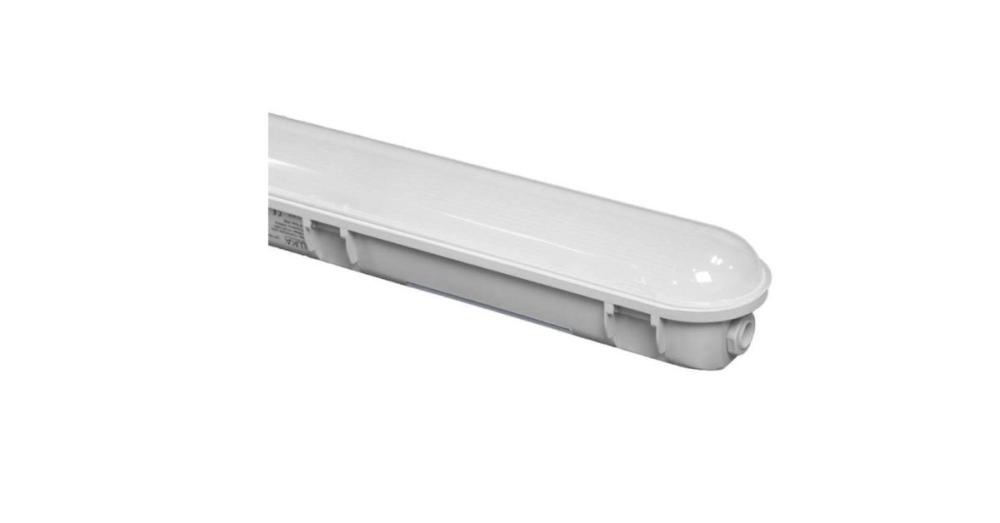
It is one of the newer additions to the waterproof, non-corrosive range, and it's built with a streamlined body and a quick terminal connector so it's not a headache to install. It runs at 54 watts, gives you 7,000 lumens at 4000K cool white, and carries an IP66 rating along with a 30,000-hour life expectancy and a full five-year guarantee. Made from ABS and polycarbonate and rated to work between -10°C and 40°C, it's a genuinely solid pick for warehouses, factories, and garages where dust and damp are just part of the job.
The 30W 5FT LED Vapour Proof 220V (Emergency):
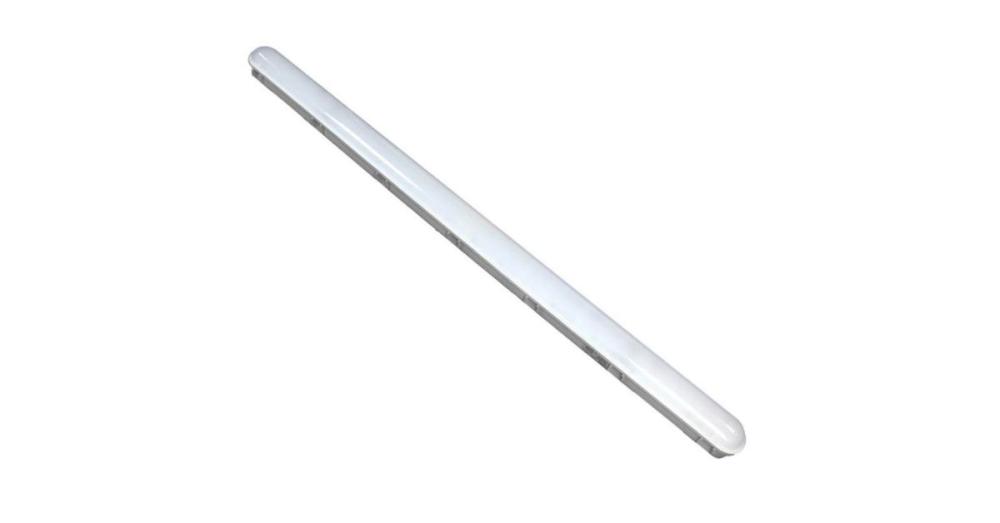
This one shares that same streamlined, non-corrosive build, but the standout feature is the built-in three-hour emergency pack, which matters far more than people realise until the power actually cuts out mid-shift. It puts out 3,500 lumens at 4000K from 30 watts, runs on 220V, and comes with IP66 and IK07 protection plus a wide 120-degree beam angle. Add a five-year guarantee and a 40,000-hour life expectancy, and it's a fitting built to be left alone once it's up.
The 30 Watt LED 1500mm Emergency LUKA IP66 Non-Corrosive Fitting:
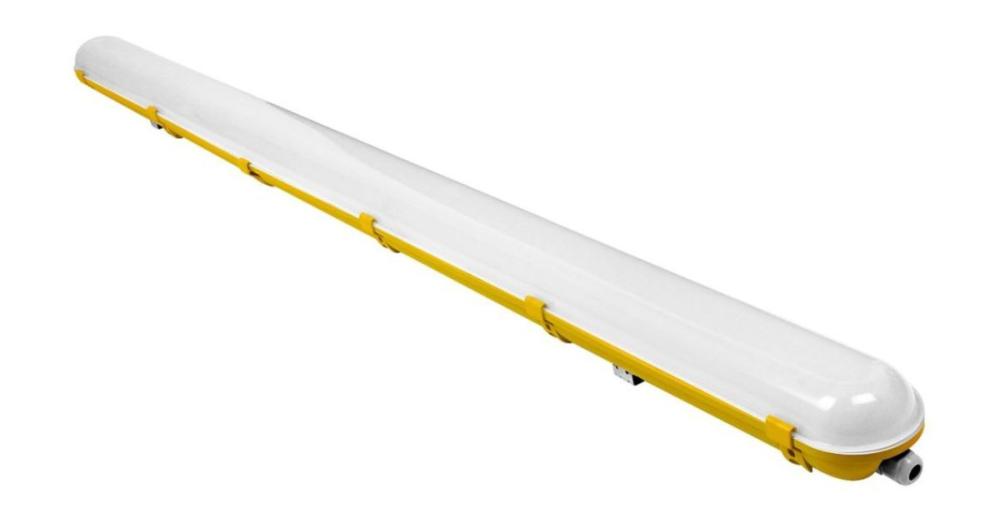
It runs on 110V and is aimed squarely at site lighting jobs where reliability can't be an afterthought. It delivers 3,300 lumens at 4000K with a CRI of 80Ra, a 120-degree beam angle, and IP65 with IK07 protection, backed by a three-year guarantee and a 40,000-hour life expectancy. It comes ready to go with a hanging bracket, opal diffuser, fast-fit connector, and a Ni-CD battery, so there's very little extra kit needed to get it installed and working.
The Cirrus III LED High Bay, CCT and Wattage Switchable:
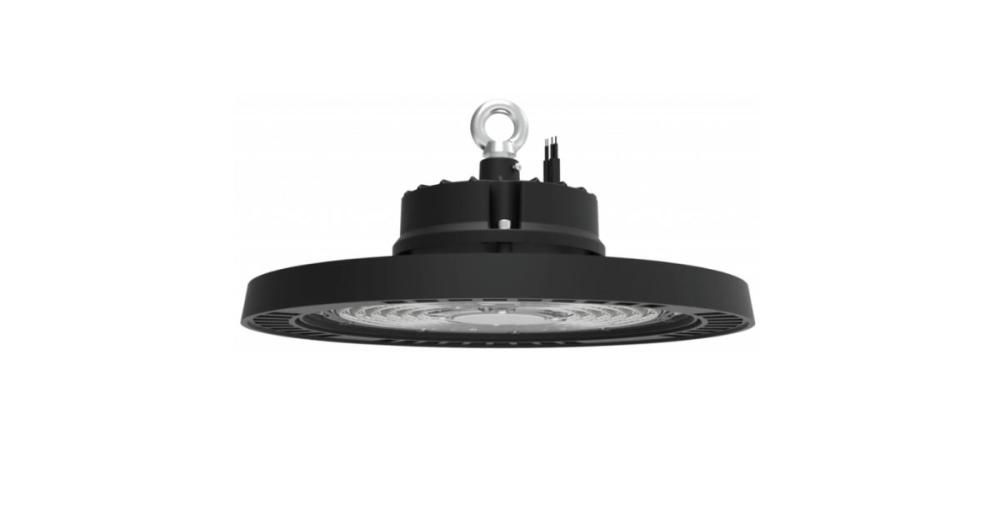
The LED is built by Kosnic as a straight swap for older, less efficient high bay fittings, and it's designed with flexibility in mind rather than a fixed spec. Because both the wattage and the colour temperature can be switched, installers can tailor the output on site to suit manufacturing floors, warehousing, leisure facilities, or general industrial spaces without needing to stock several different versions of the same fitting.
The Kosnic Push-in EME Echo 3 Circular Highbay 100W 5000K:
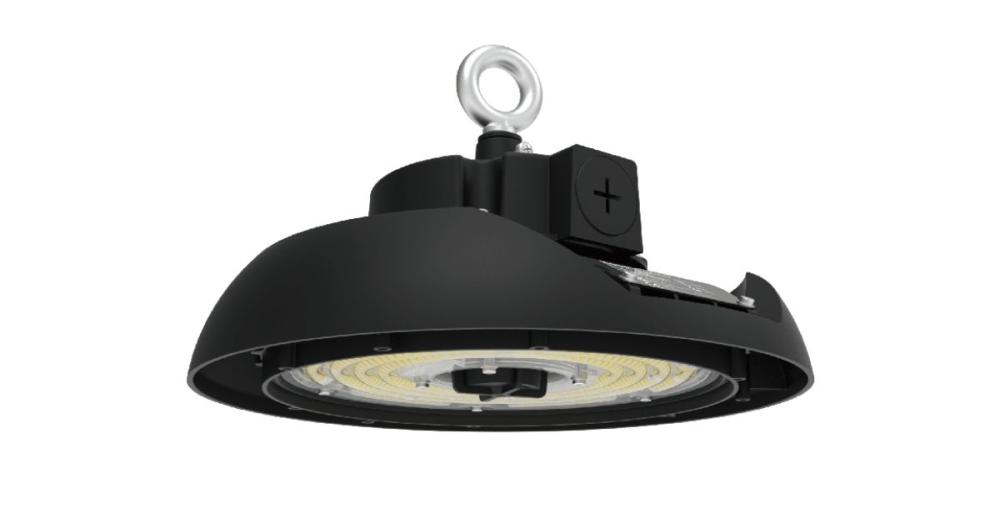
Built for efficiency first, it delivers an impressive 145 lumens per watt, which is a genuinely strong figure for this category of fitting. Rated IP65 with a choice of shade options, it works equally well indoors and outdoors, covering warehouses, manufacturing sites, and outdoor loading areas. It comes with 1-10V dimming as standard for tighter control over energy use, and optional emergency gear is available for sites where continuous operation really matters.
A Few More Things Worth Thinking About
Lumens are the big piece of the puzzle, but not the only one. A few smaller details are usually what separate an okay lighting job from a genuinely good one. Here are some points to consider:
- Beam angle decides how evenly the light spreads. Anything at 90 degrees or wider tends to cover open warehouse floors more consistently.
- IP and IK ratings protect fittings from dust, damp, and the odd knock, all fairly common around loading bays and forklift routes.
- Colour temperature has a real effect on how alert people feel while working. Cooler light around 4000K to 5000K usually suits busy task areas better than something warmer and softer.
- Emergency lighting isn't optional in most commercial buildings, so it's worth thinking about early rather than bolting it on later.
- Long-life LED fittings mean fewer trips up to ceiling height with access equipment, which saves both time and money in a warehouse where downtime costs real money.
Final Thoughts
Getting your warehouse lighting output right isn't complicated once you understand the task, the space, and the ceiling height you're working with. Start with your target lux, work through to the right fitting, and most of the guesswork just falls away.
Wherever you are in that process, Meteor Electrical's range of high bay and non-corrosive fittings, backed by real product data and a team that actually knows this industry, is there to help you get it right. We supply a diverse range of electrical equipment that is ready to dispatch. View our products and order online today!
Frequently Asked Questions
Q1. How many lumens per square foot for a warehouse?
Most general storage areas need around 10 to 15 lumens per square foot. Busier zones like picking benches need noticeably more.
Q2. What lux level suits a warehouse loading bay?
Around 150 lux usually does the job, enough for safe movement and accurate load checks.
Q3. Do high bay lights need a minimum beam angle?
Yes, 90 degrees or wider is generally recommended so light spreads evenly across open floors.
Q4. Is emergency lighting a legal requirement in warehouses?
Emergency lighting may be required where normal lighting failure could create a safety risk, particularly along escape routes and in certain occupied commercial premises. Requirements depend on the building and applicable UK regulations and standards.
Q5. How often should warehouse LED fittings be replaced?
Good LED high bay fittings often last 30,000 to 40,000 hours, so you're not replacing them often.