
Information
Fire-Rated vs Standard Bathroom Downlights: What Should You Check Before Buying?
Fire-Rated vs Standard Bathroom Downlights: What Should You Check Before Buying?
Fire-rated bathroom downlights keep a ceiling's fire protection intact, while standard downlights do not, so the right pick depends on what sits above your room. In a bathroom, though, fire rating is only half the test, because the IP rating decides whether a fitting can handle steam and splashes. Check both labels before you pay, because each one answers a different question. Meteor Electrical makes this easier, since its bathroom lighting range lists the fire rating, IP rating, cut-out size and lamp type on every product page, which saves a lot of tab-hopping.
Below, we cover how the two types differ, how bathroom zones work, a buying checklist, six products worth comparing and a simple way to decide.
Every bathroom light gets two tests: can it survive the steam, and can it protect the ceiling? Good buying starts with both questions.
Fire-Rated vs Standard: What's Actually Different?
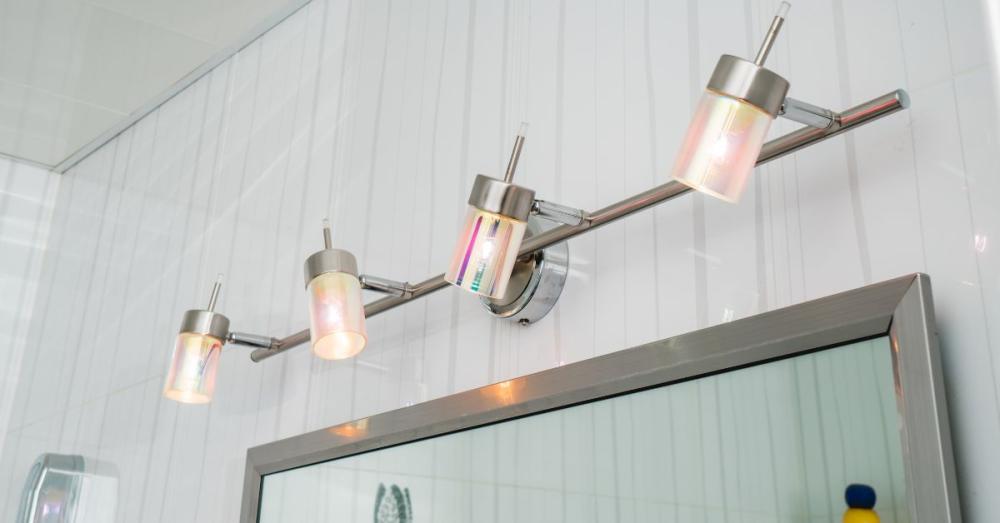
Cut a hole in a ceiling for a standard downlight, and you've made a weak spot in its fire protection. A fire-rated downlight is made to fill that weak spot. Here's the breakdown.
Purpose
A fire-rated fitting helps the ceiling hold back fire for longer, so flames and hot gas take more time to reach the space above. A standard fitting just gives you light, nothing more.
Fire ratings
Fire-rated models are tested for a set number of minutes. The Kosnic ones in this post list 30, 60 and 90 minutes, and that's the number you match to your ceiling's requirement.
Insulation
Lots of fire-rated downlights can sit under loft insulation because they're built to cope with the heat. Standard ones usually need some clear space around them, which can leave cold patches.
Water protection
A fire rating tells you nothing about moisture. Fire-rated lights still need a proper IP rating, and a standard light can have a great IP rating with no fire rating at all.
Bathroom Zones and Why IP Ratings Matter
Once you know if you need fire protection, think about where the light will go. Bathrooms are split into three zones, and each one has a minimum IP rating:
- Zone 1 (inside the shower and around the bath): IP65 minimum
- Zone 2 (on a wall): IP44 minimum
- Zone 3 (away from wet areas): IP44
These are the figures from Meteor's bathroom lighting guide, and you can filter its bathroom range by IP20, IP40, IP44 and IP65 to save time. No window in the room? Think about emergency lighting too. BS 5266 asks for at least one emergency light in a bathroom without borrowed light, which often applies to bathrooms made for disabled use.
Source - GSH Electrical
Five Checks Before You Buy
A product page can look perfect until you notice what it left out. Go through these five things first.
- Fire rating - Confirm the minutes (30, 60 or 90) and make sure that matches what the ceiling above the room needs, not just what the box claims on the front.
- IP rating - Match the IP code to the zone where the light will go. That means IP65 for Zone 1 and at least IP44 for the rest of the room.
- Cut-out and depth - Measure the hole before you order. The fire-rated models below need 68mm or 74mm, while the Aurora standard downlight needs 200mm.
- Lamp and driver - See whether a lamp comes with it. The Kosnic GU10 and the Scorpius are sold without lamps, and the Mauna Plus Tilt has an IP20 driver, so think about where that will sit.
- Colour and control - Warm light is nice for a long soak; cooler light helps with shaving and make-up. Switchable colour temperature and dimming let one fitting do both jobs.
Six Bathroom Lighting Options to Compare at Meteor Electrical
These six show the checklist working on real products. Three are fire-rated, two are standard fittings, and one is a bezel that changes how the Mauna range looks.
1. Kosnic GU10 Fire Rated Downlight with Magnetic Interchangeable Bezel
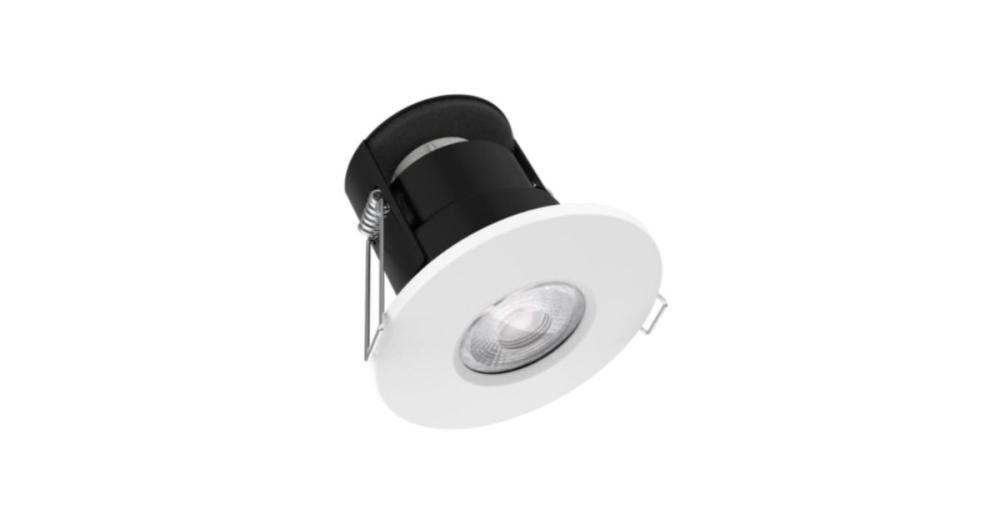
The budget fire-rated pick, Kosnic GU10 Fire Rated Downlight. It's IP65, has 30, 60 and 90-minute fire ratings and can go under insulation. The cut-out is 68mm; it takes a GU10 lamp (sold separately), and a white bezel comes in the box.
2. Kosnic Mauna III Fire-Rated Downlight 4W/6W
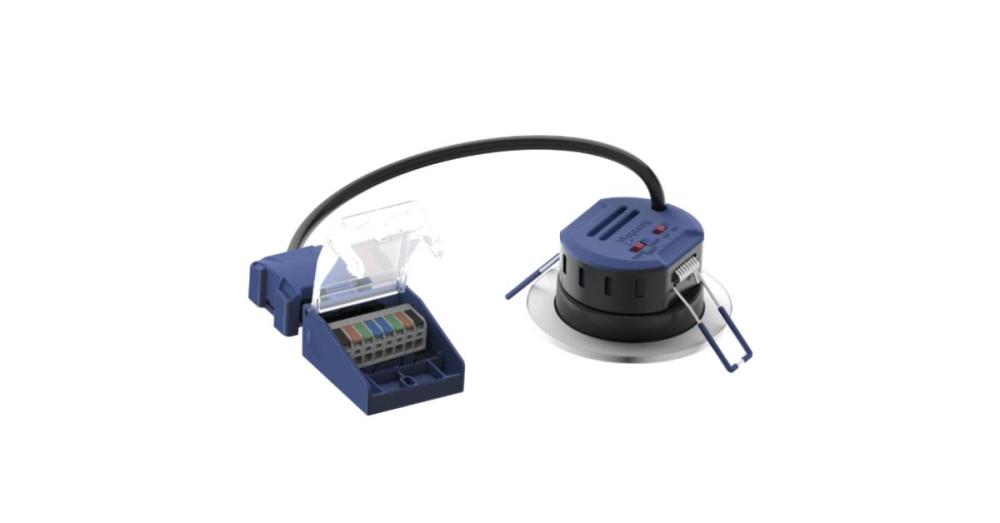
You can switch between 4W and 6W, and between 3000K, 4000K and 6000K. It dims on mains dimmers, is rated IP65 and IK07, needs a 68mm cut-out and goes under insulation. One model, plenty of bathrooms.
3. Forum Scorpius GU10 3 Light Adjustable Plate Spotlight
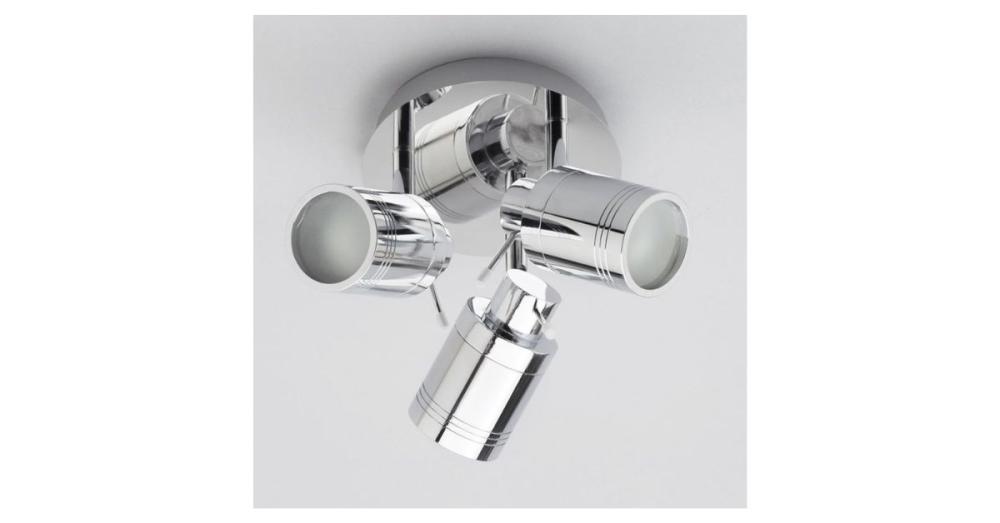
Not fire-rated, just a good standard option. The three heads can be aimed, say, at the mirror, and the chrome stainless steel finish is IP44. You'll need three GU10 lamps of up to 35W each, which aren't included.
4. Aurora 25W Integrated IP44 Dimmable Downlight
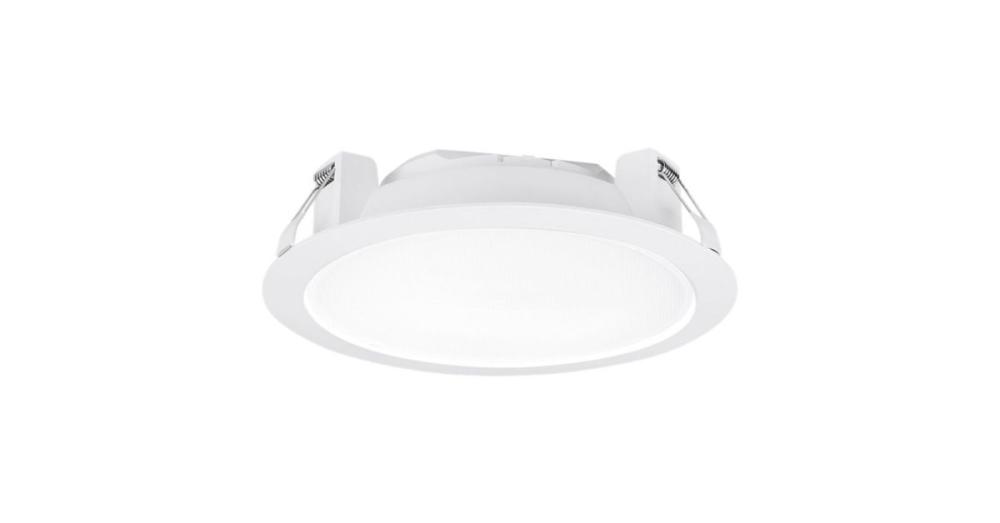
A standard fitting from the Uni-Fit range. You get 2000 lumens at 4000K, a 100-degree beam, dimming and an integrated driver that suits shallow ceiling voids. It needs a 200mm cut-out, and the page mentions a three-year Aurora warranty.
5. Kosnic Mauna 4.5W/6W Fire Rated Downlight Plus Tilt
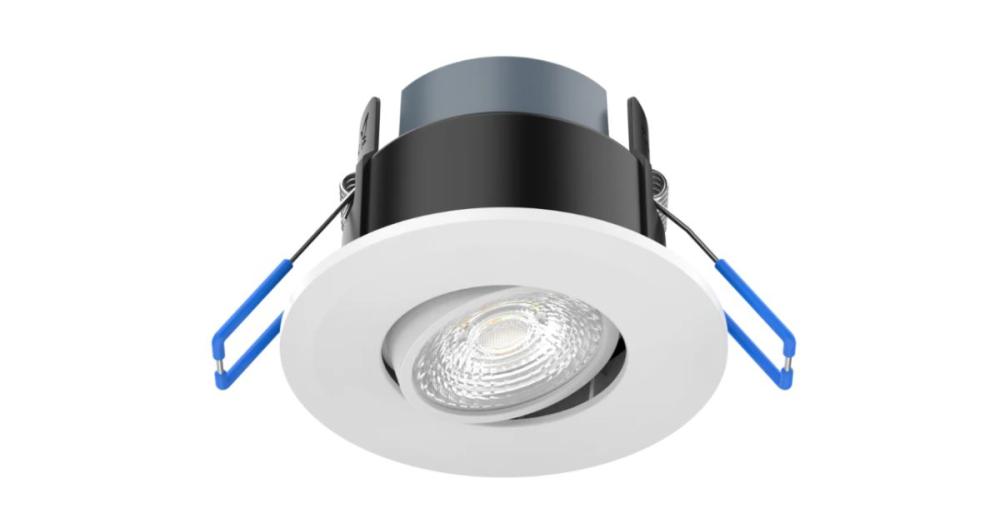
This one adds a tilting head, plus switchable 2700K, 3000K, 4000K and 6000K. It's dimmable, IP65 for the luminaire, works with a Kosnic emergency module and needs a 74mm cut-out. The driver is IP20, so plan where it goes.
6. Kosnic Mauna Satin Chrome Interchangeable Bezel
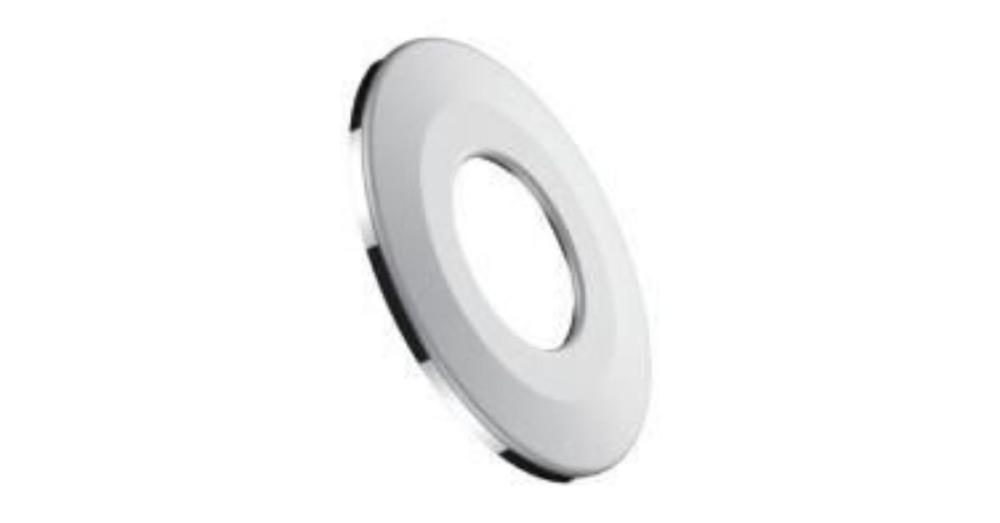
This magnetic bezel changes the finish of a compatible Mauna downlight with no screws. Meteor's page says it fits Kosnic Mauna Plus fixed LED downlights, so check that first. Handy if you want it to match your taps.
Making the Call in Four Steps
- Look at what's above the ceiling. If a fire rating is needed, choose fire-rated.
- Work out the zone and its minimum IP rating.
- Measure the cut-out and the void depth.
- Pick colour temperature, dimming and finish last.
Closing out:
Fire-rated downlights are installed to shield the ceiling from fire, while the regular downlights are installed for room lighting. Both types can be used in a bathroom, depending on the IP rating. Please note both labels, measure the cut-out size and select your preferred colour and dimming level.
When comparing fire-rated downlights and standard bathroom downlights, Meteor Electrical offers clear specifications and ships in-stock items the next business day. Browse our whole collection of bathroom lighting and other electrical equipment. Check out free delivery options and warranties today!
FAQ
Q1. Can I use a fire-rated downlight in a bathroom shower zone?
Only if the IP rating fits the zone. Fire rating and water protection are two separate things. Meteor's guide says Zone 1 needs IP65 minimum, so check both labels first.
Q2. Can fire-rated downlights be installed under loft insulation?
Many can. The Kosnic GU10 and Mauna III fire-rated models on Meteor's site are made for use under insulation. Still, read the datasheet before you install.
Q3. What IP rating do I need for a bathroom ceiling downlight?
Meteor's guide says Zone 1 needs at least IP65 and Zone 2 needs at least IP44. Zone 3, away from wet areas, is IP44 too. Always check the product label.
Q4. Is a fire-rated downlight dimmable with a standard dimmer?
Some are. The Kosnic Mauna III and Mauna Plus Tilt dim on mains dimmer switches. With GU10 housings, it depends on the lamp you fit, so check the lamp details.
Q5. Does a bathroom without borrowed light need emergency lighting?
Under BS 5266, a bathroom without borrowed light needs at least one emergency light. It's common in disabled-use bathrooms. Ask a qualified electrician about your layout.