
Information
Commercial EV Charger Installation Guide: How to Plan Multi-Charger Layouts, Containment, and Commissioning
Putting up a single domestic wall box is a relatively straightforward job that rarely tests a seasoned electrician. Kitting out a crowded retail car park or workplace facility using multiple 22kW EV charging units demands intense containment mapping, strict commissioning routines, and careful load balancing. Electrical contractors must constantly juggle the maximum electrical demand of a site alongside a scalable framework. Nobody wants to trigger nuisance tripping across a commercial estate. This guide breaks down the core phases of commercial EV charger installation to keep your team on track.
Designing durable cable routes, selecting heavy-duty hardware, and navigating the final digital commissioning flow remain fundamental steps to making your project safe and future-proof. Careful planning serves as your most valuable and profitable asset.
- Why Is Containment Planning Critical for Multiple Commercial EV Chargers?
- How Do You Design a Compliant Multi-Charger Layout and Cable Route?
- What Are the Essential Steps in the Commercial EV Commissioning Flow?
- Which Commercial EV Chargers Are Best for Multi-Unit Installations?
- Key Takeaways
- How Do Smart Billing and Back-Office Systems Operate?
- Conclusion
- Frequently Asked Questions (FAQs) About Commercial EV Charger Installation
Why Is Containment Planning Critical for Multiple Commercial EV Chargers?
Assessing Maximum Demand and DNO Capacity
Conducting a thorough site load survey is absolutely mandatory before anyone lays a single cable. Clustering multiple 22kW EV chargers drastically alters the thermal and electrical load of any commercial property. Electricians must notify the local Distribution Network Operator early in the project timeline to guarantee the local grid can handle the increased capacity. Every single 22kW unit draws approximately 32 amps per phase.
Failing to check the spare electrical capacity often results in severely overloaded circuits, damaged distribution boards, and surprise upgrade fees — charges that can cripple a project budget.
Future-Proofing with Scalable Containment
Installers should always over-spec underground ducting and cable trays during the initial groundwork phase. Laying wider containment pipes on day one allows facilities managers to easily pull new cables as the demand for electric vehicles grows. Forward-thinking approaches provide the physical space necessary to upgrade the network quickly. You also avoid loud disruptions to active car parks during later hardware additions.
How Do You Design a Compliant Multi-Charger Layout and Cable Route?
Wall-Mounted vs. Ground-Mounted Pedestals
Site surveying requires strategic thinking. Choosing the correct physical setup largely depends on your specific parking layout and available structural supports. Here is a quick comparison to help you choose the most effective physical mounting strategy:
| Installation Type | Best Used For | Key Advantages | Structural Requirements |
|---|---|---|---|
| Wall-Mounted | Perimeter parking and enclosed commercial garages | Minimises expensive groundwork and trenching costs | Sturdy existing perimeter brickwork or concrete walls |
| EV ground mounted charger | Open-bay retail parks and expansive workplace lots | Highly visible and easily accessible from multiple parking angles | Deep concrete plinths to prevent heavy hardware from leaning |
Cable Segregation and Physical Protection
High-traffic commercial zones demand exceptional physical protection around all electrical wiring. Galvanised steel trunking or Steel Wired Armour (SWA) cables provide the ultimate defence against accidental vehicle impacts and severe weather degradation. Installers must strictly follow the latest BS 7671 regulations regarding cable segregation. You are required to physically separate high-voltage power cables from the low-voltage data cables required to maintain smart network communication.
Keeping these lines apart prevents dangerous electromagnetic interference from scrambling your essential billing data.
Source - eFIXX
What Are the Essential Steps in the Commercial EV Commissioning Flow?
Digital and electrical commissioning represents the final step of commercial EV charger installation. You must execute several key tasks to get the system online safely:
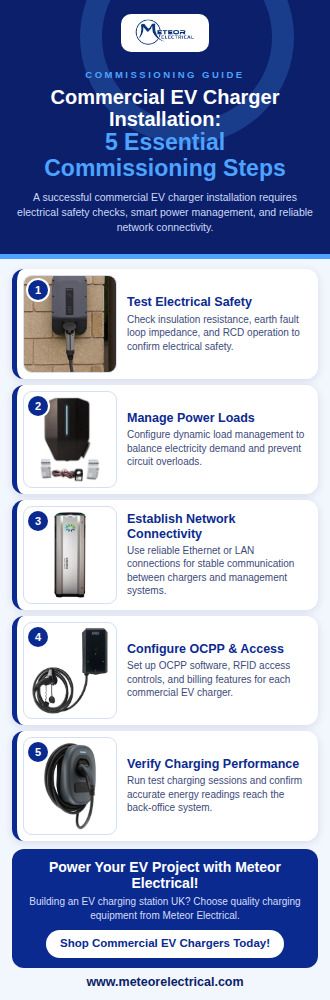
- Pre-Commissioning Electrical Testing: Execute mandatory dead and live testing phases to protect the entire building and its occupants. Electricians must perform earth loop impedance tests, thorough insulation resistance checks at 500V, and verify the correct operation of integrated Type A or Type B RCDs.
- Implement Dynamic Load Management: Dynamic load management technology actively monitors a building’s overall power consumption and adjusts the energy distributed to the chargers in real time. The system automatically lowers the charging rate whenever the building's main HVAC or lighting systems spike. Such intelligent software prevents dangerous overloads across the entire electric vehicle charging network while maximising vehicle uptime.
- Establish Network Connectivity: Connect the chargers directly to the local network using hardwired Ethernet or LAN. Hardwiring provides a vastly more stable and secure network connection than standard Wi-Fi in dense concrete structures.
- Configure OCPP and Access Control: Configure the Open Charge Point Protocol back-office settings to link the hardware to your chosen software platform. You can then assign specific RFID cards to manage secure employee access or public billing.
- Execute Test Sessions: Run a final test charging session using an EV simulator or an actual vehicle. You must verify that the kilowatt-hour metering data transmits accurately to the back office before handing the site over to the client.
Did You Know - Integrating dynamic load management can allow you to safely install up to four times as many charge points on your existing power supply compared to an unmanaged setup?
Which Commercial EV Chargers Are Best for Multi-Unit Installations?
Trade professionals rely on high-spec hardware to guarantee regulatory compliance, durability, and smooth load management across multiple bays. Here are the top-tier units for your next commercial EV charger project available at Meteor Electrical:
1. GARO LS4 2 x 22kW Outlets Metered LAN EV Ground Mounted Charger
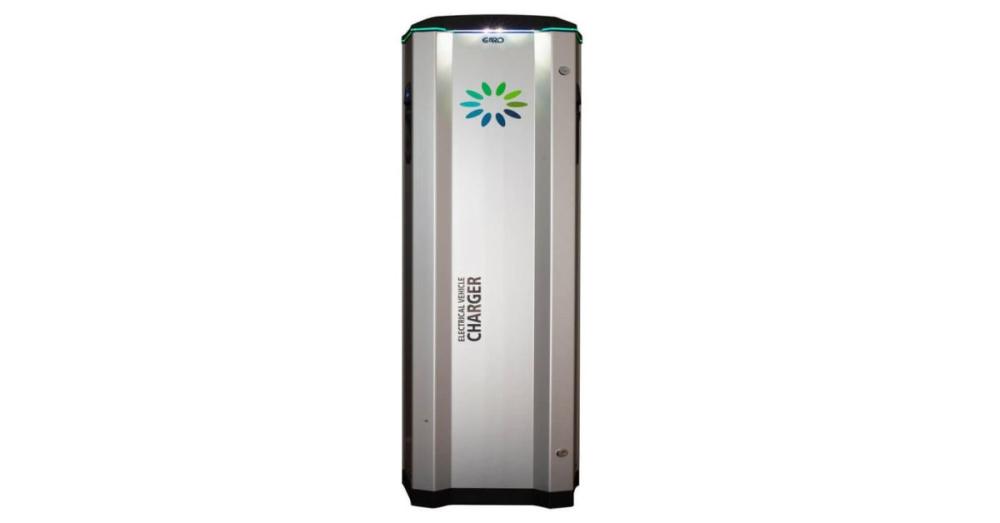
Engineered specifically to survive heavy-duty public environments, this dual-outlet pedestal can charge two vehicles simultaneously at a rapid 22kW. Constructed from marine-grade aluminium — it is highly resistant to vandalism and extreme weather. It serves as the go-to hardware solution for open-air retail parks operating on a three-phase supply.
- Dual Type 2 sockets delivering a massive 44kW total output.
- Built-in LAN connectivity and strict OCPP 1.6 compliance.
- Integrated MID metering to provide highly accurate billing data.
- Clever 360-degree LED status indicators visible from afar in busy car parks.
2. GARO 2 x 22kW Outlets Metered Ethernet Charger
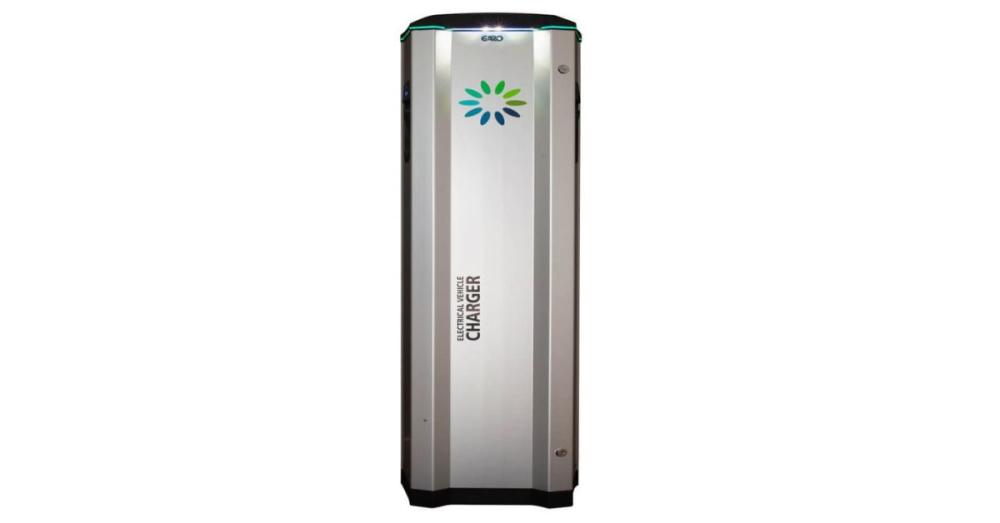
A robust and high-performance commercial EV charger designed to maximise available space across busy commercial settings. Featuring dual 22kW outlets, the unit is perfect to provide rapid power to employee fleets or high-turnover visitor parking.
- Two 22kW Type 2 sockets delivering exceptionally rapid power.
- Stable Ethernet connection to maintain flawless back-office communication.
- Integrated dynamic load management capabilities to protect your main fuse.
- Highly durable commercial casing built to last through harsh winters.
Key Takeaways
- Before starting a commercial EV charger installation, assess the site's electrical capacity and consult the Distribution Network Operator (DNO) to confirm the available power supply.
- Plan scalable underground ducting, cable trays, and wiring routes to support multiple EV chargers and allow for future expansion without major groundwork.
- Choose durable commercial EV chargers with suitable power ratings, MID metering, Ethernet connectivity, and OCPP compatibility for reliable performance.
- Implement dynamic load management to distribute electrical power efficiently across multiple charging points and prevent overloading the building's electrical supply.
- Complete all necessary electrical safety tests, verify network connectivity, configure access controls, and conduct test charging sessions before commissioning the system.
- Integrate RFID access control, smart billing software, and OCPP-enabled back-office systems to manage employee charging and support public charging payments.
How Do Smart Billing and Back-Office Systems Operate?
RFID Access and Employee Tariffs
Networked charging systems offer incredible administrative control over your electrical infrastructure. Facilities managers can issue dedicated RFID tags to specific staff members to enable closed-network charging. Using these tags allows businesses to offer discounted employee tariffs as an attractive workplace perk while tracking exactly who consumes power.
Restricting access in such a highly controlled manner completely prevents unauthorised public use. It also actively protects corporate EV chargers & accessories from being physically blocked by loitering vehicles overnight.
Public Monetisation via OCPP
Open Charge Point Protocol compliance unlocks major financial benefits to property owners. Businesses can link their hardware to third-party payment gateways smoothly and securely without being locked into one software vendor. Setting customised per-kWh tariffs to charge public drivers allows property owners to generate a brand new and highly reliable revenue stream.
Installing a fully networked commercial EV charger essentially transforms a standard parking bay into a highly profitable digital asset — generating passive income while drivers shop or work.
Conclusion
Successfully executing a commercial EV charger installation requires far more than just wiring a heavy-duty plug. It demands strategic containment planning, a firm grasp of network commissioning, and the deployment of rugged multi-socket hardware. Prioritising scalable infrastructure and dynamic load management allows you to build a reliable EV charging station UK network that easily evolves alongside client needs. Every successful installation requires dependable materials that will not let you down in the field.
Meteor Electrical is your premier wholesale partner. We supply heavily vetted hardware and containment solutions to contractors and facilities managers across the UK and Europe. We stock the exact components required to build safe, profitable, and highly resilient transport networks.
Ready to upgrade your commercial car park? Shop commercial EV chargers online today and secure rapid delivery direct to your site!
Explore the range at Meteor Electrical
Browse our range of commercial EV chargers, electrical equipment and installation accessories on the:
Visit Meteor ElectricalBrowse EV ChargersFrequently Asked Questions (FAQs) About Commercial EV Charger Installation
1) Do I need a three-phase power supply for commercial EV chargers?
Achieving fast 22kW charging speeds in commercial spaces strictly requires a robust three-phase electrical supply to handle the heavy current draw safely without overloading the building.
2) What is the difference between static and dynamic load management?
Static management strictly caps chargers at a fixed power limit. Dynamic management actively reads the live power usage of the entire building and diverts all available spare power to the vehicles moment by moment.
3) Why is LAN/Ethernet preferred over Wi-Fi for commercial EV chargers?
Hardwired connections provide a vastly more stable and secure network — preventing frustrating signal drops in dense concrete car parks and keeping billing software online continuously.
4) What does OCPP compliance mean for a facilities manager?
OCPP compliance means the hardware is not locked to a single software provider. Facilities managers can freely switch their billing and monitoring platforms at any time to set specific user tariffs.
5) How deep should underground ducting be for EV charger cables?
Underground power cables must be buried at a sufficient depth to avoid accidental damage — typically at least 600mm deep in general areas and deeper under commercial roadways subject to heavy vehicular traffic.