
What Is the Best Electrical Cable for Office Wiring? A Commercial Guide to Sizing, Safety, and Fire-Resistant Solutions
What Is the Best Electrical Cable for Office Wiring? A Commercial Guide to Sizing, Safety, and Fire-Resistant Solutions
Outfitting a commercial workspace requires significantly more thought than wiring a domestic property. Office environments demand durable materials capable of handling continuous electrical loads while strictly adhering to commercial safety regulations. Finding the best electrical cable for office wiring means balancing everyday power delivery with critical fire safety. Modern commercial buildings rely on robust infrastructure to support dense server networks, high-output workstation lighting, and life-saving emergency systems.
Commercial contractors and facilities managers often ask - "What cable specifications are legally mandated for commercial office fit-outs under BS 7671?" This guide provides electricians and facilities managers with essential buying and installation guidance. We explore core safety requirements, the importance of fire-resistant materials, and how to select the right electrical cable for UK offices to ensure long-term regulatory compliance.
What Are the Key Requirements for an Electrical Cable for Office Wiring?
Commercial office environments pose unique electrical demands compared to residential dwellings. Choosing an electrical cable for office wiring requires an in-depth understanding of constant loads and statutory guidelines. Determining the best electrical cable requires balancing conductor ampacity, insulation material, and fire performance across diverse workspace zones.
Handling Continuous Commercial Loads
Unlike domestic properties where power use peaks during brief morning and evening hours, commercial office spaces experience relentless power draw. Hundreds of desktop computers, continuous LED arrays, multifunction copiers, and heavy HVAC units run simultaneously for ten to twelve hours straight. Standard building wiring can experience significant thermal strain under such heavy duty cycles.
Conductors must possess exceptional thermal endurance to dissipate heat effectively, preventing localised hot spots and premature insulation breakdown.
Strict Regulatory Compliance (BS 7671)
Every fixed installation in the UK must adhere strictly to the 18th Edition wiring regulations (BS 7671:2018+A2:2022). In high-occupancy commercial properties, inspectors review cable construction, current-carrying capacities, and containment methods. Compliance ensures that conductors remain completely safe within enclosed risers, ceiling voids, and partition stud walls without creating hidden fire risks or excessive voltage drop.
Why Are Fire-Resistant Cables Essential for UK Offices?
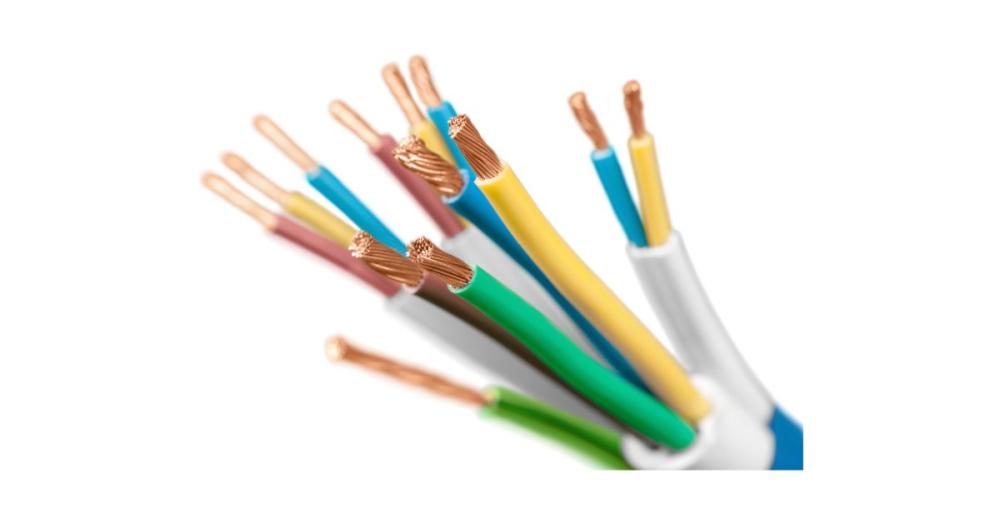
Modern workplace design prioritises open floor plans and rapid emergency evacuation. The materials hidden inside your ceiling voids and containment systems play a direct role in human life safety during an incident. Facilities managers frequently ask - "What are the legal requirements for installing LSZH and fire-resistant cables in commercial buildings?" The answer centres around smoke toxicity and system survivability.
The Danger of Toxic Smoke Emissions
Traditional cables insulated with standard PVC release thick black smoke and acidic halogen gases when subjected to open flames. In a confined commercial building, hydrogen chloride gas obscures emergency exit signs and burns the respiratory tracts of escaping occupants.
Low Smoke Zero Halogen (LSZH) cables replace toxic compounds with thermoplastic mixtures that generate minimal light smoke and zero acid fumes. This protects personnel and preserves valuable electronics from corrosive soot.
Maintaining Circuit Integrity During an Emergency
Fire-resistant (FR) cables go a step further than standard LSZH variants. Engineered with fire-barrier tapes such as mica glass, these cables continue conducting electricity even while directly exposed to flames exceeding 800°C. They preserve circuit integrity for critical life-safety assets, including voice evacuation alarms, emergency stairwell illumination, fire dampeners, and smoke extraction fans.
How Do You Choose the Right Cable Sizes for Office Applications?
Selecting conductor dimensions is a delicate calculation involving continuous current, installation method, thermal insulation, and voltage drop limits. Choosing the right cable requires tailoring conductor cross-sections directly to expected socket loads and lighting schemes.
1.5mm and 2.5mm Cables for Lighting and Workstations
Lighting circuits throughout modern commercial premises almost universally utilise energy-efficient LED luminaires. A 1.5mm² conductor is typically ideal for commercial LED lighting circuits, safely handling the lower operating wattage while providing sufficient physical strength across long ceiling spans.
Meanwhile, standard 230V workstation power points and perimeter dado trunking rely on 2.5mm² conductors. When arranged in a standard 32A commercial ring final circuit, 2.5mm² cabling accommodates desktop computers, monitor banks, and peripheral equipment across several desk pods without nuisance tripping.
Heavy-Duty Cables for Server Rooms and HVAC
Dedicated communications rooms, centralised server racks, and central air conditioning compressors demand substantial continuous energy. Running these appliances on undersized conductors causes significant voltage drop and severe heat buildup. Electricians specify heavier sub-main conductors, such as 6.0mm², 10.0mm², or even 16.0mm² multi-core cables, to deliver steady voltage, isolate noisy motor loads from sensitive data devices, and prevent high-resistance joints.
Source - eFIXX
What Are the Common Mistakes to Avoid During Office Cable Installation?
Even premium wiring can underperform or create hazards if site teams cut corners during installation. Avoiding standard pitfalls guarantees system longevity and smooth handovers.
Did You Know: Overfilling cable trays beyond the 45% space factor can cause operating temperatures to rise dramatically, increasing conductor resistance and wasting up to 10% more energy through thermal dissipation?
Ignoring Proper Cable Segregation
Running low-voltage structured data cabling like Cat6 or Cat6a right beside high-voltage mains power within unshielded channels creates electromagnetic interference (EMI). This crosstalk disrupts network speeds, drops VoIP calls, and corrupts data packets.
BS 7671 regulations require physical segregation between Band I (telecommunications/data) and Band II (mains power) circuits, achievable using multi-compartment trunking or earthed metal dividers.
Overfilling Cable Trunking and Trays
Cramming multiple circuits into tight containment enclosures restricts heat dissipation. Installers must always apply the 45% space factor rule, ensuring that at least 55% of the interior void remains open. This practice prevents thermal hotspots, protects outer insulation jackets from crushing, and provides essential physical capacity for future tenant modifications.
What Are the Top Electrical Cables for Your Next Office Project?
To guarantee regulatory compliance and maximum safety for high-occupancy workspaces, you need trade-trusted supplies. Meteor Electrical offers a premium range of fire-resistant and LSF cables designed specifically for demanding commercial environments. Here are top recommendations:
1. 2 Core + Earth 1.5mm Red Fire Resistant Cable (100m Reel)
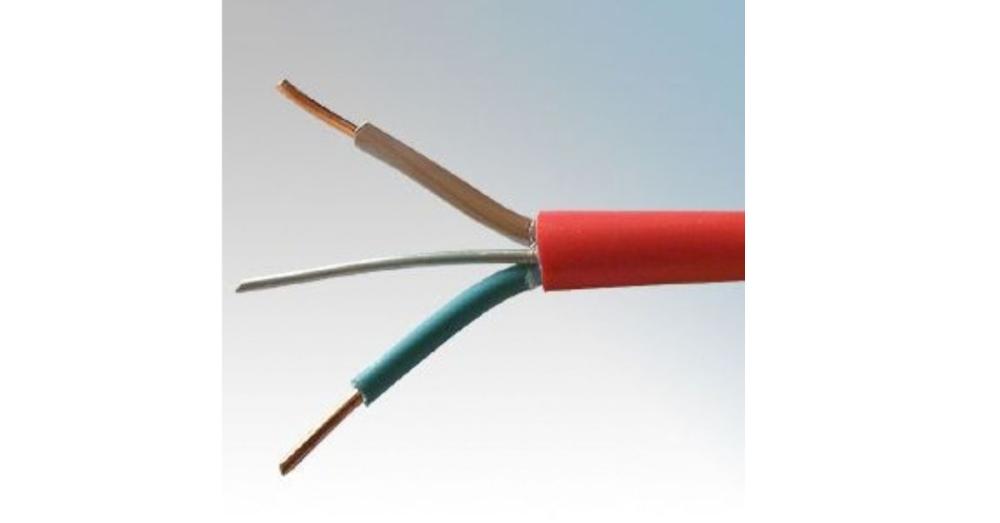
Designed specifically for critical life safety loops, this high-integrity cable delivers uncompromised performance under high-heat emergencies. It provides the ideal containment solution for emergency lighting and alarm sounders across small to medium-sized commercial premises.
- Halogen-free thermoplastic compound preventing toxic gas emissions
- PH60 fire resistance rating guaranteeing 60 minutes of circuit integrity
- Solid copper conductors with an easy-strip sheath for rapid terminations
- Fully compliant with BS 5839-1 and BS EN 50200 standards
Shop 2 Core + Earth 1.5mm Red Fire Resistant Cable 100m
2. 2 Core + Earth 1.5mm Red Fire Resistant Cable (500m Reel)
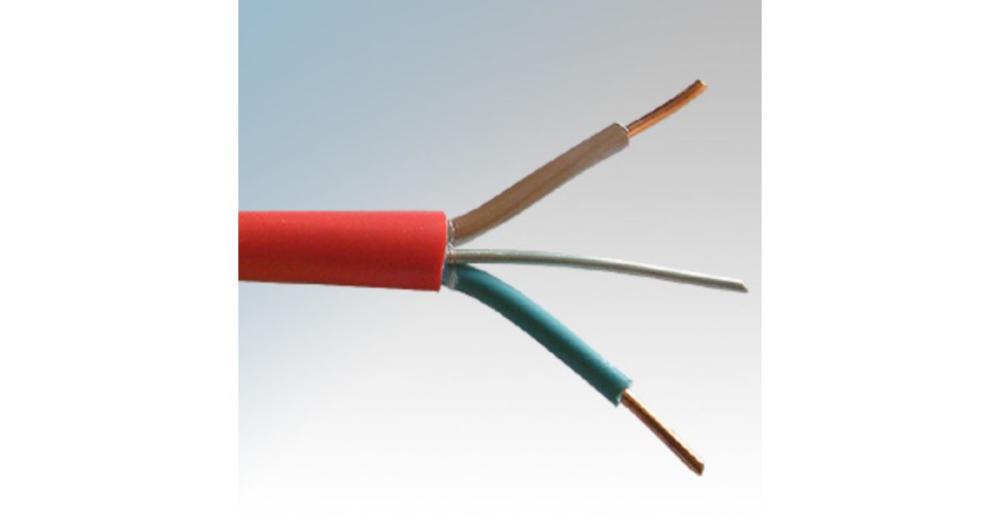
Large multi-storey corporate fit-outs demand long continuous cable runs to minimise junction boxes and termination joints. This 500-metre bulk drum is engineered for extensive emergency lighting grids and addressable fire detection networks spanning multiple office floors.
- Cost-effective bulk sizing for continuous, splice-free commercial pulls
- Low smoke and zero fume properties for safer occupant egress
- Robust electrostatic aluminium screening protecting against signal interference
- Certified for harsh emergency environments under standard commercial codes
Shop 2 Core + Earth 1.5mm Red Fire Resistant Cable 500m
3. 1.5mm LSF Twin & Insulated Earth Cable (100m)
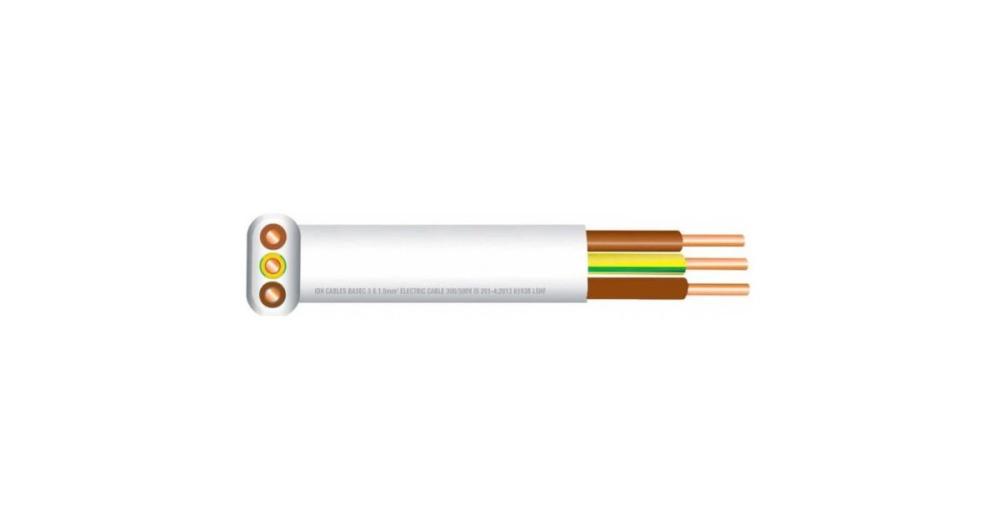
General fixed office wiring in occupied public spaces requires enhanced safety materials. This 1.5mm Low Smoke and Fume cable is tailored for office ceiling grids, modern LED downlights, and light commercial distribution boards where toxic smoke elimination is critical.
- Low Smoke Zero Halogen outer sheathing emitting negligible acidic smoke
- High-grade solid plain copper cores ensuring stable conductivity
- Includes a fully insulated green and yellow earth core for faster installation
- BASEC approved and fully aligned with modern UK commercial wiring codes
Shop 1.5mm LSF Twin & Insulated Earth Cable
Conclusion: Ready to Secure Your Office Wiring Project?
Selecting the best electrical cable for office wiring goes beyond simply carrying a current. It involves prioritizing employee safety, ensuring data integrity through proper segregation, and meeting strict commercial fire safety regulations. Sizing conductors correctly and choosing LSZH or fire-resistant sheathing safeguards property, secures network reliability, and protects human lives.
When mapping out your next commercial fit-out, you need an electrical wholesaler that understands the rigorous demands of the trade. Meteor Electrical is your premier partner for trade-grade electrical supplies.
Shop the full range of fire-resistant and commercial cables at Meteor Electrical today for competitive trade prices and reliable next-day delivery!
Frequently Asked Questions (FAQs) About Office Wiring
1) What is the best electrical cable for office wiring?
The best choice combines LSZH twin and earth cables for general power and lighting circuits with PH60 or PH120 rated fire-resistant cables for emergency systems.
2) Why is an electrical cable for UK offices required to be low smoke?
UK commercial regulations require LSZH materials to prevent dense black smoke and toxic acidic fumes from obstructing escape routes and harming occupants during an evacuation.
3) Can I run data and power cables in the same office trunking?
Only if you use multi-compartment trunking with physical dividers, as power cables emit electromagnetic interference that degrades network speeds and corrupts data signals.
4) What cable size is standard for office plug sockets?
Standard commercial ring final circuits supplying office workstations and desk modules typically use 2.5mm² copper cables protected by a 32A circuit breaker.
5) How long do fire-resistant cables remain operational during a blaze?
Certified fire-resistant cables typically offer PH60 or PH120 ratings, maintaining essential circuit integrity for 60 to 120 minutes during extreme fire conditions.
Key Takeaways: Best Electrical Cable for Office Wiring
- Choosing the right office electrical cable requires balancing safety, load capacity, and compliance with commercial wiring standards such as BS 7671.
- Fire-resistant and LSZH cables are essential for modern offices because they reduce toxic smoke emissions and help maintain circuit operation during emergencies.
- Correct cable sizing prevents overheating, voltage drops, and electrical failures, with common office applications using 1.5mm² cables for lighting and 2.5mm² cables for workstation power circuits.
- High-demand areas such as server rooms and HVAC systems require heavier-duty cables to safely handle continuous electrical loads and protect sensitive equipment.
- Proper installation practices matter as much as cable quality, including correct cable segregation, avoiding overloaded trays, and maintaining safe thermal conditions.
- Selecting trade-approved fire-resistant and LSF cables helps create safer, compliant, and reliable office electrical systems while supporting long-term performance.