
Protect Your Electrical Equipment: How A Heat Aerosol Fire Extinguishing Device Helps Put Out Electrical Fires
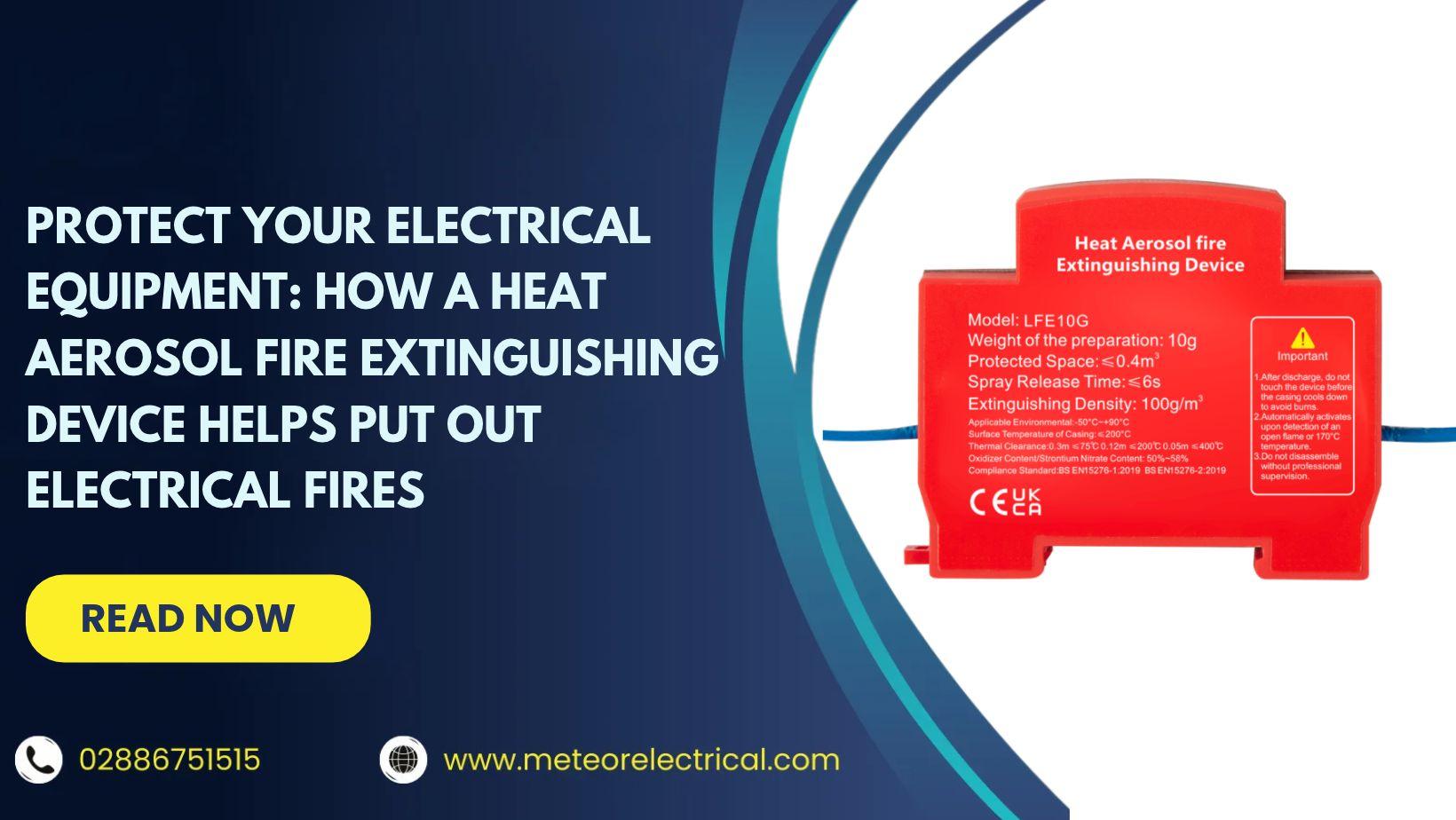
Protect Your Electrical Equipment: How A Heat Aerosol Fire Extinguishing Device Helps Put Out Electrical Fires
Electrical enclosures represent the nerve centres of commercial and industrial infrastructure. Whether managing a main distribution board, an industrial motor control centre, or a compact consumer unit, these metal and plastic cabinets concentrate enormous electrical energy into tightly confined volumes. When terminal screws loosen over time, or when harmonic distortion and continuous overcurrent create excessive heat, thermal overloads occur quickly.
Facilities managers often ask - "What is the most effective automatic fire suppression method for electrical panels?" Deploying an autonomous Heat Aerosol Fire Extinguishing Device resolves this operational vulnerability by suppressing thermal emergencies inside the enclosure before downtime cripples facility operations.
What Are the Main Hazards of Electrical Fires in Enclosed Spaces?
Enclosed electrical assemblies create micro-climates where thermal energy accumulates rapidly. When air circulation is restricted, a small electrical failure quickly escalates into a self-sustaining combustion event.
Identifying Overloads and Short Circuits
Overcurrent faults and short circuits generate intense, localised heat spikes within fractions of a second. In crowded distribution boards, these thermal surges create several dangerous pathways to ignition:
- Insulation Degradation - Prolonged thermal stress weakens PVC and XLPE cable sheathing, turning flexible insulation into brittle, combustible fuel.
- Loose Terminations - Cyclic thermal expansion and mechanical vibration loosen busbar connections and terminal cages, sparking resistive micro-arcs that reach temperatures exceeding several hundred degrees Celsius.
- Component Breakdown - Overdriven relays, contactors, and miniature circuit breakers experience internal dielectric breakdown, triggering runaway arcing within the switchgear housing.
Once ignition occurs within an enclosed casing, electrical fires spread rapidly across adjacent wiring looms, transforming a single failing component into an aggressive internal fire.
The High Cost of Collateral Equipment Damage
The initial electrical failure rarely represents the largest financial expense for a business. The destructive aftermath of the blaze often incurs far greater costs:
- Corrosive Soot Deposition - Combustion produces acidic, conductive smoke that deposits micro-particulates across neighbouring circuit boards, causing irreversible insulation tracking and future flashovers.
- Destructive Suppression Residue - Standard dry chemical powders contain monoammonium phosphate, an abrasive salt that melts upon contact with hot surfaces and corrodes copper busbars beyond recovery.
- Extended Business Interruption - Sourcing custom panels, rebuilding wire harnesses, and recertifying an entire distribution board under emergency conditions can halt production lines for weeks.
How Can You Protect Electrical Equipment from Fire?
Effective fire defence demands a fundamental shift from building-level detection to localised, equipment-level containment. Protecting sensitive electronics requires containment methods that work immediately without causing secondary contamination.
A common concern comes up here - "How can engineers protect electrical equipment from fire inside distribution cabinets without causing water or powder damage?" The answer lies in targeted automation.
Traditional Suppression vs. Clean Automation
Manual firefighting requires human intervention, but electrical panels are typically locked and located in unoccupied utility cupboards. By the time a wall-mounted extinguisher is fetched, the internal damage is complete. Furthermore, standard ABC powder leaves a destructive mess that ruins nearby circuitry, while water-based agents present severe electrocution risks.
In contrast, clean automated solutions monitor the enclosure continuously. They discharge non-conductive, residue-free agents right at the ignition point, putting out the fire in seconds while leaving nearby electronics clean and operational.
Upgrading Your Electrical Fire Safety Strategy
Modern electrical fire safety standards rely on defence-in-depth engineering. Facilities teams should implement a multi-layered defence protocol:
- Infrared Thermography - Perform bi-annual thermal imaging surveys to detect high-resistance joints and hot terminations prior to failure.
- Torque Verification Audits - Ensure all circuit breaker terminations and busbar link screws adhere to manufacturer torque specifications.
- Point-of-Hazard Suppression - Install a self-activating electrical fire extinguisher inside each high-risk cubicle to catch failures the moment protective switchgear cannot interrupt a thermal event.
Source - Live Electrical Distribution UK Ltd
How Does A Heat Aerosol Fire Extinguishing Device Work?
Aerosol extinguishing represents an advanced leap in active fire engineering. Rather than simply displacing oxygen or spraying liquid coolants, it neutralises the chemical combustion process directly.
Automatic Temperature-Sensing Activation
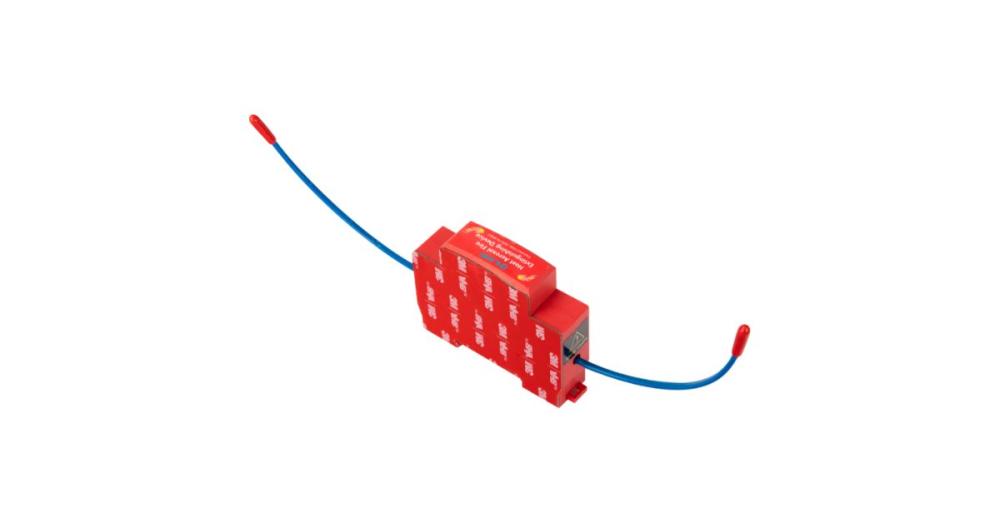
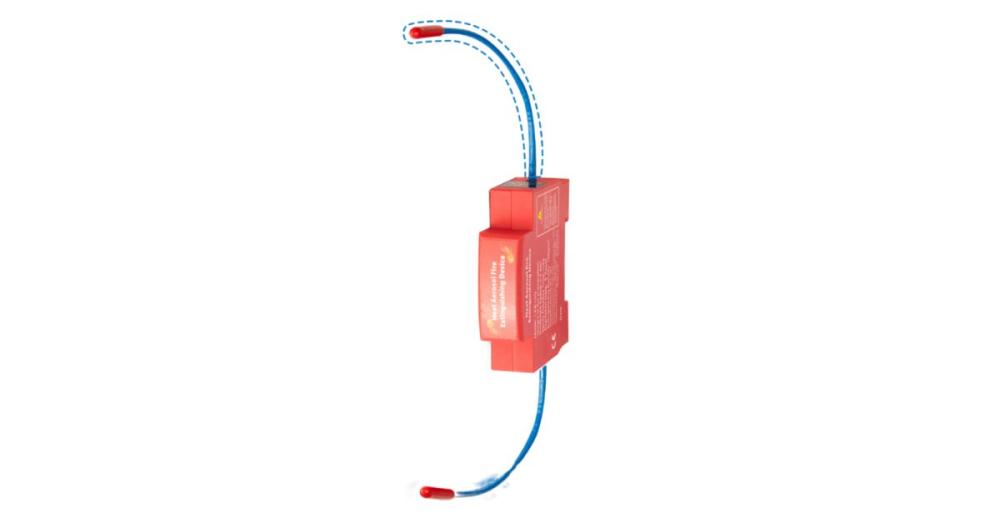
The device operates via a thermal-activation cord routed through the critical heat zones of an electrical panel.
- The temperature-sensing wire acts as an autonomous mechanical trigger that activates when exposed to a specific thermal threshold.
- Because the activation mechanism is entirely thermal, it does not rely on external power, PLC signals, batteries, or auxiliary relays.
- It remains permanently primed, providing 24/7 autonomous protection even during complete facility power blackouts.
Did You Know - Aerosol fire extinguishing agents do not extinguish flames by displacing oxygen, but instead neutralise the free radicals of the combustion reaction at a molecular level?
Fast-Acting, Residue-Free Suppression
When the thermal wire triggers the device, it discharges a clean, condensed aerosol within 6 seconds or less. The formulation uses a 50% to 58% strontium nitrate oxidiser mix that breaks the combustion chain:
- Molecular Free-Radical Scavenging - Strontium radicals bind directly with free oxygen and hydrogen radicals within the flame front, stopping combustion instantaneously.
- Safe for Delicate Electronics - The aerosol produces ultra-fine particulates that remain suspended in the air without coating delicate relay contacts in corrosive cakes.
- Oxygen Preservation - Ambient oxygen levels remain unaffected, keeping enclosed equipment rooms safe for entering service technicians.
Why Is DIN-Rail Mounting Essential for Rapid Installation?
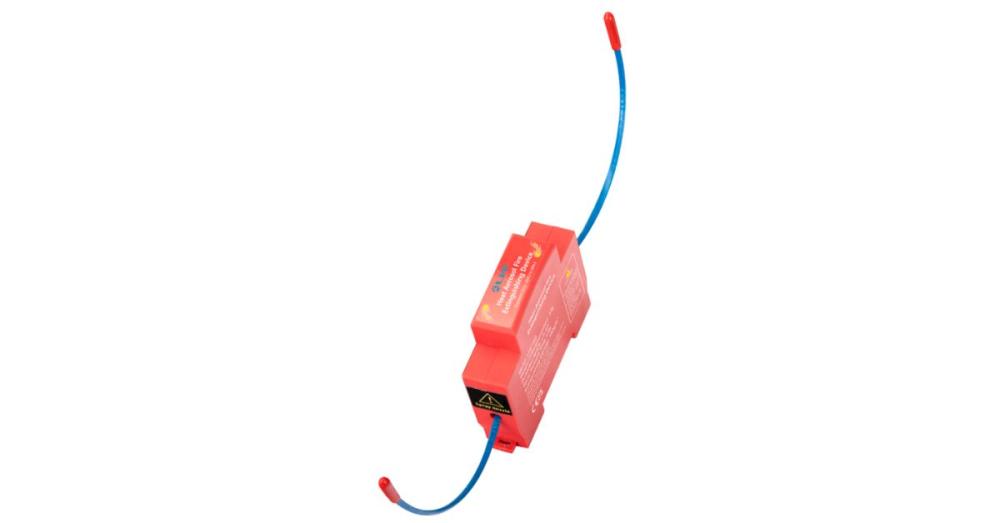
In commercial panel building, installation efficiency and neatness are critical. Fire suppression hardware must fit into standard enclosures without requiring bespoke engineering.
Seamless Integration for Electricians
Specifying hardware with standard 35 mm DIN-rail mounting streamlines retrofitting dramatically:
- Standard Form Factor - Snaps directly onto standard 35 mm top-hat DIN rails alongside existing breakers, contactors, and terminal blocks.
- No Enclosure Alterations - Eliminates the need to drill external casing walls, punch knockouts, or bolt external brackets, preserving the IP rating and manufacturer warranty of the switchboard.
- Zero Space Waste - Its compact footprint fits inside cramped enclosures where traditional suppression canisters cannot be positioned.
Reliable Protection in Extreme Environments
Electrical infrastructure must function across difficult, unpredictable environments. The unit delivers exceptional operational versatility:
- Protected Volume - Efficiently defends small enclosed spaces up to 0.1 m³, matching standard panel volumes.
- Wide Operating Range - Operates reliably in extreme temperatures ranging from -50°C to +90°C, making it resilient in plant rooms, outdoor kiosks, and unheated substations.
- High Humidity Tolerance - Withstands relative humidity levels up to 95% RH without false triggering or compound degradation.
Which Electrical Fire Extinguisher Should You Choose for Your Project?
For contractors seeking certified components, selecting an established, high-grade suppression module is vital to safeguard high-value infrastructure.
Introducing the Live Electrical Heat Aerosol Fire Extinguishing Device
Engineered for compact enclosures, control cabinets, and distribution boards, the Live Electrical Heat Aerosol Fire Extinguishing Device provides fully autonomous protection against electrical fires without needing complicated electrical controls or regular maintenance visits.
- Rapid Discharge Cycle - Extinguishing aerosol deploys in 6 seconds or less for instant flame knockdown.
- Residue-Free Clean Agent - Strontium nitrate compound (50%–58%) neutralises flames without leaving damaging residue on delicate switchgear.
- Modular DIN Integration - Standard 35 mm DIN-rail mount design allows rapid snap-on installation inside existing consumer units.
- Broad Environmental Rating - Performs across extreme temperatures from -50°C to +90°C and humidity levels up to 95% RH.
- Fail-Safe Operation - Autonomous temperature-sensing activation wire eliminates reliance on external battery packs or power supplies.
Shop the Live Electrical Heat Aerosol Fire Extinguishing Device
Key Takeaways
- Electrical fires inside enclosed panels can escalate quickly, especially when caused by loose connections, overloads, short circuits, or component failure.
- Traditional suppression methods can create additional damage, with water presenting electrical risks and dry chemical powders potentially harming sensitive components.
- The Heat Aerosol Fire Extinguishing Device provides automatic, point-of-hazard fire suppression directly inside electrical enclosures.
- Its temperature-sensing activation system works independently of external power, allowing continuous protection even during power failures.
- The device delivers rapid, residue-free aerosol suppression, helping control fire without coating nearby electrical equipment in corrosive material.
- With DIN-rail mounting, compact dimensions, and a wide operating temperature range, the device is suitable for distribution boards, control cabinets, plant rooms, kiosks, and similar installations.
Conclusion
Securing sensitive distribution equipment against unexpected thermal events is essential for modern installations. Integrating the Live Electrical Heat Aerosol Fire Extinguishing Device gives electrical professionals a reliable, zero-maintenance tool to contain switchboard fires at the initial point of ignition. By isolating thermal runaways within the cabinet, contractors safeguard client infrastructure, protect against expensive collateral hardware destruction, and maintain maximum facility uptime.
When sourcing trade-grade safety equipment, panel builders, electricians, and facilities managers require verified stock availability, rapid turnaround, and competitive commercial pricing. Meteor Electrical stands as your premier online wholesale distributor across the UK and Ireland, stocking trade-ready fire safety, circuit protection, and industrial control supplies.
Partner with Meteor Electrical for your commercial projects to access comprehensive product inventory, dedicated trade support and dependable next-day delivery.
Frequently Asked Questions (FAQs) About Heat Aerosol Fire Extinguishing Device
1) How does an aerosol electrical fire extinguisher work?
It releases an ultra-fine strontium nitrate aerosol that interrupts flame chemistry at the molecular level, stopping combustion within 6 seconds without reducing ambient oxygen.
2) Is the Heat Aerosol Fire Extinguishing Device safe for sensitive electrical components?
Yes, the discharged aerosol is clean, non-conductive, and non-corrosive, leaving no sticky residue that could harm busbars, microprocessors, or terminal points.
3) What size enclosure can this aerosol device effectively protect?
A single compact unit is engineered to protect sealed electrical cabinets and enclosures up to 0.1 cubic metres (≤ 0.1 m³).
4) Do I need specialised tools for DIN-rail mounting?
No, the device clips straight onto any standard 35 mm DIN rail, allowing electricians to secure it inside consumer units without specialised mounting plates.
5) Does this electrical fire extinguisher require ongoing maintenance?
No, it is a fully sealed, maintenance-free device that monitors the cabinet passively via a thermal wire, remaining functional without periodic pressure testing or refills.