
Electric Water Heaters Buying Guide: Point‑of‑Use vs Storage, Sizing & Recovery Time
Electric Water Heaters Buying Guide: Point‑of‑Use vs Storage, Sizing & Recovery Time
If you have ever ended up with lukewarm water halfway through a busy morning, you already know that choosing the right hot water system matters. This includes comparing practical hot water options, especially where reliability, running costs, and ease of installation all count. In this blog, we break down the essentials of electric water heaters, including the difference between point-of-use and storage models, how to size a unit properly, and why recovery time matters more than many buyers realise.
If you are comparing products for a home, office, washroom, or light commercial space, this guide is designed for homeowners, electricians, and facilities managers who want to make a more informed choice with confidence.
Electric Water Heaters Buying Guide - How to Choose the Right System for Your Property
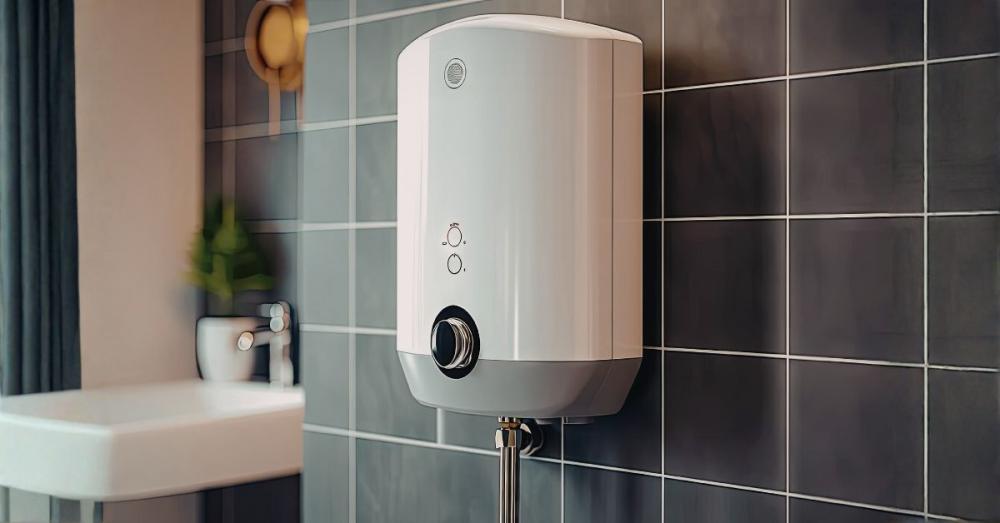
When it comes to electric water heaters, the best buying decision usually comes down to three things - heater type, sizing, and recovery time. Get those right, and you are far more likely to end up with dependable hot water and sensible operating costs.
A smart buyer does not just look at tank size or price. They also ask how the unit will be used, how many outlets need hot water, and whether the system can cope at peak times.
The Three Key Buying Factors - Heater Type, Sizing, and Recovery Time
- Heater type decides where and how water is heated.
- Sizing determines whether the system can meet daily hot water demand.
- Recovery time shows how quickly a storage unit reheats after use.
Point-of-Use vs Storage Electric Water Heaters - Which Is Better for Your Site?
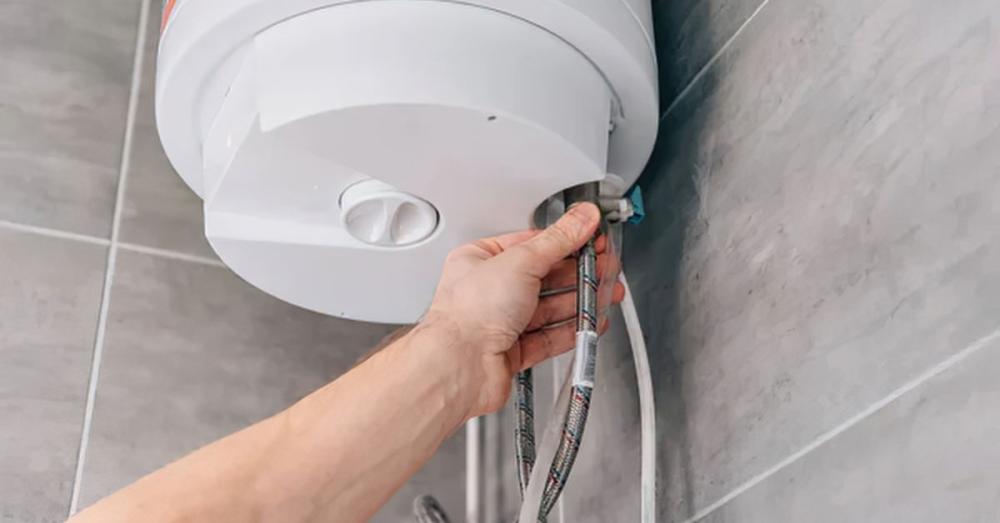
In simple terms, a point-of-use water heater is designed to heat water close to the tap, often under a sink or near a single outlet. A storage water heater keeps a tank of hot water ready for use, which makes it a better fit where several people may need hot water throughout the day.
Point-of-use models are great when you want faster delivery, less pipe heat loss, and less wasted water while waiting for the tap to warm up. That can make them an excellent choice if you want an energy-efficient electric water heater for a single basin, kitchenette, or ensuite.
Storage units, on the other hand, make more sense when demand is repeated or shared across multiple users.
Source - eFIXX
Main Differences in Installation Location, Hot Water Delivery, Wait Time, and Daily Usage Pattern
- Point-of-use units sit close to the outlet and heat on demand.
- Storage units hold pre-heated water in a tank for quicker access during repeated use.
- Point-of-use is ideal for localised demand, while storage suits clustered demand.
- Storage systems usually offer better continuity where usage happens in bursts.
Best Applications for Each Type
- Under-sink use, hand-wash basins, and compact kitchens often suit point-of-use.
- Shared washrooms, staff areas, and light commercial spaces often suit storage.
- Ensuites can work with either option, depending on flow rate and demand.
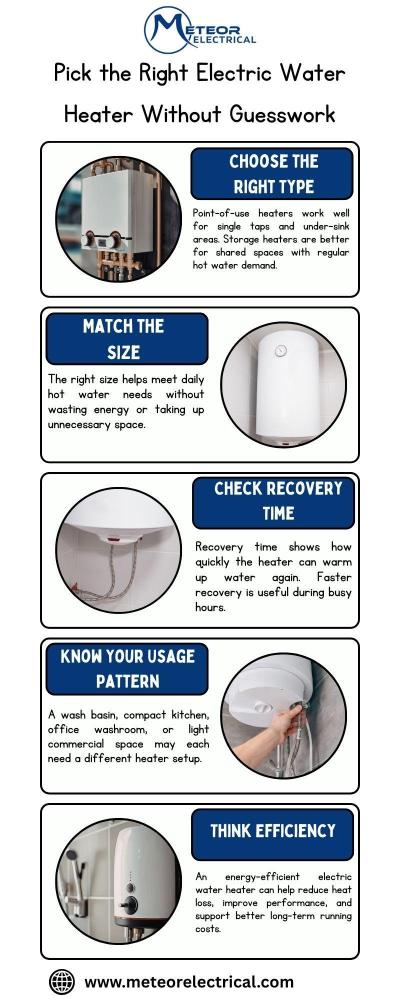
How to Size Electric Water Heaters: Capacity, First-Hour Rating, and Recovery Time
Sizing starts with one question - how much hot water do you actually need at your busiest time? That is more useful than looking only at overall daily use. A unit may seem adequate on paper but still struggle if several outlets call for hot water within the same hour.
Capacity Explained - Why Tank Volume Should Match How Many Outlets or Users Need Hot Water
Capacity is the amount of water the unit can hold, usually measured in litres. A smaller tank may be perfect for one sink, while larger requirements need more stored volume or a better recovery profile.
Did You Know – A compact heater with the right recovery rate can sometimes outperform a larger tank in staggered-use environments?
First-Hour Rating Explained for Storage Electric Water Heaters
First-hour rating tells you how much hot water a storage unit can deliver during one busy hour. It combines stored hot water with the amount reheated during that same period. For electricians and facilities managers, this is often the most practical figure when comparing systems for peak-hour performance.
Recovery Time Explained
Recovery time is how long a storage heater takes to bring the tank back up to temperature after hot water has been used. Faster recovery matters in offices, washrooms, and commercial kitchens where use is frequent and back-to-back. If recovery is too slow, complaints usually follow, even if the original tank size seemed reasonable.
Electric Water Heaters for Sale - Compare Top Under-Sink Options
If you are looking at electric water heaters for sale, compact under-sink units are often the most practical starting point for localised or light commercial demand.
1. 5 Litre Under Sink Water Heater ATC
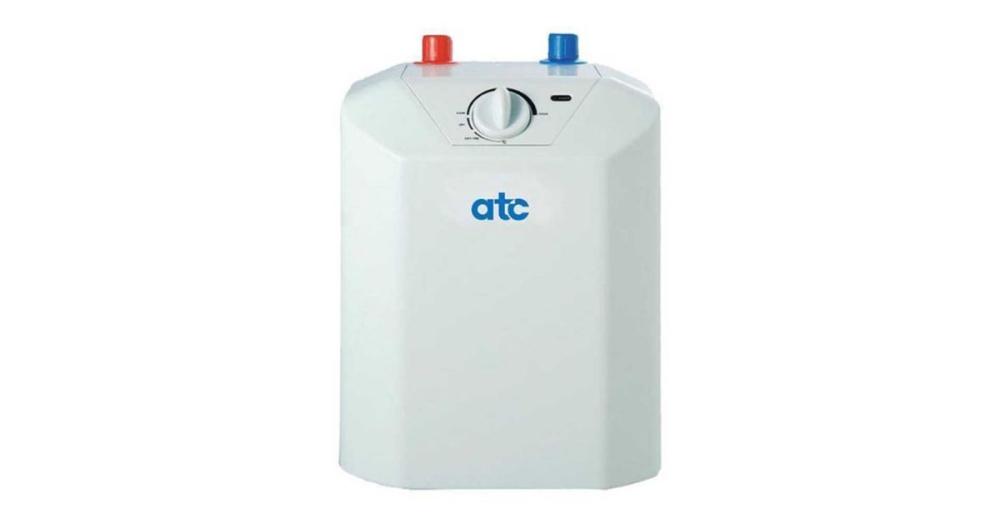
A compact under sink water heater built for smaller commercial or household spaces where quick access to hot water matters. It is especially useful where one or more nearby sinks need dependable service without a bulky setup.
- 5 litre capacity, roughly 1.1 gallon
- 2000W output for strong heating performance
- Maximum pressure up to 8 bar
- External thermostat for easy control
- CE and RoHs approved, ERP Class B
Shop 5 Litre Under Sink Water Heater ATC
2. 10 Litre Under Sink Water Heater ATC
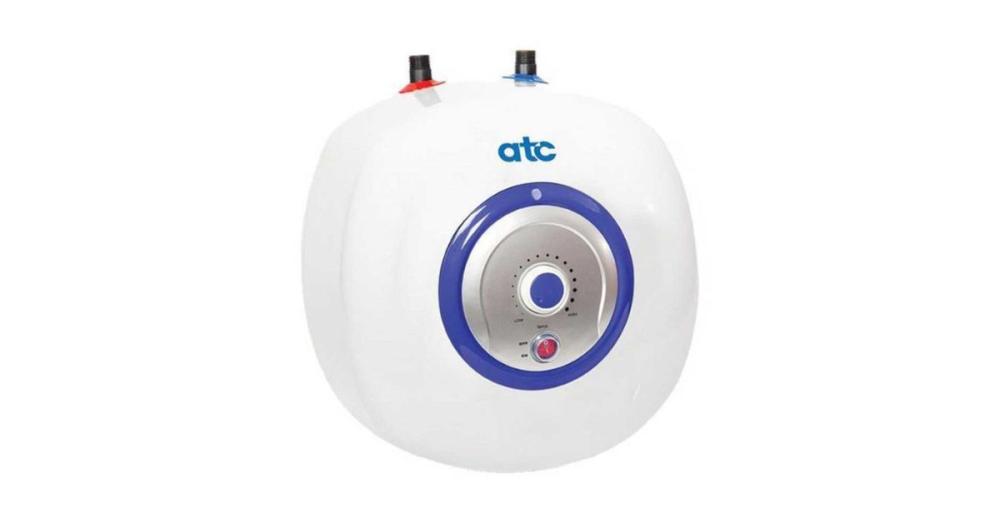
This model is a strong middle-ground choice for buyers who need more stored hot water without taking up too much room. It suits compact kitchens, commercial wash areas, and users who want an energy-efficient electric water heater with flexible temperature control.
- 10L capacity, roughly 2.2 gallons
- 2000W power, 220 to 240V
- Compact dimensions for easier fitting
- External thermostat and top inlet/outlet fittings
- CE and RoHs approved, Class B
Shop 10 Litre Under Sink Water Heater ATC
3. 14 Litre Under Sink Water Heater ATC
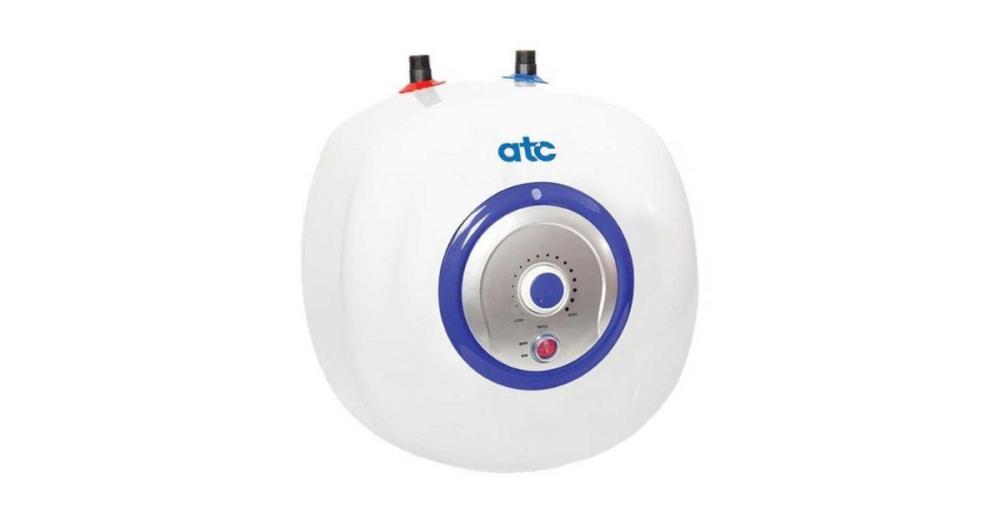
For higher hot water demand, this unvented water heater gives you more stored capacity and solid commercial potential. It is well suited to multiple sinks where usage is frequent and a traditional vented system would be less efficient.
- 14L capacity, roughly 3 gallons
- 2000W heating power
- Maximum pressure of 8 bar
- External thermostat for simple adjustment
- CE and RoHs approved, ERP Class B
Shop 14 Litre Under Sink Water Heater ATC
Pre-Installation Checks Electricians and Facilities Managers Should Review Before Buying
Before ordering, it is worth checking the installation basics carefully, especially on refurbishments:
- Confirm voltage, load capacity, and available circuit protection.
- Check water pressure and compatibility with the selected unit.
- Measure the installation space, including pipe and cable access.
- Review outlet demand, peak use times, and likely recovery expectations.
- Verify approvals, compliance requirements, and maintenance access.
Key Takeaways
- Electric water heaters should be chosen based on heater type, sizing, and recovery time rather than price alone.
- Point-of-use water heaters work best for single outlets such as under-sink areas, compact kitchens, wash basins, and ensuites.
- Storage electric water heaters are a better fit for shared washrooms, staff areas, and light commercial spaces with repeated hot water demand.
- Proper sizing helps the system handle peak usage without wasting energy or leaving users with lukewarm water.
- Recovery time is important because it shows how quickly a storage heater can reheat water after use.
- Before buying, electricians and facilities managers should check voltage, water pressure, available space, circuit protection, and compliance requirements.
Conclusion
The right choice comes down to matching the heater to the outlet, the usage pattern, and the recovery performance you actually need. By comparing capacity, first-hour rating, and installation fit, you can avoid both undersizing and overbuying.
If you are comparing electric water heaters for sale and want one place to source hot water products and other heating and ventilation products, explore the full range at Meteor Electrical and choose with confidence today!
FAQs
1. Can a point-of-use electric water heater run a shower, or is it only suitable for sinks?
Usually, point-of-use units are better for sinks and basins. A shower normally needs higher flow and more sustained output than many compact units can provide.
2. How do I know if a storage electric water heater is too small for peak-hour demand?
Look at the number of users, outlets, and the first-hour rating. If several people need hot water at the same time and the supply runs out quickly, the unit is likely undersized.
3. How long does a storage electric water heater take to recover after back-to-back showers or heavy use?
It depends on tank size and heating power, but slower recovery often becomes noticeable after repeated use. Faster recovery is especially important in workplaces and shared wash areas.
4. What should an electrician check before installing an electric water heater?
They should review electrical load, circuit protection, water pressure, space, pipework, and access for servicing. Compliance and product approvals should also be checked before installation.
5. Which electric water heater is best for an office kitchen, staff washroom, or small commercial space?
A compact under sink or small storage unit is often the best fit. The right choice depends on whether hot water is needed at one outlet or across several sinks during busy periods.