
How to Install Weatherproof Switches and Sockets: A Complete Guide to Knockouts, Entries, Glands, and Seals?
How to Install Weatherproof Switches and Sockets: A Complete Guide to Knockouts, Entries, Glands, and Seals?
Outdoor fittings rarely fail because the switch mechanism is poor. More often, weatherproof switches and sockets lose protection at the entry point, the gland, or the seal, which is exactly where rain, dust and temperature changes start to work their way in.
Common concerns include: "what usually goes wrong first when weatherproof switches and sockets are installed with the wrong cable entry, gland or seal" - where in most cases, the weak point is not the faceplate but the opening that was left unsealed, oversized, or poorly compressed.
If you are an electrician or facilities manager, this guide will help you choose the right IP rating, understand knockouts and cable entries, and install outdoor accessories with fewer call-backs.
Weatherproof Switches and Sockets: IP Ratings, Knockouts, Entries, Glands and Seals Explained
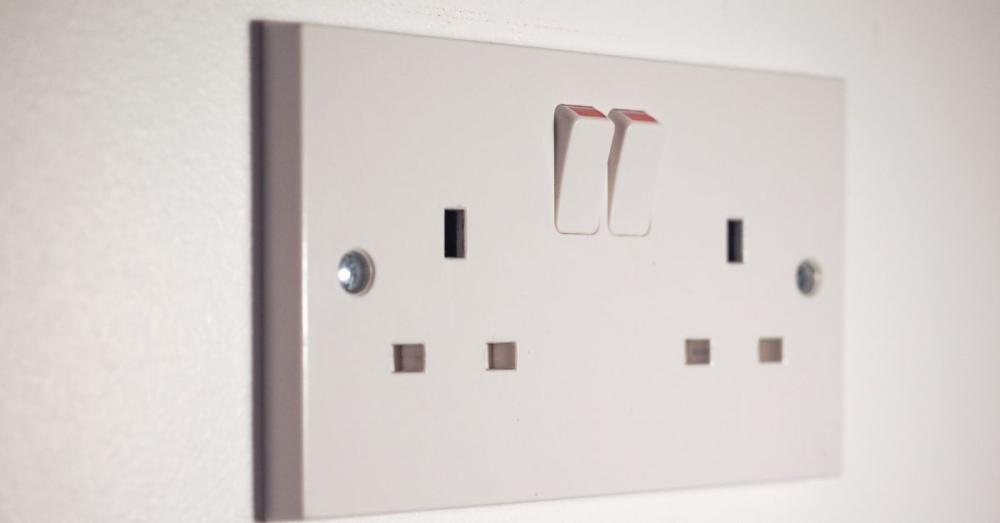
Weatherproof switches and sockets are built differently from standard indoor accessories as they rely on tougher housings, protective lids, gaskets and tested ingress protection to keep moisture and debris away from live parts. They feature materials such as polycarbonate, plus protective enclosure formats designed for harsher environments. In practical terms, that means the enclosure matters just as much as the switch or socket itself when you are planning an external installation.
Selecting the Right IP Rating
IP ratings are where many buying decisions go right or wrong. IP55 is generally suited to outdoor areas with lighter exposure, IP56 adds protection against stronger water jets, and IP66 is the better choice where fittings face direct weather or more demanding washdown conditions.
The important point is to match the rating to the site, not to assume any covered socket is suitable for every wall, yard or service area.
Understanding the Role of Knockouts and Entries
Knockouts and entries deserve more attention than they usually get. Rear entry can be useful where cables come cleanly through the wall, bottom entry often helps reduce water tracking, and conduit entry is valuable when you need a more controlled cable route in commercial or industrial settings. Unused openings should always be sealed with the correct blanking solution, as one open knockout can compromise the performance of the whole fitting.
Installers often ask: "how do knockouts, conduit entries, cable glands and blanking plugs work together to maintain the IP rating of weatherproof switches and sockets?" In simple terms — they work as a sealed system, where each opening must either hold the right cable gland or be fully closed off.
How to Install Weatherproof Switches and Sockets Correctly Outdoors
Before fixing anything in place, check the real installation conditions. Look at exposure to wind-driven rain, hose-down risk, load requirements, mounting height and the safest cable route, as these factors determine whether your chosen fitting and entry method are actually appropriate.
Did You Know: Even a correctly rated outdoor socket can underperform if it is mounted where water regularly pools around the cable entry rather than drains away from it?
A tidy installation usually follows a simple sequence:
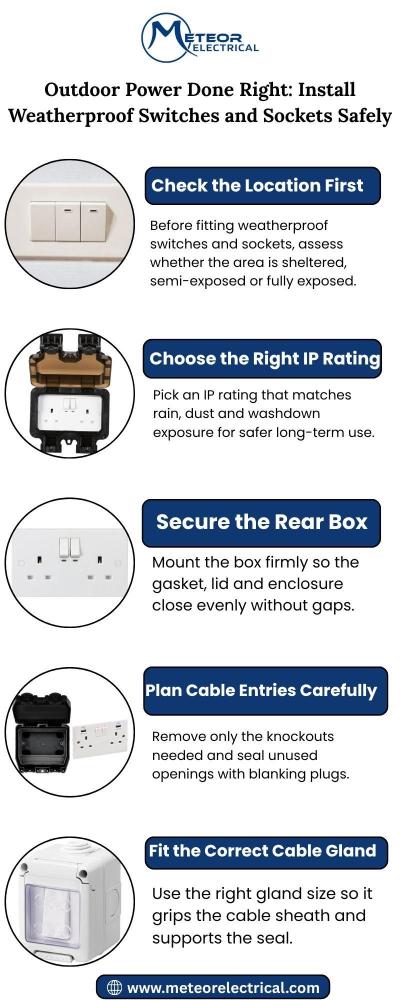
- Assess whether the position is sheltered, semi-exposed or fully exposed before choosing the IP rating.
- Mount the rear box securely on a sound surface so the gasket and lid can close evenly.
- Select the best cable entry point before removing any knockout. Remove only the openings you actually need.
- Leave enough cable length for clean termination without forcing conductors into the enclosure.
- Fit one correctly sized gland for each cable and tighten the compression nut fully so the seal grips the sheath properly.
- Use blanking plugs on unused entries and double-check that the cover, hinges and catches close flush against the gasket.
Experienced installers trust IP rated switches, outdoor sockets and a well-matched waterproof socket enclosure as a complete system rather than separate parts.
Common Weatherproof Switches and Sockets Installation Mistakes to Avoid
Even high-quality outdoor switches and sockets can fail early if the installation details are rushed. In most cases, problems start with poor rating selection, weak sealing, or mounting choices that expose the enclosure to unnecessary water ingress.
- Choosing an IP rating without properly assessing site exposure, especially where wind-driven rain or washdown is likely.
- Using the wrong cable gland size or failing to tighten it fully around the cable sheath.
- Leaving unused knockouts open instead of sealing them with the correct blanking plugs.
- Mounting the enclosure where water can pool or run directly over the cable entries.
- Skipping final checks on the gasket, lid closure, and future access for inspection or maintenance.
Weatherproof Switches and Sockets Buy Online: Products to Compare Before Installation
For buyers reviewing outdoor sockets and switches online, these products cover smart control, modular enclosure needs and heavy-duty switching in a practical way.
1.Smart IP66 13A 2G Outdoor Socket
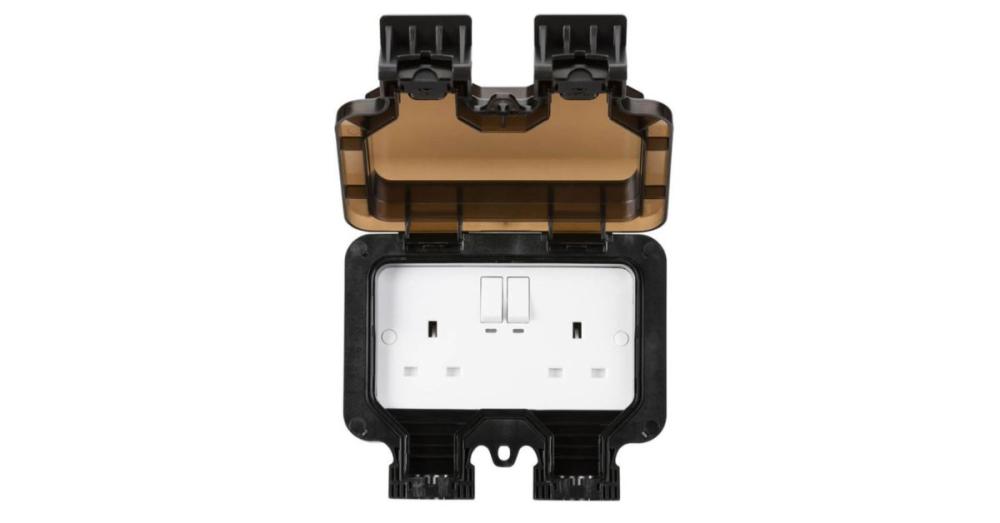
A strong choice for controlled outdoor power, this Knightsbridge model combines IP66 protection with app control, scheduling, power monitoring and voice assistant compatibility. It is especially useful where users want convenience without giving up weather resistance.
- IP66 outdoor socket
- IK06 impact rating
- 13A, 230V, 2990W max
- SmartKnight app control plus manual operation
- Works with Alexa and Google Assistant
Shop Smart IP66 13A 2G Outdoor Socket
2. 4Module 132x82x55 IP55 Enclosure
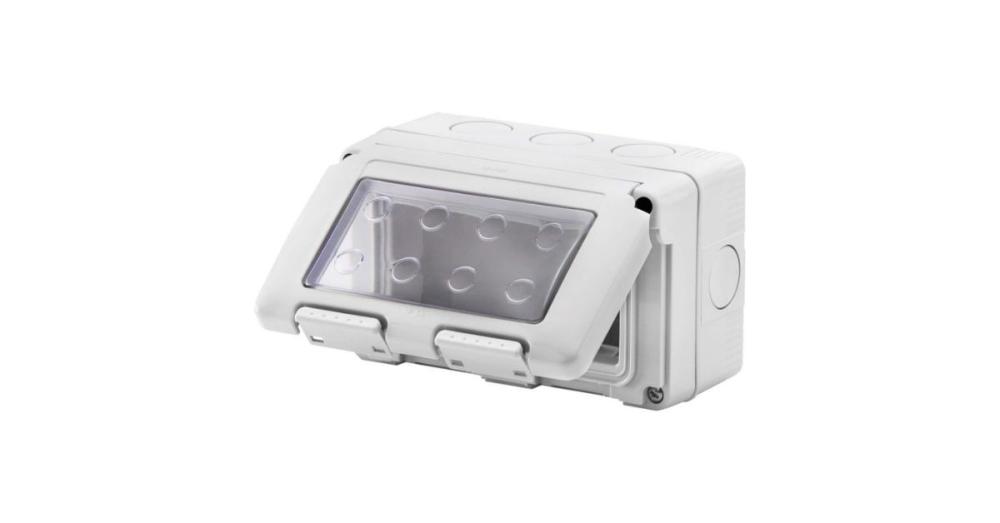
This Gewiss enclosure is ideal when the installation needs a modular outdoor housing rather than a single finished accessory. Its multiple knockout positions and transparent membrane door make it a useful base for more customised setups.
- 4 gang enclosure
- IP55 protection
- 8 side knockouts and 1 bottom knockout
- Transparent membrane door
- IK07 mechanical resistance
Shop 4 Module 132x82x55 IP55 Enclosure
3. 16A Single Pole Two-Way Switch IP56 GW27833 Gewiss
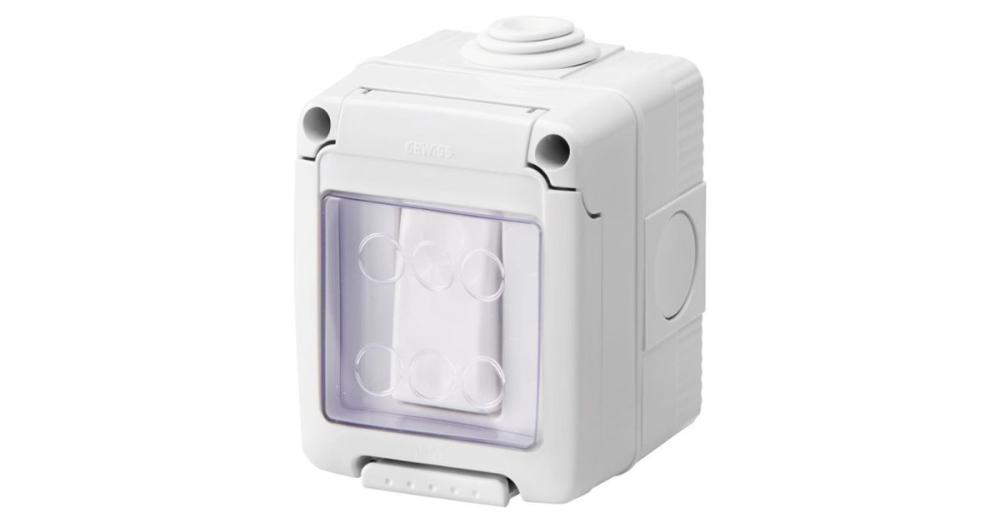
This switch suits installers who need a dependable outdoor control point with a higher current rating and multiple entry options. The polycarbonate construction and IP56 rating make it a practical fit for many external walls and utility areas.
- 16A single pole two-way format
- IP56 rated
- Polycarbonate construction
- Multiple knockout entries
- CE approved and RoHS compliant
Shop 16A Single Pole Two-Way Switch IP56 GW27833 Gewiss
4.10 Amp Heavy Duty Plate Switch 2 Gang 2 Way, X-Rated Selectric
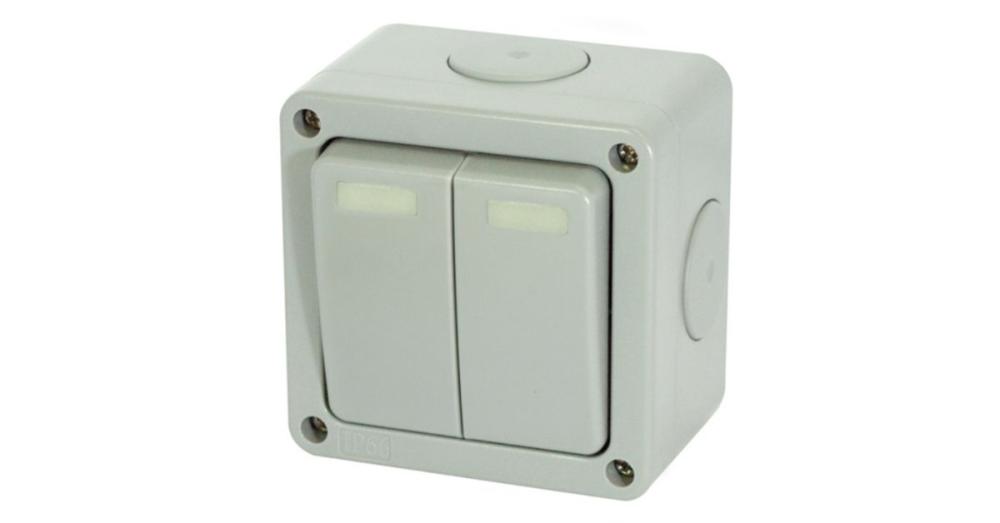
For tougher duty cycles, this Selectric switch brings IP66 protection, four threaded cable entries and a heavy-duty build that suits more demanding environments. It is a sensible option when you need durability and flexible cable routing in one unit.
- IP66 rated
- 2 gang 2-way, 10 amp
- Four threaded cable entries
- Polycarbonate body
- Complies with BS EN 60669-1 and BS EN 60529
Shop 10 Amp Heavy Duty Plate Switch 2 Gang 2 Way, X-Rated Selectric
Source - Proper DIY
Key Takeaways
- Weatherproof switches and sockets need the right IP rating based on real site exposure, not just general outdoor use.
- Cable entries are often the weakest point when knockouts, glands, or seals are poorly fitted.
- Unused knockouts must be sealed properly to maintain the protection level of the full enclosure.
- Correct gland sizing matters because the seal must grip the cable sheath firmly to prevent water and dust entry.
- Mounting position affects long-term performance as water should drain away from entries instead of pooling around them.
- A reliable outdoor setup works as a complete system with the enclosure, gasket, lid, cable entry, gland and blanking plugs all fitted correctly.
Wrapping Up
Long-term outdoor reliability comes down to three things: the right IP rating, the right cable entry method and the right gland seal. Get those right, and outdoor switches and sockets are far more likely to stay safe, durable and maintenance-friendly over time.
If you are ready to buy electrical switches and sockets online, Meteor Electrical's weatherproof range features top brands including Gewiss, Selectric and Zahler, backed by fast delivery in Northern Ireland and across the UK.
Explore the range and choose the right fittings that are built for the site!
FAQs About Weatherproof Switches and Sockets
-
What IP rating do weatherproof switches and sockets need for exposed outdoor areas?
For exposed locations, IP66 is usually the safer benchmark as it is designed for dust-tight performance and strong water jet protection.
-
Do unused knockouts or badly fitted cable glands break the weatherproof seal?
Yes. An unused knockout or loose gland can weaken the enclosure at its most vulnerable point and reduce the intended ingress protection.
-
What should I check before I buy weatherproof switches and sockets online?
Check the IP rating, cable entry options, current rating, enclosure style and whether the fitting matches the actual exposure level on site.
-
Are weatherproof sockets suitable for every outdoor wall?
No. A covered location and a fully exposed wall may need different ratings and entry arrangements, even if both are outdoors.
-
Can I use any cable gland with an outdoor socket or switch?
No. The gland should match the cable diameter and enclosure entry correctly, otherwise the seal may not compress properly.