
Information
Emergency Lighting Buying Guide: How to Choose the Right LED Emergency Lighting for Safe, Compliant Buildings
Emergency Lighting Buying Guide: How to Choose the Right LED Emergency Lighting for Safe, Compliant Buildings
Choosing the right emergency lighting is not always straightforward. Electricians and facilities managers need fittings that support safe evacuation, suit the building's layout and help meet compliance expectations without creating headaches during installation or testing time. Common concerns include, “What should installation teams check before buying emergency lighting for a commercial building?” This guide gives you a practical answer for the same.
Emergency Lighting Explained - What Buyers Need to Know Before They Choose
Emergency lighting serves as a backup light source that operates when normal power fails, helping individuals move safely and identify escape routes. It plays a vital role in commercial premises, public buildings, corridors, stairwells and areas around exits and fire safety equipment.
What Emergency Lighting Does in A Power Failure
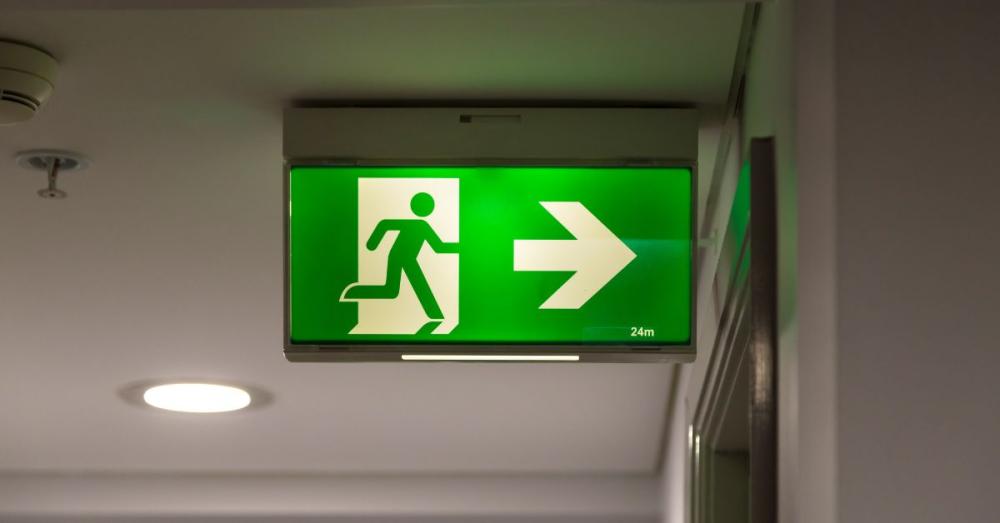
When the mains supply drops, emergency fittings come in to provide enough illumination for evacuation and essential movement. In real terms, that means less confusion, faster wayfinding and better visibility where people need it most.
Where Emergency Lighting Is Typically Needed, Including Near Exits and Fire Safety Equipment
The most common locations include escape routes, final exits, corridor junctions, open areas, stairways and points close to fire alarm call points or firefighting equipment. A smart specification starts with precisely mapping the exit route of occupants, then selecting the right fittings that make the process clear and consistent.
How to Choose the Right LED Emergency Lighting for Your Building
The best choice depends on the building use, ceiling type, circulation routes and how visible the fitting needs to be. If you are wondering, “Which LED emergency lighting type is best for offices, warehouses, retail units and public buildings?”, the answer usually comes down to matching the fitting to the space rather than chasing a one-size-fits-all option.
Maintained Vs Non-Maintained Emergency Lighting
Maintained fittings stay illuminated during normal operation and continue to work during a power failure. Non-maintained fittings only come on when the mains supply fails. For many public-facing spaces, maintained emergency exit signs make sense, while back-of-house areas often suit non-maintained options.
How to Match Fittings to Exits, Corridors, Open Areas and High-Risk Task Zones
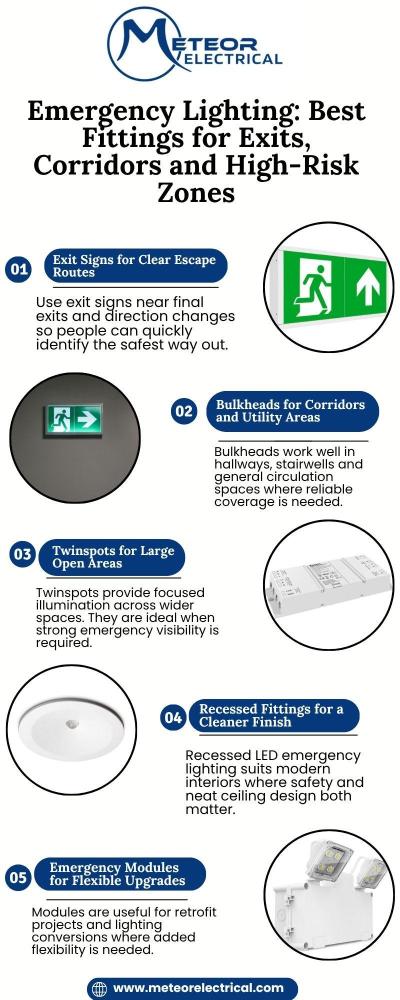
A simple rule helps here:
- Exit signs for escape direction and final exits
- Bulkheads for corridors, utility spaces and general circulation areas
- Twinspots for larger open spaces where focused light is useful
- Recessed fittings where a cleaner ceiling finish matters
- Emergency modules where retrofit or conversion flexibility is needed
Did You Know - A poor fitting choice can increase maintenance time far more than the upfront saving is worth, especially in larger buildings where access equipment is needed?
What to Compare Before You Buy - Battery Duration, Brightness, Mounting Type, Test Method and Visibility
Before you buy, compare:
- Battery duration suitable for evacuation strategy
- Light output and visibility
- Mounting style, such as recessed, surface, wall or suspended
- Testing method and ease of maintenance
- Compatibility with the space and route layout
These details often separate a fitting that looks fine on paper from one that actually works well on site.
Why LED Emergency Lighting Is Often Preferred for Efficiency, Lifespan, Brightness and Lower Maintenance
LED emergency lighting is widely chosen because it combines energy efficiency with strong visibility and long service life. For busy sites, that usually means less disruption, fewer replacement cycles and better overall value from the installation.
Emergency Lighting Installation and Maintenance Tips for Electricians and Facilities Managers
When it comes to emergency lighting installation, proper planning and timely maintenance go a long way.
What to Plan Before Installation, From Positioning to Circuit Setup
Check mounting surfaces, cable routes, viewing angles and whether maintained or non-maintained wiring is required before the first fixing goes in. For mixed-use buildings, consistency across fitting types also makes testing and replacement simpler.
Key Testing Expectations, Including Monthly Checks and Annual Duration Tests
Most buyers should think beyond purchase price and ask how the fitting will be tested across its lifespan. A product that is easy to inspect and maintain can reduce labour costs over time, especially for facilities teams managing multiple zones.
Common Buying Mistakes That Create Installation or Maintenance Issues
Common mistakes include:
- Choosing the wrong fitting for ceiling or wall conditions
- Ignoring viewing distance and sign visibility
- Overlooking test access
- Mixing incompatible products across the same site
- Buying only on price, not application
Source - eFIXX
What Decision-Makers Should Look for In Products That Simplify Ongoing Testing
Look for practical features like accessible terminals, straightforward mounting, good visibility and sensible accessory support. For emergency lighting UK, the most useful products are often the ones that make routine testing less disruptive.
Best Emergency Lighting Products to Consider for Different Installations
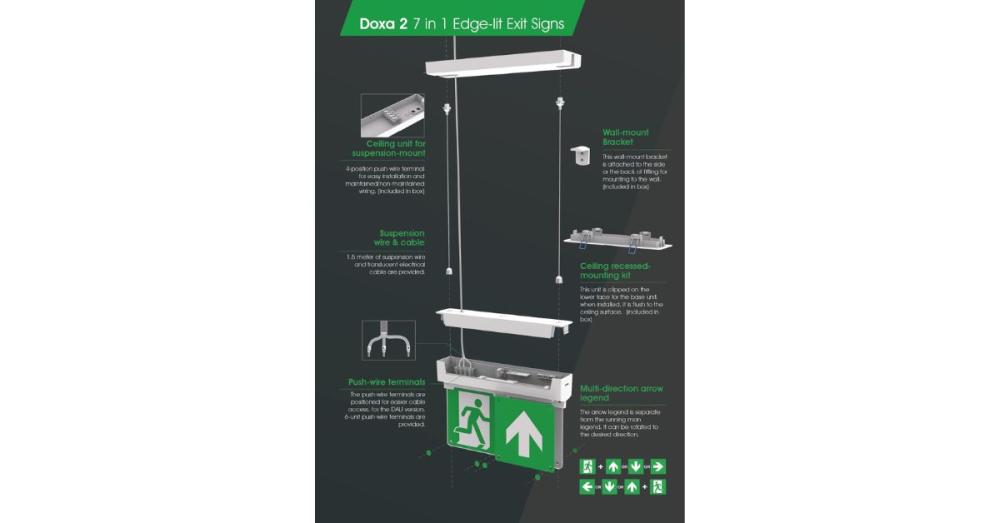
1. Doxa 2 7-in-1 Edge-Lit Exit Signs for Flexible Mounting Layouts
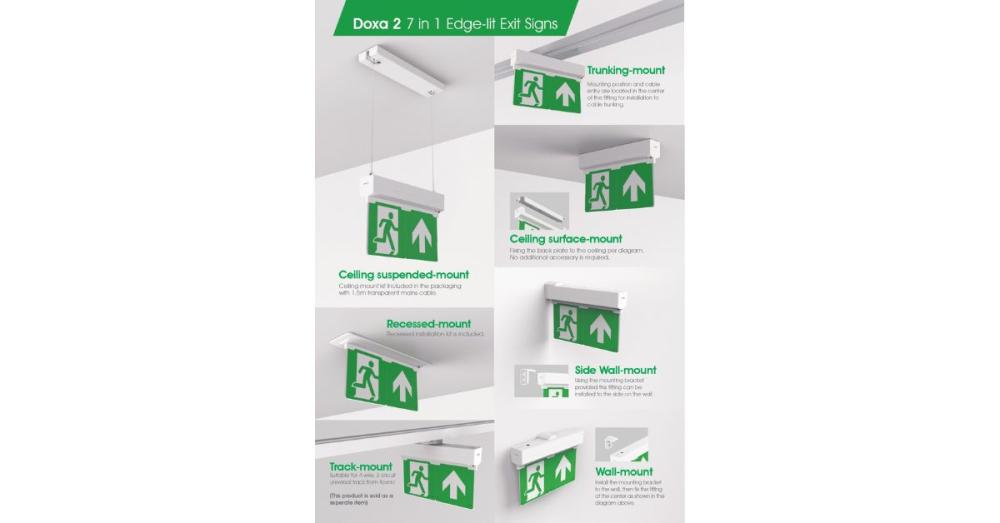
For sites that need one sign format to work across several fixing conditions, the Doxa 2 7-in-1 offers excellent flexibility. The various types include ceiling suspended, ceiling surface, recessed, side wall, wall, trunking and track mounting, plus multi-direction arrow legends, which make it a practical fit for varied layouts.
Key features:
- Seven mounting possibilities in one format
- Ceiling suspension kit and recessed kit shown in the visuals
- Wall and side-wall mounting support
- Trunking and track-mount capability highlighted
- Multi-direction arrow legends for route guidance
Shop Doxa 2 7-in-1 Edge-Lit Exit Signs
2. UEM Pro Universal Emergency Module for Conversion and Retrofit Jobs
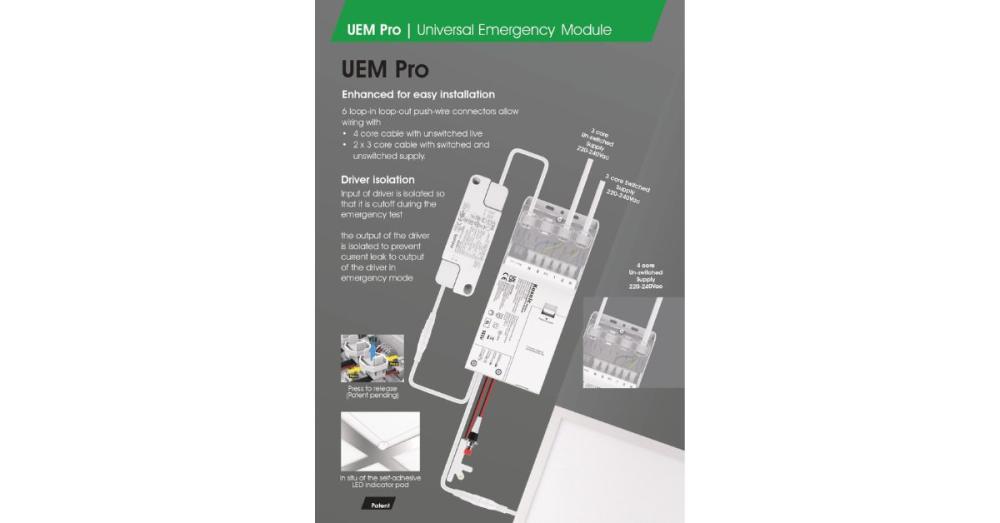
The UEM Pro is a strong choice where installation speed and retrofit flexibility matter. It comes with 6 loop-in loop-out push-wire connectors, support for switched and un-switched supply arrangements and driver isolation, which all point to easier wiring and practical emergency conversion use.
Key features:
- 6 loop-in loop-out push-wire connectors
- Supports switched and unswitched supply setups
- Driver isolation for safer emergency testing behaviour
- Designed with easy installation in mind
Shop UEM Pro Universal Emergency Module
3. LED Emergency Exit Signs and Running Man Legends for Clear Escape Guidance
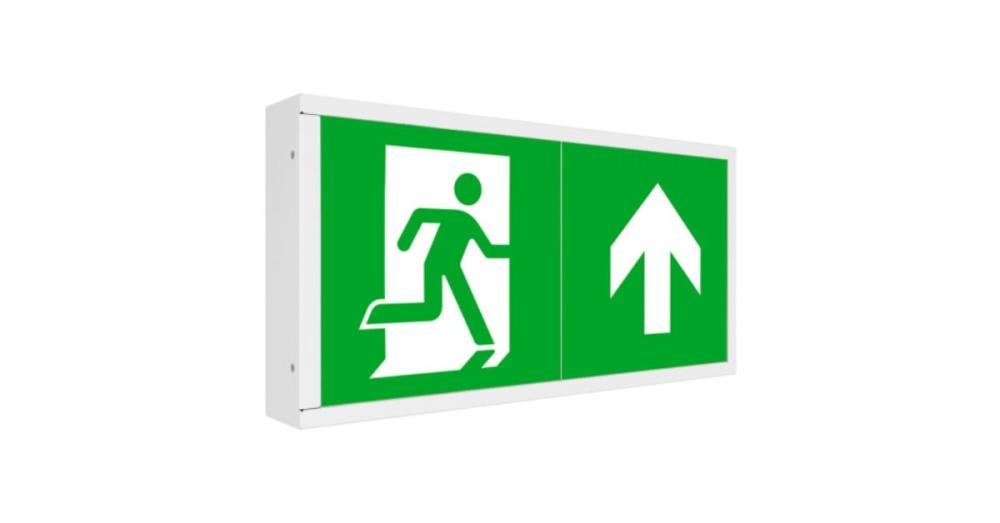
Where directional clarity is the priority, exit signs and running man legends should come first. LED emergency exit signs and running man legends are designed to help mark routes clearly in escape situations.
4. Recessed, Bulkhead and Twinspot Emergency Lighting for Corridors, Utility Areas and Open Spaces
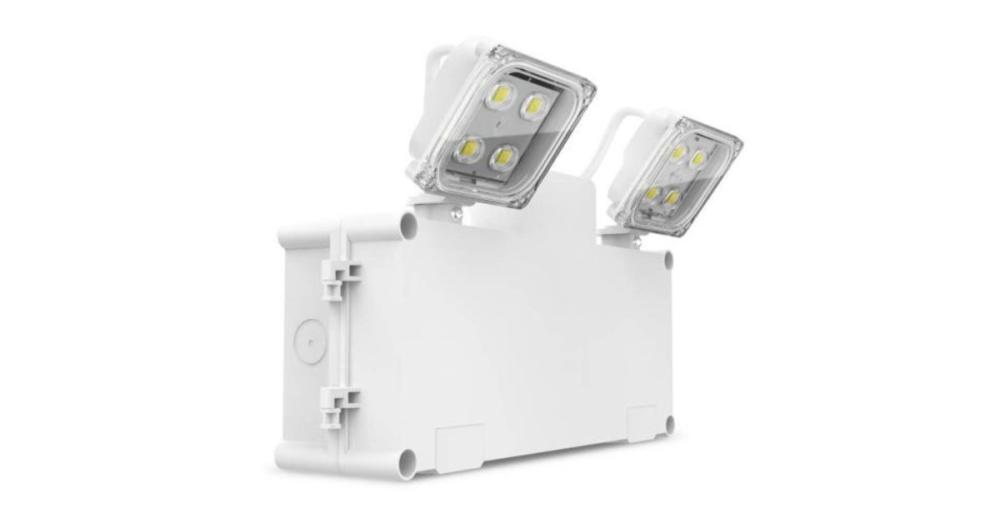
Different environments call for different fittings. Recessed emergency fittings, emergency bulkheads and LED emergency twinspots give buyers options for cleaner ceilings, durable circulation lighting or broader coverage in open spaces.
Shop Recessed, Bulkhead and Twinspot Emergency Lighting
5. Dinrail Test Units and Accessories for Smarter Emergency Lighting Management
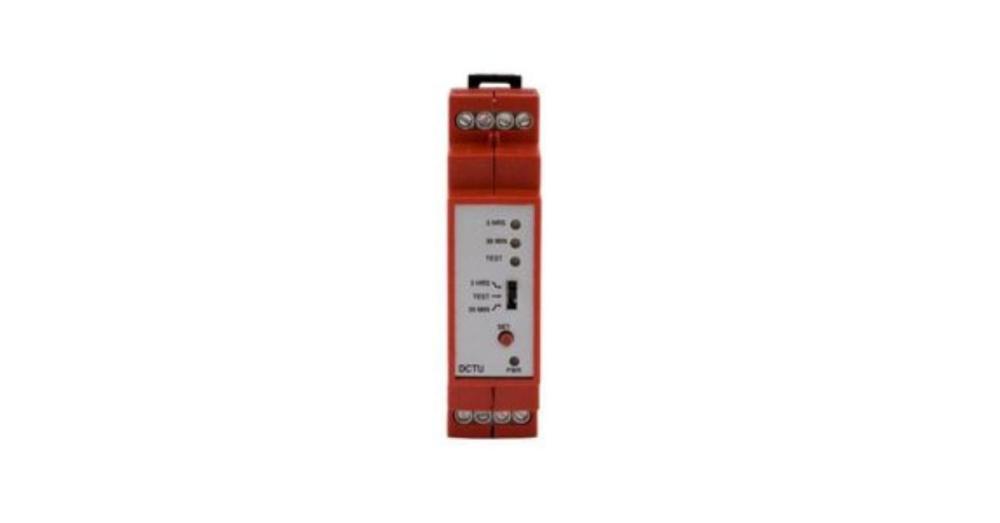
Testing accessories matter more than many buyers expect. Dinrail test units and related accessories can support a more organised maintenance routine, especially on larger sites where teams need a practical way to manage testing.
Shop Dinrail Test Units and Accessories
Conclusion - Choose Emergency Lighting That Balances Safety, Compliance and Buying Confidence
The right emergency lighting setup depends on where it will be used, how it will be mounted, how it will be tested and whether the project needs exit signs, modules, bulkheads, twinspots, legends or test units. If you are looking to buy online emergency lighting, explore the full range at Meteor Electrical and make a smarter purchase decision.
Browse the range and find dependable solutions for every installation, from first fix to final sign-off.
FAQs About Emergency Lighting
1. What is the difference between maintained and non-maintained emergency lighting?
Maintained fittings stay on during normal use and during power failure, while non-maintained fittings only operate when the mains supply fails.
2. Where should LED emergency lighting be installed in a commercial building?
Typical positions include exits, escape routes, stairways, corridors, open areas and locations near fire safety equipment.
3. How often should emergency lighting be tested and what should be recorded?
A consistent testing routine should be planned from the start, with records kept in a clear log so faults, inspections and corrective actions can be tracked over time.
4. How do I choose between an edge-lit exit sign, bulkhead, twinspot or emergency module for my site?
Choose by application: exit signs for route guidance, bulkheads for general circulation areas, twinspots for larger spaces and modules for retrofit or conversion work.
5. What backup duration should LED emergency lighting have for safe evacuation and compliance?
The right duration depends on the building’s evacuation strategy and risk profile, so it is best checked at specification stage rather than assumed.