
LED vs CFL vs Halogen: Which Bulb Is Best For You?
LED vs CFL vs Halogen: Which Bulb Is Best For You?
Lighting has changed a lot since incandescent bulbs were phased out, and the “quick bulb swap” is not always that quick anymore. Electricians and facilities managers now juggle efficiency targets, lighting comfort, compliance, and long-term maintenance costs across multiple sites.
This guide makes the choice simple. You will learn how to pick the correct bulb fitting, compare LED vs CFL vs halogen in practical terms, and match brightness and colour temperature to the space, using a clear lumens to watts guide and a colour temperature chart (Kelvin) style approach.
Choose The Right Bulb Fitting (Base Type)

Before you compare technologies, confirm the base fitting. The fastest way is to remove the old lamp and match the code printed on the base. If you cannot remove it, note the fitting from the fixture specs or site documentation.
Common UK And European Bulb Fittings
- B22 (BC): Bayonet cap, common in older UK fittings
- E27 (ES): Edison screw, common in commercial and domestic
- E14 (SES): Small Edison screw, often decorative or compact fittings
- GU10: Twist-and-lock spotlight base (downlights)
- G9 / G4: Capsule lamps used in compact luminaires
If you are unsure about screw bases, the E27 vs E14 bulb difference is simple: E27 is the larger Edison screw, while E14 is the smaller version typically used for decorative lamps and tighter fittings.
LED Vs CFL Vs Halogen: What To Choose (And Why)
There are three regular bulb types you will still see in the field: CFL, halogen, and LED. Here is how they compare for most projects.
LED Bulbs (Best Overall For Most Sites)
LED bulbs cost more upfront, but they usually deliver the lowest running cost and the longest life, often up to 15 to 25 years in typical use. They also reduce relamping frequency, which matters in high ceilings, stairwells, warehouses, and anywhere access is time-consuming.
For many sites, LED bulb wattage equivalent questions come up during upgrades. Instead of matching watts, match lumens, then choose an LED that delivers that output at a much lower wattage.
CFL Bulbs (Budget Option, Less Popular Now)
CFLs are commonly available and fairly efficient, but they can be slow to reach full brightness, especially in cold areas or where switching is frequent. They also tend to be less convenient for disposal policies compared to LED.
CFLs can work in low-use areas where budget is the priority, but most facilities now choose LEDs for better switching performance and longer service life.
Source - SpruceCC
Halogen Bulbs (Good Light Quality, Higher Running Cost)
Halogens produce a warm light similar to older incandescent lamps, but they consume much more energy than LED and typically have a shorter lifespan. In many real installations, halogens fail before the total operating cost makes sense.
If you are maintaining legacy fittings, check for LED retrofit bulbs for commercial buildings that match the same base and beam angle to modernise without replacing the whole luminaire.
Brightness Made Simple With Lumens (Not Watts)
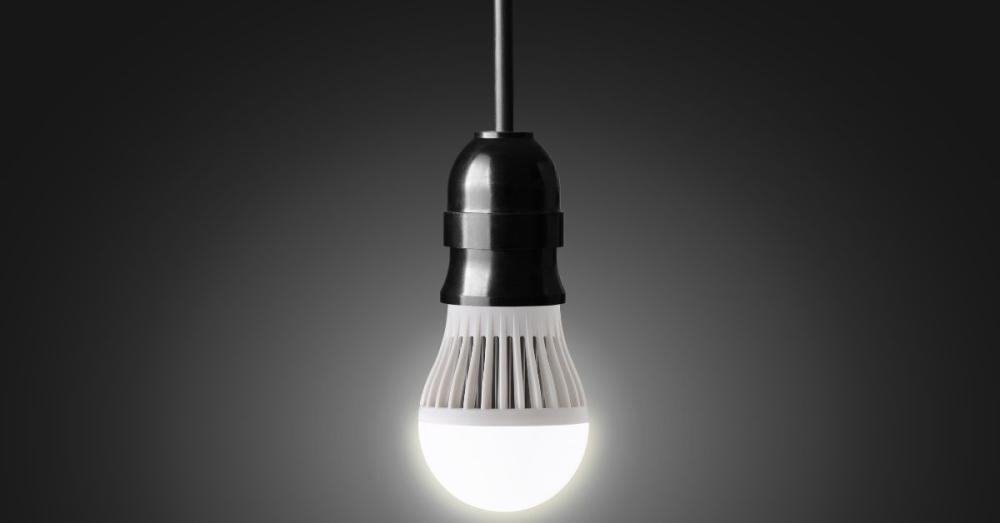
With energy-saving lighting, brightness is measured in lumens, while watts measure power consumption. That is why the same brightness can use very different wattages depending on the technology.
Lumens To Watts Guide (Common Equivalents)
- 400 to 500 lm ≈ old 40W incandescent brightness
- 700 to 900 lm ≈ old 60W incandescent brightness
- 1000 to 1300 lm ≈ old 75 to 100W incandescent brightness
When standardising procurement, define lumen targets per room type. This keeps sites consistent and avoids the common problem of mixing lamps that look uneven across corridors, offices, or meeting rooms.
Use Kelvin To Choose The Right Colour Temperature
Colour temperature is measured in Kelvin and controls whether the light looks warm, neutral, or cool. If you have ever searched for a colour temperature chart (Kelvin), these are the practical ranges most teams use.
Common Kelvin Choices For Commercial Spaces
- 2700K to 3000K (Warm White): hospitality, lounges, residential-style spaces
- 4000K (Neutral White): offices, corridors, classrooms, general commercial use
- 5000K to 6500K (Cool White or Daylight): task-heavy areas where visibility is the priority
For multi-site facilities, choosing one default Kelvin such as 4000K helps maintain a consistent look and simplifies re-ordering.
Buying Checklist For Electricians And Facilities Managers
Use this checklist to reduce ordering errors and improve long-term performance:
- Confirm the base fitting before ordering (E27, E14, B22, GU10)
- Match brightness by lumens, using a lumens to watts guide for reference
- Select Kelvin based on the space and user comfort
- Verify dimmer compatibility if dimming is required (use LED-rated dimmers)
- Check beam angle for spotlights and downlights
- Choose suitable ratings for bathrooms and exterior fixtures (IP-rated where needed)
Conclusion: Upgrade With Confidence And Buy From Meteor Electrical
For most homes, offices, and commercial sites, LED is the clear choice for efficiency, lifespan, and maintenance reduction. Combine the right fitting with the right lumens and the right Kelvin, and you will get consistent lighting that performs well over time.
Ready to source quality lamps and LED retrofit bulbs for commercial buildings at trade-friendly prices? Shop from Meteor Electrical, a leading wholesale electrical supplier for the UK and European markets.
Visit https://www.meteorelectrical.com/ and get the right bulbs delivered fast.
FAQs
1. Which Bulb Is The Most Energy Efficient?
LED bulbs are typically the most energy efficient and deliver the lowest long-term cost for most installations.
2. What Do Lumens Mean On A Light Bulb?
Lumens measure brightness. Higher lumens mean more light output, regardless of wattage.
3. What Kelvin Is Best For Offices?
Most offices use 4000K because it feels clean and bright without looking overly cold.
4. Can I Replace Halogen With LED?
Yes, in many cases. Match the fitting, beam angle, and check dimmer compatibility before ordering.
5. What Is The E27 Vs E14 Bulb Difference?
E27 is the larger Edison screw base, while E14 is the smaller Edison screw used for compact and decorative fittings.
6. Are CFL Bulbs Still Worth Buying?
Sometimes for budget, low-use areas, but LEDs usually win on lifespan, switching performance, and overall running cost.