
Installing Enclosures for Electrical Equipment: Entry Planning, Gland Selection and Maintaining IP Ratings
Installing Enclosures for Electrical Equipment: Entry Planning, Gland Selection and Maintaining IP Ratings
Enclosures for electrical equipment do more than simply hide the wiring. They protect against dust, water ingress, impact, corrosion, and accidental contact, so your installation stays safe and compliant. A little planning upfront can prevent nuisance trips, premature corrosion, and expensive rework later.
This guide is for electricians and facilities managers handling new runs, retrofits, or panel upgrades who want fewer callbacks and cleaner, longer-lasting results.
Entry Planning Before You Drill: Galvanised vs PVC Enclosures
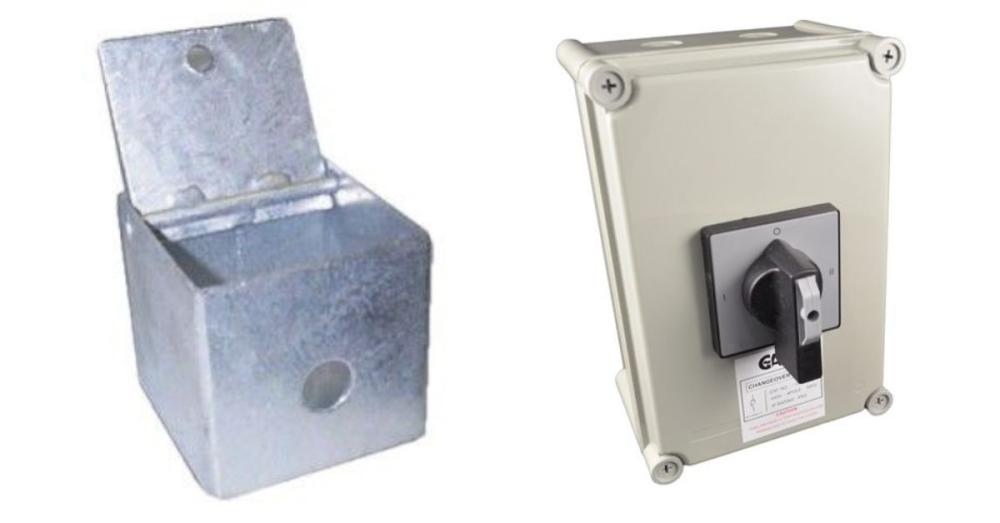
Choosing the right material upfront saves you from fighting corrosion, cracked entries, or earthing headaches later.
- Galvanised Enclosures: strong, site-tough, and well suited to plant areas where knocks are likely. Also supports dependable earthing practices when installed correctly.
- PVC Enclosures: excellent for corrosion resistance and electrical insulation, often a better fit for coastal, chemical, or damp locations.
- Quick Decision Cues: Outdoors vs indoors, washdown zones, vibration, and any corrosive atmosphere (including coastal salt and chemical vapours).
Mark Entry Points to Protect IP Rating and Simplify Cable Management
Before you touch a hole saw, plan the route like you’re planning maintenance access, because you are.
- Route Mapping: Keep runs short and safe, respect bend radius, segregate power from control and signal to reduce interference.
- Future-Proofing: Allow spare entries, specify blanks for unused knockouts, and avoid drilling later which usually ruins the seal.
- Position Rules: Avoid bottom entries in flood-prone areas, keep clearance for locknuts and washers, and leave space for cable management accessories like cleats or tie bases.
Did You Know: Most real-world IP failures happen at the cable entry, not the lid seal, because a rushed entry layout leads to over-tightened glands and damaged seals?
Cable Entry Plus Gland Selection - How to Match Materials, Ensure Sealing, and Protect IP Rating?
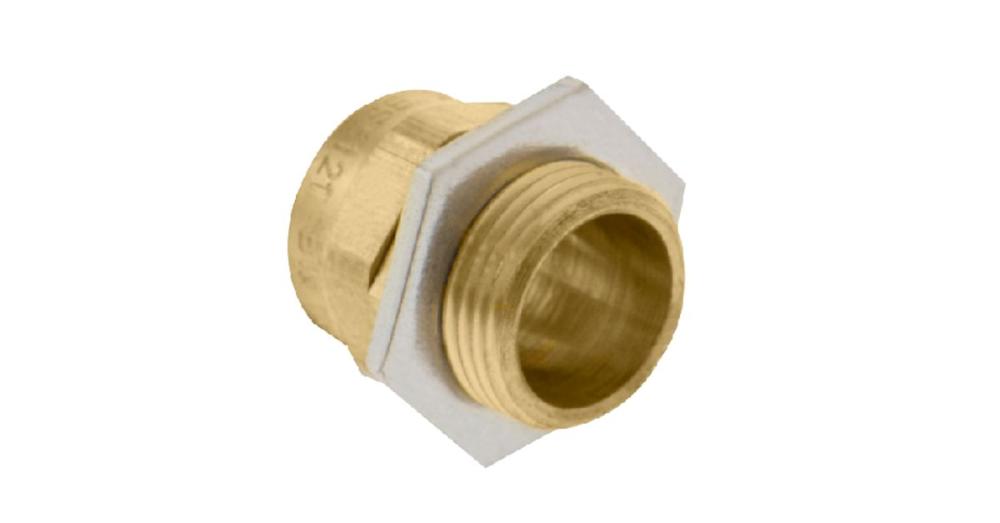
A high-quality electrical enclosure box can still leak if the gland, hole size, and tightening method are mismatched.
Gland Material Selection
Match gland material to enclosure material and the environment:
- Galvanised enclosures generally use metal glands for strength and earthing continuity.
- PVC enclosures generally use plastic glands for corrosion resistance and insulation.
- Where it matters most: vibration zones (retention), corrosive sites (material compatibility), outdoor UV (degradation), washdown exposure (seal integrity).
Source- CABTEK CABLE GLAND
Choose the Correct Gland Type for Cable Construction and Site Conditions
Pick the right glands for the cable and the job.
- Unarmoured vs Armoured: Armour needs proper retention and termination; unarmoured still needs reliable sealing and strain relief.
- Entry Strategy: Individual glands for serviceability; grommet systems only where appropriate and rated for the environment.
- Site Demands: Splash vs jets, dust levels, temperature swings, and chemical exposure all change what “good enough” looks like.
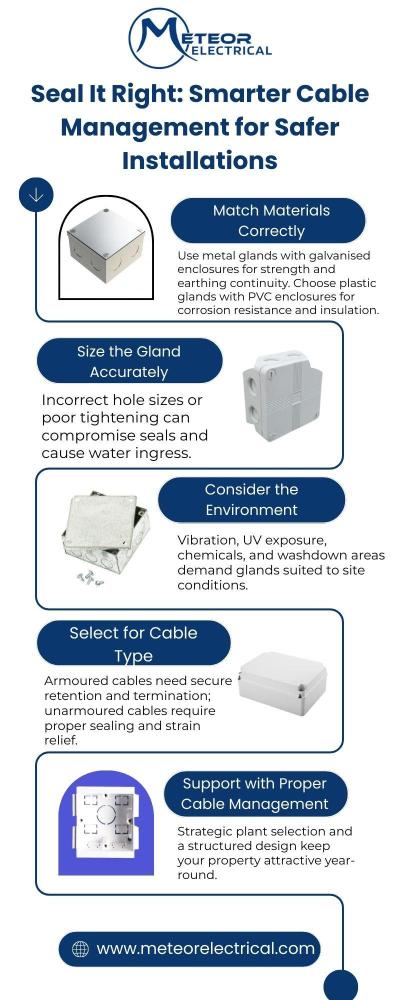
Installation Sequence That Protects the IP Rating
- Choose the right cutting method to avoid burrs and cracking, especially on PVC.
- Drill the correct hole size, then deburr fully so seals are not nicked on installation.
- Tighten to secure compression without over-torquing, which can deform seals or damage threads.
- For galvanised, confirm earthing continuity where metal glands and locknuts form part of the bonding path.
Maintaining IP Ratings Over Time: Sealing, Inspection, and Common Failure Points
If ingress protection matters, treat it like a maintenance item, not a one-off feature.
IP Rating Basics Installers Must Apply On-Site
An IP rating is only as strong as the weakest point - door seal, gland, plug, breather, or an unused knockout. One poor accessory can downgrade the whole assembly, even if the enclosure label looks reassuring.
Frequent IP Failures and How to Prevent Them
- Misaligned door gasket, debris on sealing faces, or distorted mounting that twists the enclosure.
- Wrong gland size for cable outer diameter, missing washers, or damaged compression seals.
- Unused holes left open - Fit proper blanks or stops rated for the same ingress conditions.
- Cable management stress - Pulling forces and unsupported weight can loosen glands over time.
Use cable management accessories to support the cable near the entry, add service loops for re-terminations, and label clearly.
Top Product Picks: Galvanised and PVC Enclosures You Can Buy Online
If you want to buy boxes and enclosures online, focus on application fit - entry options, sealing design, and internal working space, not just dimensions. The products below cover galvanised and PVC options for common installation needs.
1. Galvanised Adaptable Box 6X6X2 IP44 Enclosure
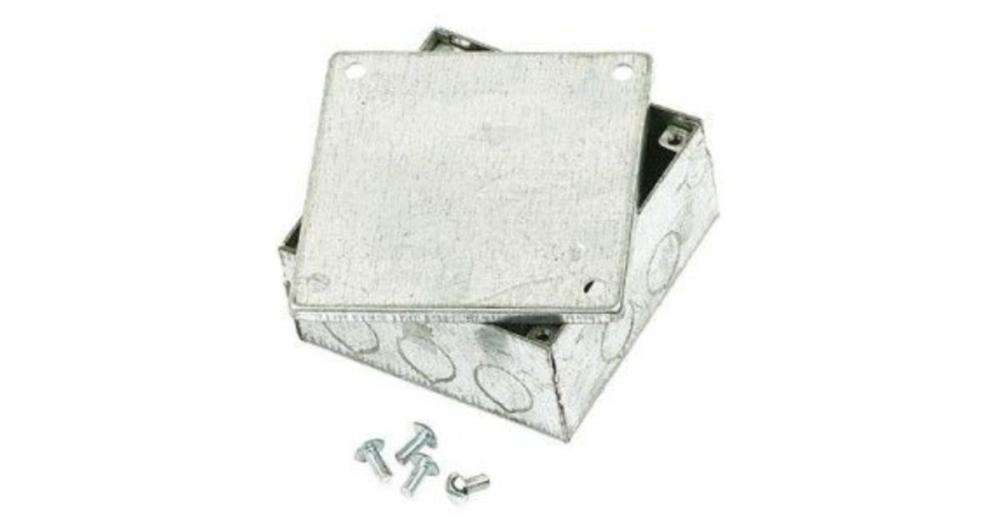
A compact adaptable box for tidy terminations where you still want a robust steel body and practical knockouts for fast entry planning.
- Knockouts for flexible entry locations
- Steel construction for durability
- Galvanised finish for added corrosion resistance
- IP44 rating for typical indoor and sheltered areas
2. Galvanised Adaptable Box 3x3x2 Enclosure
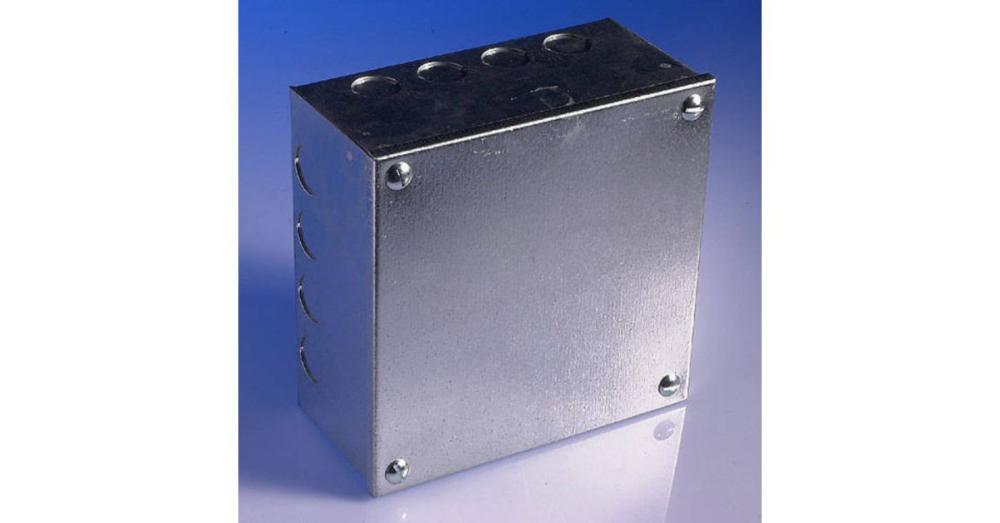
A hard-wearing galvanised option when you want a simple, adaptable box that suits straightforward industrial wiring work.
- Knockouts included
- Steel body for site toughness
- Galvanised finish
- Suits clean cable management with planned entry points
3. Junction Box 300 x 220 x 120mm IP56 Gewiss Enclosure
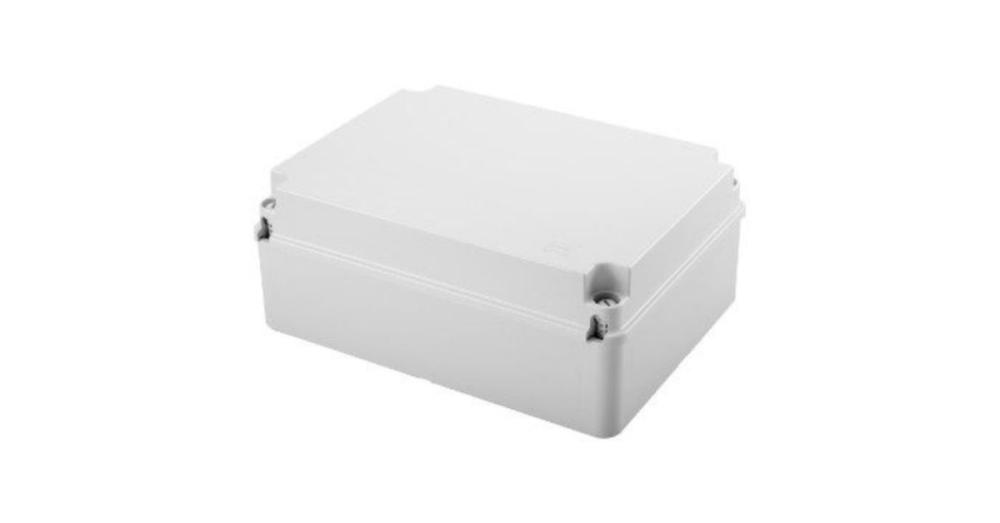
A watertight, surface-mount PVC junction box style enclosure made from high-performance technopolymer, ideal where corrosion resistance and ingress protection are priorities.
- Halogen-free technopolymer (GWPLAST 75)
- IP56 rating for dust and strong water spray scenarios
- Insulation class II
- Press-on lid included for quicker closure
- Standards support: IEC and EN references
4. 2 Gang Outlet Box for Dado/Skirting PEMCO
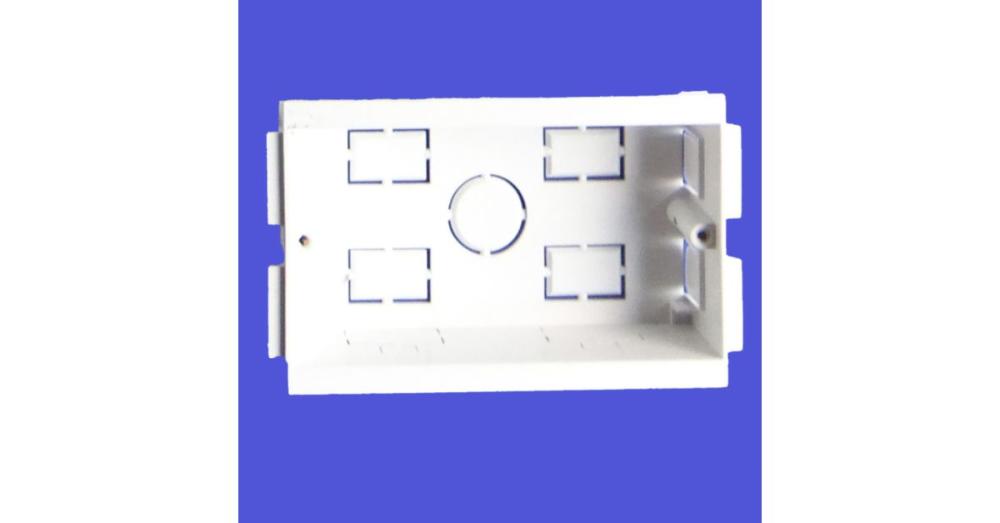
A PVCu outlet box designed for dado, skirting, and trunking systems where a neat finish and accessible device mounting matter in commercial or residential fit-outs.
- Non-flame propagating PVCu construction
- Suitable for Cat 5e, 6, and 7 compliant installations
- Supports structure in trunking runs
Key Takeaways
- Plan entries before drilling – Good layout ensures better sealing and long-term IP protection.
- Select the right enclosure material – Galvanised for strength and earthing; PVC for corrosion resistance.
- Match glands correctly – Choose the right material, size, and type for the cable and environment.
- Install carefully – Drill accurately, deburr properly, and avoid over-tightening glands.
- Maintain and inspect regularly – Check seals, blank unused holes, and support cables to preserve IP ratings.
Conclusion
Reliable enclosures for electrical equipment installations come down to three decisions: careful entry planning, correct gland selection (metal for galvanised; plastic for PVC), and disciplined sealing plus inspection to preserve IP ratings.
If you are looking to buy boxes and enclosures online, Meteor Electrical - a leading electrical wholesaler serving buyers in the Republic of Ireland and the UK - stocks quality galvanised and PVC options in one place.
Browse and order with confidence and get your next electrical enclosure box sorted fast!
FAQs
1. What’s the best entry location to maintain an enclosure’s IP rating outdoors?
Use side entries where practical and avoid bottom entries in flood-prone areas; keep clear of drip paths and always blank unused knockouts with rated stops.
2. Should I use metal or plastic cable glands, and how does enclosure material affect the choice?
Use metal glands on galvanised enclosures for strength and earthing continuity, and plastic glands on PVC enclosures for corrosion resistance and insulation.
3. How do I size a cable gland correctly for my cable outer diameter to prevent water ingress?
Measure the cable outer diameter and select a gland whose clamping range comfortably covers it; if you’re at the edge of the range, move up a size to avoid poor compression.
4. Can I drill extra holes on-site without compromising the electrical enclosure box rating?
Yes, but only if you drill cleanly, deburr properly, and fit correctly rated glands or blanks. Rushed extra holes are a common cause of leakage.
5. What are the most common cable management mistakes that lead to gland leaks or IP failures?
Unsupported cable weight, tight bends at the entry, mixed segregation causing rework, and pulling forces that gradually loosen glands.