
BS 7671 Amendment 4 Is Here: What the New 2026 Wiring Regulations Mean for Electricians and Businesses
BS 7671 Amendment 4 Is Here: What the New 2026 Wiring Regulations Mean for Electricians and Businesses
BS 7671 Amendment 4 Has Officially Arrived
BS 7671 Amendment 4 has now been officially published by the IET and BSI, marking the latest update to the 18th Edition of the IET Wiring Regulations. Published on 15 April 2026, the new standard can be used straight away, while the previous version will be withdrawn after a six-month transition period.
That makes this more than just a routine update. BS 7671 is the UK’s national standard for electrical installation safety, covering the design, erection and verification of installations, as well as additions and alterations. So, whether you’re an electrician on the tools, a contractor pricing jobs, or a business responsible for premises and compliance, Amendment 4 is something you’ll want on your radar.
What’s New in BS 7671 Amendment 4?
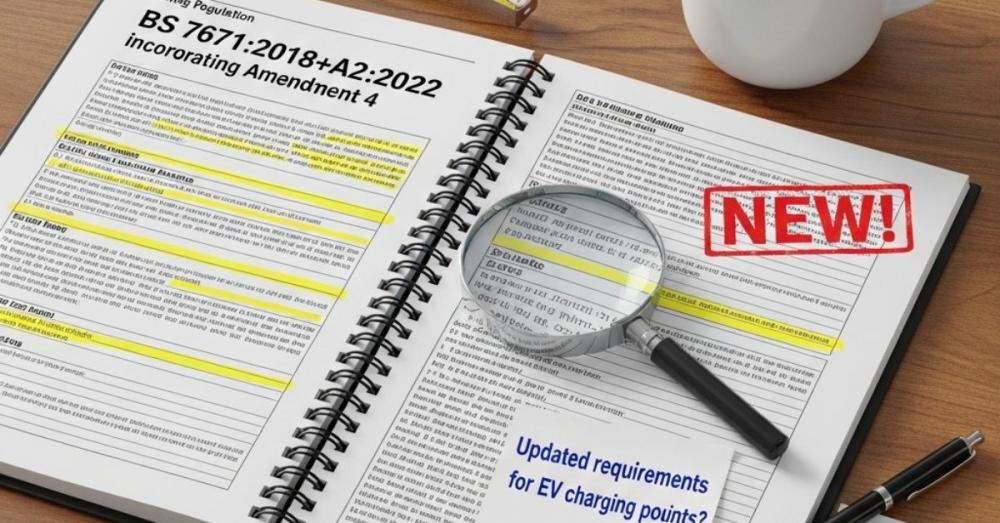
The headline changes in Amendment 4 reflect the way electrical work is changing in real life: more battery storage, more connected systems, and more specialist environments that need tighter rules. These amendments aim to improve safety, address the rise of IoT and DC systems, and update standards to match evolving technology. The updated standard is available for purchase and training via organisations like NICEIC and the IET.
New Rules for Stationary Secondary Batteries
A brand-new chapter now covers stationary secondary batteries, responding to the rapid growth of energy storage systems used with and without solar PV. The update deals with system design, power conversion equipment, hybrid and bidirectional inverters, and the suitability of protective devices where energy can flow in two directions. It also puts a sharper focus on battery location, ventilation and fire-risk mitigation.
A Dedicated Section for Power Over Ethernet
Amendment 4 introduces Section 716 for Power over Ethernet, recognising that Ethernet cabling is now being used to power low-wattage equipment such as LED lighting and small appliances. The section sets out requirements for selecting power supplies and cables using SELV and PELV systems, and it also introduces specific voltage limits and connection requirements for safe operation.
Major Revisions for Medical Locations and ICT Systems
Section 710 has been significantly revised for medical locations, with clearer classification of Groups 0, 1 and 2 and stronger requirements around supply resilience in higher-risk areas such as operating theatres.
Industry guidance published around Amendment 4 also highlights new or expanded requirements for functional earthing and functional equipotential bonding for ICT equipment and systems, reflecting the growing role of digital infrastructure in modern buildings.
Source - eFIXX
Why Amendment 4 Matters
Put simply, Amendment 4 matters because electrical installations are no longer just about sockets, lighting and distribution boards. The UK is moving towards greater electrification, smarter buildings and stronger integration of renewables, and BSI says BS 7671 underpins the safe, modern infrastructure needed for that shift.
For the trade, this update raises the bar on safety, clarity and future-readiness. The IET says the amendment is intended to keep the Wiring Regulations aligned with the technologies shaping current and future electrical work, particularly in areas such as energy storage.
In practice, that means fewer grey areas, better guidance on emerging applications, and stronger protection in environments where failure simply isn’t an option.
How Amendment 4 Affects Electricians and Businesses
For electricians, the biggest impact is practical. New work, additions, alterations, and periodic inspection and testing all sit within the scope of the updated standard, so designers, installers and inspectors will need to understand the new rules before the old version is withdrawn. If your workload includes battery storage, ICT-heavy installations, PoE applications or healthcare sites, this isn’t one to leave until the last minute.
For Electricians
- Review current designs and specifications against BS 7671:2018+A4:2026 now, especially for battery and PoE projects.
- Plan training or refresher study early, as industry guidance expects professionals to update their knowledge before the transition ends.
- Check product selection carefully, because protective devices, inverters, cabling and supporting equipment may need closer scrutiny under the new requirements.
For UK Businesses
UK businesses, landlords, facilities teams and procurement leads should also pay attention. BS 7671 applies to new low-voltage installations as well as additions, alterations and inspection work, so projects specified after the transition period will need to reflect Amendment 4.
For organisations in healthcare, commercial property, data-rich environments or sites investing in battery storage, early alignment will help avoid delays, redesign costs and compliance headaches later on.
Useful Links:
- IET Amendment 4 announcement – official publication update from the IET and BSI.
- BSI BS 7671 overview – background on the national standard.
- Electrical Safety First guidance – practical safety information and best-practice resources.
- NICEIC certification – certification and support for electrical businesses.
- ECA Amendment 4 update – industry reaction and member-facing guidance.
Key Takeaways
- BS 7671 Amendment 4 is now officially published and came into effect on 15 April 2026, with a six-month transition period before the previous version is withdrawn.
- The update reflects modern electrical demands, especially the rise of battery storage, connected systems, IoT, and DC applications.
- A new chapter for stationary secondary batteries introduces clearer rules around design, bidirectional energy flow, ventilation, and fire risk.
- Section 716 for Power over Ethernet (PoE) now gives specific guidance for powering low-wattage equipment safely through Ethernet cabling.
- Medical locations and ICT systems see major revisions, with stronger requirements for resilience, classification, and functional earthing in critical environments.
- Electricians and businesses should prepare early by reviewing designs, updating specifications, and aligning projects with the new standard before the transition period ends.
Preparing for the Change Ahead with Confidence
Amendment 4 is a timely update, and it lands at exactly the point where the trade is dealing with more storage, more digital systems and tighter expectations around resilience and safety. For electricians and businesses alike, the smart move is to get familiar with the changes now, review upcoming projects, and make sure specifications, products and working practices are ready well before the old version disappears.
And if you’re updating stock, sourcing compliant products or getting jobs lined up for the months ahead, Meteor Electrical is a great place to start for reliable electrical supplies, competitive value and the everyday essentials that keep your projects moving.
FAQs About BS 7671 Amendment 4
1. When was BS 7671 Amendment 4 published?
It was officially published on 15 April 2026 by the IET and BSI.
2. When does Amendment 4 replace the previous version?
It can be used immediately, and the previous version is due to be withdrawn six months after publication.
3. What are the biggest changes in Amendment 4?
The main updates cover stationary secondary batteries, Power over Ethernet, medical locations, and ICT earthing and bonding requirements.
4. Does Amendment 4 apply only to new installations?
No. It also applies to additions, alterations, and periodic inspection and testing of existing installations.
5. Do electricians need new training for Amendment 4?
The IET encourages electrical professionals to become familiar with the changes, and industry guidance says updating knowledge early will be important for compliance.
6. Where can I find the official standard and guidance?
The official standard is available through the IET and BSI, while supporting guidance can also be found through bodies such as Electrical Safety First, NICEIC and ECA.