
Kinetic Wireless vs Wired Switching for Refurbishments: The Best Option for Fast, Low-Disruption Installs
Kinetic Wireless vs Wired Switching for Refurbishments: The Best Option for Fast, Low-Disruption Installs
Refurb projects rarely give you perfect cable routes, deep back boxes, or clean wall finishes. And that is exactly why choosing between kinetic wireless vs wired switching has become a real on-site decision, not just a spec-sheet debate. This guide breaks down kinetic wireless and traditional wired switches with the practical factors electricians and facilities managers care about - disruption, reliability, compliance, and total cost when access is tight in listed buildings, concrete structures, occupied sites, and budget refits.
Kinetic Wireless Switching Explained - How It Works and Where It Fits

What Is A Kinetic Wireless Light Switch?
A kinetic wireless light switch generates its own energy when you press it. No batteries, no charging. That tiny burst of energy sends a signal from the switch (the transmitter) to a separate module (the receiver) that actually controls the lighting circuit.
In refurb work, the appeal is obvious. You can add a new switch point without modifying walls, and you can retrofit multi-way control where running new strappers would be messy or impossible. It is a popular approach for retrofit lighting control in corridors, reconfigured rooms, and custom client requests.
Kinetic Switch Installation Requirements in Refurb Sites
Kinetic systems still need thoughtful planning, because the receiver must be installed within range. Common receiver locations include:
- Ceiling rose or lighting junction box (often easiest in domestic refurbs).
- Behind a switch position if you have back box depth.
- In an accessible panel or enclosure for certain commercial layouts.
Range and signal strength matter too. Thick masonry, foil-backed plasterboard, and metal enclosures can reduce performance. Plant rooms and risers can also be noisy RF environments. If you are fitting into newly constructed spaces, kinetic switches can shine as they support unintrusive installation and keep surfaces intact.
Pros and Cons of Kinetic Wireless Switching
It is important to understand the strengths and limitations of kinetic wireless switches to make the best choice for refurbs:
Pros
- Minimal disruption, less making good, faster handover.
- Flexible positioning, ideal when the “right place” for a switch is not where the cables are.
- Great for adding control points late in a refurb.
Cons
- Receiver dependency means you must document where modules are installed for future maintenance.
- RF performance varies by building fabric and layout.
- Product choice matters because build quality affects feel, durability, and pairing stability.
Wired Switching Explained - Proven Standards for Permanent Control
What Counts as Wired Switching in Refurb Projects?
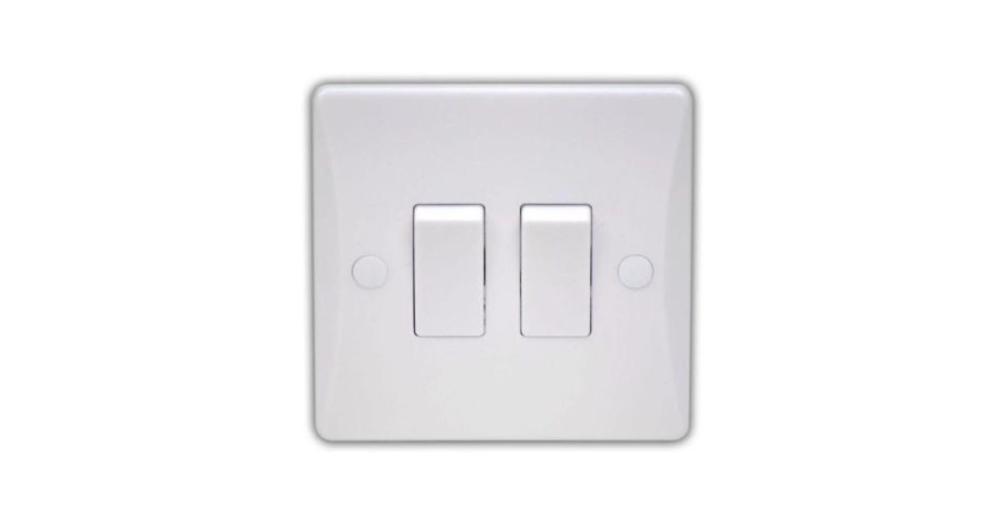
Wired switching covers the classic setups most electricians know instinctively:
- 1-way switching for single-point control.
- 2-way (3-way) switching for two locations, like top and bottom of stairs.
- Intermediate switching for three or more points.
Refurbishments complicate the simple stuff. You may find buried junctions, unknown cable routes, borrowed neutrals, or old conduit that looks usable until it isn’t. Sometimes the switching is straightforward, but the route to get there becomes the real job.
Wired Switching Advantages for Compliance and Long-Term Reliability
Wired switching is still the gold standard when you want predictable performance, especially in high-use areas such as stair cores, toilets, and shared corridors. It also integrates cleanly with:
- LED trailing-edge dimmer controls for smooth, quiet dimming.
- Emergency lighting logic and test regimes where applicable.
- Existing maintenance processes that expect conventional fault-finding.
If you manage facilities, wired switching can be easier to standardise across a portfolio. It also pairs naturally with most switches & sockets specifications and common stock profiles.
Wired Switching Challenges in Access-Constrained Environments
The drawback is not the switching method, it is the building. Wired work can trigger:
- Wall chasing and redecoration cost.
- Extra risk management where asbestos surveys or dust control apply.
- Restricted shutdown windows in occupied premises, which pushes labour costs up.
So, while the parts might be cheaper, the installation can be the real budget line.
Kinetic Wireless vs Wired Switching - Highlighting the Top Decision Factors
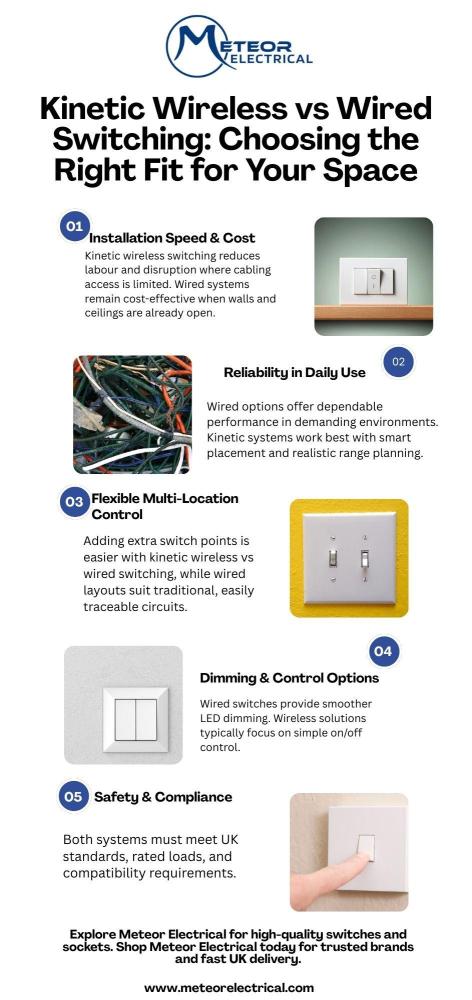
1. Installation Time, Disruption, and Labour Cost Comparison
Kinetic can save time and labour when running new cables would mean messy repairs, or when you need to add a switch point late in the job. Wired can be cheaper overall when ceilings are open, walls are already coming back to brick, or you have accessible voids and planned rewires.
A good rule: If access is the constraint, kinetic saves time. If access is already solved, wired stays efficient.
2. Performance and Reliability in Real Buildings
Wired wins on consistency under heavy use and harsh conditions. Kinetic performs well when installed with realistic range expectations and sensible receiver placement, but thick concrete, metal-clad back boxes, and dense service zones can be challenging. In those settings, a quick on-site test before final fixing can prevent repeat visits.
3. Multi-Location Control (2-Way Switching) and Expansion Flexibility
Adding a second switch point is where kinetic can be a practical shortcut. Instead of pulling new strappers through awkward routes, you can add a wireless control point and keep décor intact.
Wired still makes sense where you want a traditional, easily traceable circuit, especially in commercial spaces where future contractors need clear, familiar layouts.
4. Dimming, LED Compatibility, and Control Features
If dimming is a priority, wired solutions often deliver the most predictable result, especially with a proper trailing-edge dimmer designed for LEDs. Many wireless setups focus on on/off control, so match expectations early. The client who wants mood lighting may be better served by a wired dimming strategy.
5. Safety, Standards, and Spec Considerations (UK-Focused Buying Checks)
Whether you choose kinetic or wired, a buying checklist should be non-negotiable:
- Correct rated loads and compatibility with LED drivers.
- Suitable enclosure type and IP rating where required.
- Clear documentation for receivers and circuit identification.
- Reputable manufacturing and UK safety compliance.
This is also where choosing high-quality switches and sockets pays off, because fewer call-backs usually outweigh small upfront savings.
Source - Sparks Electrical
Conclusion: The Best Choice Depends on Access, Control Needs, and Maintenance
When planning a refurb, choose kinetic wireless when access is restricted and disruption must stay low and choose wired when you need maximum predictability, dimming performance, and long-term standardisation. In practice, many sites land on a hybrid approach.
Ready to buy electrical switches and sockets online for an upcoming refurbishment project? Meteor Electrical stocks a wide range of wired switches, including 1-way, 2-way, trailing-edge LED dimmers, smart Wi-Fi, touch and occupancy options, along with kinetic wireless switches in multiple finishes like polished chrome, satin chrome, matt black, white, and antique brass for added aesthetic appeal.
Browse Meteor Electrical today and shop for BSI-certified brands, including Zahler, Platinum, and Selectric, along with fast delivery across Northern Ireland and the UK.
FAQs
1. Is a kinetic wireless switch reliable enough for commercial refurbishments?
Yes, if the receiver is positioned sensibly and you validate range on-site, Kinetic can be dependable for many commercial applications.
2. When should I avoid kinetic wireless switching in high-interference or metalclad environments?
Avoid it where RF signals struggle, such as dense plant rooms, heavy concrete cores, or fully metal-clad enclosures.
3. What’s the best option for adding 2-way switching without chasing walls in a finished property?
Kinetic wireless is often the quickest solution, because you can add a second control point without pulling new cables through finished walls.
4. Are wired dimmer switches better than wireless options for LED lighting upgrades?
Often yes, especially with trailing-edge dimmers designed for LEDs, as they typically provide smoother dimming and fewer compatibility surprises.
5. Which switching type is more cost-effective over the full lifecycle?
Wired is often cheaper long term in high-traffic, standardised sites, while kinetic can cost less overall when it avoids wall chasing, redecoration, and repeat disruption.