
Consumer Unit vs Small Commercial Board: What’s More Practical for Light Commercial Jobs?
Consumer Unit vs Small Commercial Board: What’s More Practical for Light Commercial Jobs?
Light commercial jobs sit in an awkward middle ground: not quite domestic, not truly industrial, yet still expected to be safe, tidy, and easy to maintain. This consumer unit vs small commercial board comparison guide helps you decide what is more practical for your next install by weighing best use-cases, install time, compliance expectations, and long-term value and maintenance.
Understanding Consumer Units for Light Commercial Setups
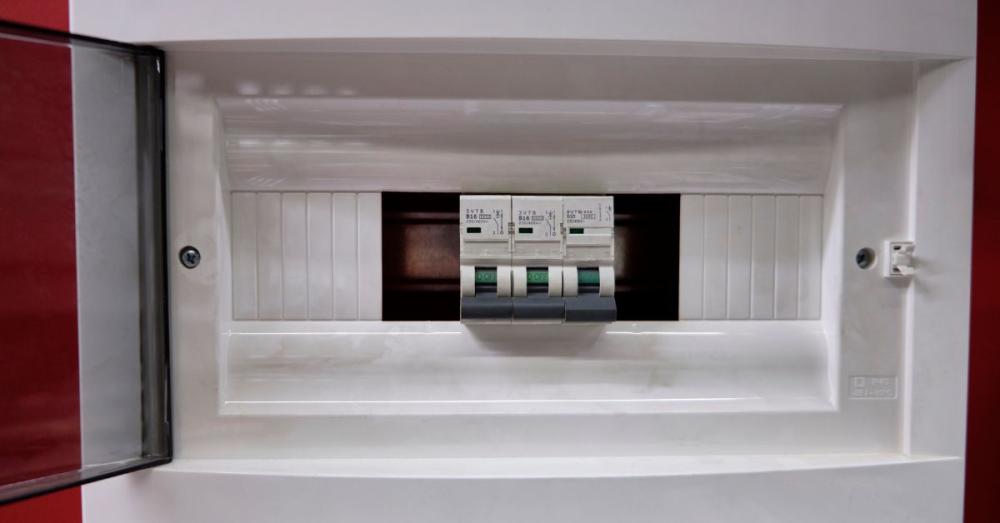
A consumer unit (often called a fuse box) is designed to control and distribute the incoming electrical supply and protect people and equipment from electrical hazards. In simple terms, it’s the heart of your distribution and control setup, typically combining a main switch, RCD protection, and circuit breakers in one enclosure.
So where does a “small commercial board” fit? Think of it as a board that is usually chosen when the site has a broader mix of loads, longer operating hours, or a bigger expectation of expansion and fault-finding. Both options can be valid, but the most practical choice depends on how the business actually uses power day to day.
Did you know: Many call-backs happen not because the board is “wrong”, but because the circuit plan did not leave enough spare ways for that one extra fridge, sign, or hand dryer added later?
Source - The Engineering Mindset
Practical Decision Framework: Which One Fits the Job?
Best-Fit Scenarios for Consumer Units
Consumer units make sense when the site is small, the loads are predictable, and the client wants a clean, straightforward install.
Suitable for:
- A salon with sockets, lighting, and one or two fixed appliances.
- A small office where the biggest loads are workstations and lighting.
- A cafe with modest kitchen equipment and clear separation between front and back circuits.
- A small clinic where you want simple circuit ID and quick isolation.
For reliability, a well-specced metal-clad consumer unit with sensible RCBO selection is the right choice. This is also where many installers prefer to buy consumer unit online, as it is easier to compare ways, protection types, and accessories quickly.
Best-Fit Scenarios for Small Commercial Boards
A small commercial board is often more practical, especially if the site may need additional circuits later. If you’ve got HVAC, signage, multiple final circuits, and longer daily running, the board choice starts affecting downtime and maintenance time.
Choose commercial-leaning boards when you expect:
- Mixed loads and higher inrush, such as motors, extract fans, and compressors.
- Longer hours, where nuisance trips become a bigger business problem.
- Higher fault levels or more demanding protective coordination.
- Frequent maintenance access by different staff, meaning facilities teams want clearer segregation and serviceability
Side-by-Side Comparison: Consumer Unit vs Small Commercial Board
Both can do the job, but practicality changes depending on the site.
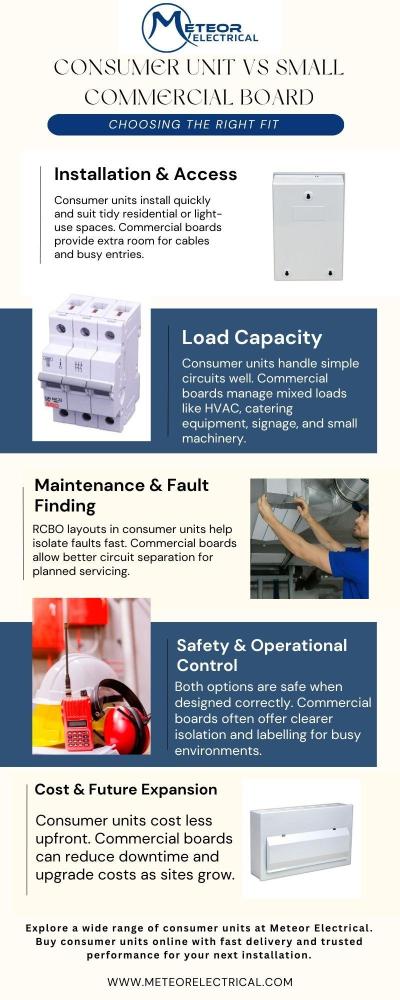
- Installation speed and accessibility: Consumer units can be quicker to mount and dress neatly, while some commercial boards offer more space and gland options for busier entries.
- Load types and diversity: Consumer units suit simpler circuits; commercial boards cope better with varied loads like HVAC, kitchen equipment, signage, and small machinery.
- Reliability and maintenance: RCBO-heavy layouts can simplify fault finding; commercial boards may offer easier segregation and clearer maintenance workflows.
- Safety and operational control: Both can be safe when designed properly, but commercial boards often make isolation and circuit identification more site-friendly.
- Cost of ownership: Consumer units can be cheaper upfront; commercial boards may reduce disruption costs later if the site expands.
Consumer Units for Light Commercial Setups - Top Picks from Meteor Electrical
The following top picks from Meteor Electrical cover common light commercial needs, from compact add-on boards to higher-way split load options.
1. 2 Usable Way Metal Clad Enclosure c/w 100A Isolator (Live Electrical)
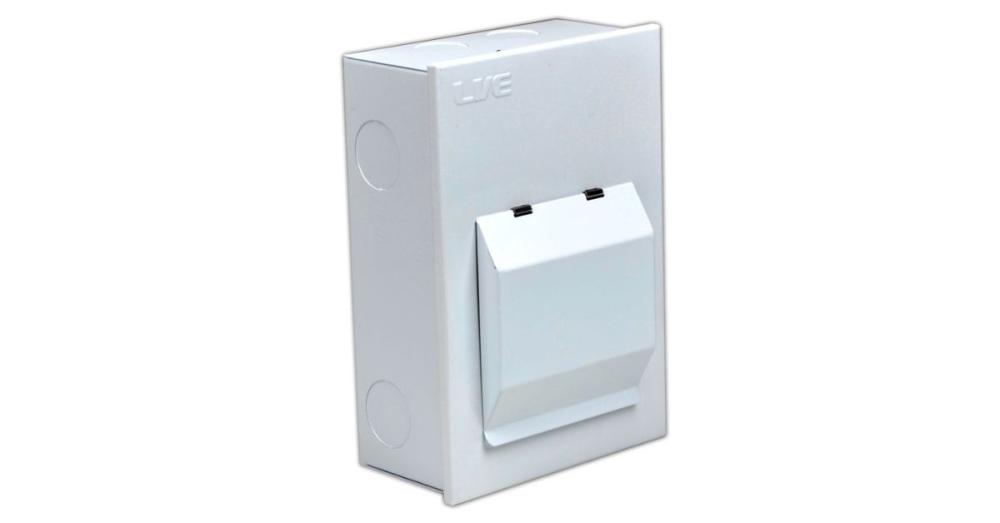
A compact metal enclosure that works well for small add-ons like a back-office supply, a sign circuit, or a dedicated socket run. The metal build is a nice confidence booster in busy environments.
Key features:
- 100A main switch isolator
- Robust powder-coated steel enclosure
- Large wiring space for easier dressing
- Raised DIN rail for cleaner routing
- Supports RCBOs or MCBs for independent circuit protection
2. Live 18 Way Split Load c/w 100A Isolator/2x80A RCD (Live Electrical)
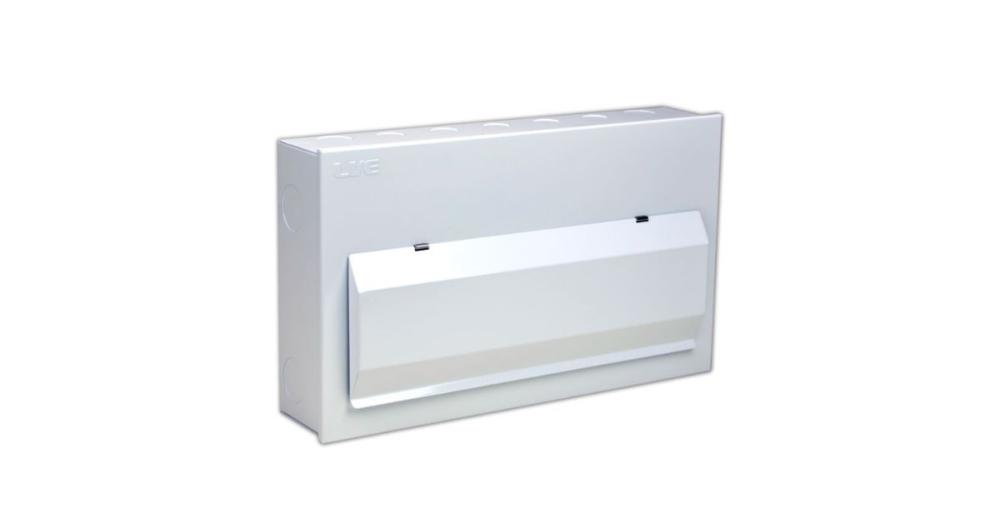
When you need room to breathe, an 18-way split load board is a practical stepping stone before you jump to a full small commercial board. Ideal for fit-outs where you can already see the “phase two” coming.
Key features:
- 100A isolator with dual RCD arrangement
- Durable powder-coated steel construction
- Accessible wiring space for faster termination
- Raised DIN rail improves cable routing
- Compatible with RCBOs or MCBs
3. MCB 3 Pole 32A Characteristic C 6kA (GARO)
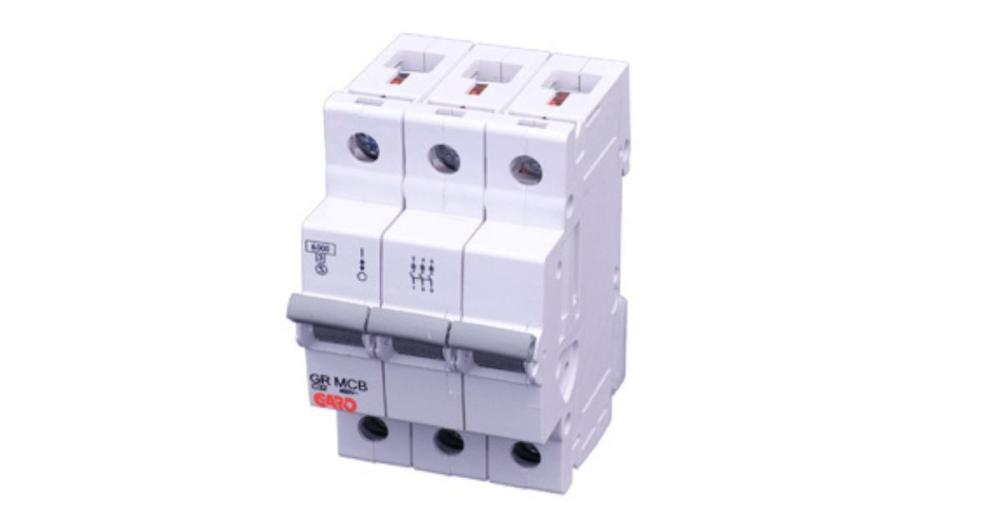
A solid choice when you need three-pole protection for specific circuits and you want a familiar, widely used format. Great to keep on hand for service work and board builds.
Key features:
- Triple pole switching
- 32A rating, C-curve
- 6kA breaking capacity
- Designed for overcurrent protection
- Built to recognised standards (BS EN 60898)
4. 63 Amp 30mA 4 Pole RCD (GARO)
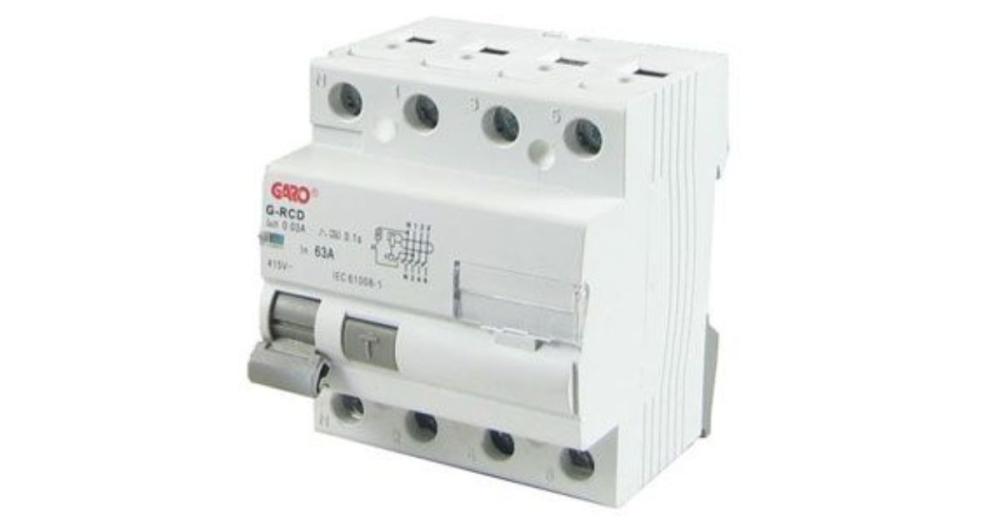
A practical RCD protection option for setups where you need four-pole coverage and clear testing. It’s the kind of component that supports safer commissioning and simpler periodic checks.
Key features:
- 4 pole, 63A rating
- 30mA sensitivity
- Test button for routine testing
- Built to recognised standards (BS EN 61008)
- Strong breaking capacity (10kA)
Conclusion
The most practical answer to consumer unit vs small commercial board depends on expansion headroom, the load mix, and how much downtime the client can tolerate. If you’re sourcing consumer units and accessories for distribution and control work, Meteor Electrical offers a wide range of consumer units with surge protection from leading brands like Garo, plus Proguard and Gewiss suitable and compliant for installation in the UK and Ireland.
Buy consumer unit online with confidence and speed. Check availability and specs and get your next board build sorted today.
Key Takeaways
- Choose the board based on actual load demands and future plans, not just whether the site is commercial.
- Always allow spare ways to avoid costly upgrades when new equipment is added.
- Consumer units are quicker and cheaper upfront; commercial boards often save downtime later.
- RCBO layouts suit simpler sites, while commercial boards handle mixed and heavier loads better.
- Prioritise space, clear labelling, and easy isolation to simplify maintenance and call-outs.
FAQs
1. Do consumer units work for small shops and offices, or are they strictly residential?
They can work well for small premises when loads are modest and the board is designed with sensible circuit separation and future spare capacity.
2. How many ways should I allow for a light commercial fit-out with room for growth?
As a rule, plan for today’s circuits plus several spare ways for signage, extra sockets, added equipment, or a small refurb.
3. Is an RCBO-only layout more practical than split-load for reducing nuisance tripping?
Often, yes. RCBOs isolate faults to a single circuit, which can reduce whole area trips and speed up diagnosis.
4. When does a small commercial board become the safer or more compliant option?
When you have mixed loads, longer operating hours, higher expected fault levels, or the client needs clearer segregation and easier maintenance access.
5. What installation features should electricians prioritise?
Prioritise wiring space, clean cable entry, clear circuit labelling, and straightforward isolation. These details save time at commissioning and make call-outs far easier later.