
Information
Best Wall-Mounted Oil-Filled Radiators UK: Size Guide and Top Picks
Updated October 2026 · Meteor Electrical guides · 10 min read
Quick answer: The best wall-mounted oil-filled radiator is the one sized to your room with good controls. For most UK homes, the ATC iLifestyle WLS range (500W to 1800W) is a strong pick: it is oil-filled for steady warmth, Wi-Fi controlled and wall-bracketed. Choose around 1000W for a double bedroom, 1500W for a living room and 1800W for large rooms.
Short on time? Jump to our wall-mounted oil-filled radiator picks or browse the full electric radiator range. Below we cover sizing, running costs, the alternatives and how to fit one safely.
In this guide
What is a wall-mounted oil-filled radiator?
An oil-filled radiator is an electric heater with a sealed reservoir of thermal oil. An element heats the oil, and the oil warms the metal fins, which release heat into the room by convection and radiation. The oil is never topped up or changed.
Because the oil holds heat, the radiator keeps giving off warmth for a while after the thermostat switches the element off. The result is a steadier, gentler warmth than a fan heater, without the “hot then cold” swings.
Why mount it on the wall?
- Space: floor space stays free, which helps in small rooms, hallways, home offices, flats and rentals.
- Safety: no trailing cable or unit to knock over, and fewer trip hazards in busy homes and offices.
- A neater finish: a fixed radiator looks like part of the room, especially when hardwired.
- Zone control: each room gets its own thermostat and timer, which suits extensions, conversions and rooms central heating struggles to reach.
What are the best wall-mounted oil-filled radiators?
Our top picks are the ATC iLifestyle WLS models. The range is oil-filled (ATC calls it “Thermic Emission Oil”) with aluminium fins, Wi-Fi app control, electronic thermostatic control, IP24 protection and metal wall brackets. ATC also lists open window detection, which pauses heating when it senses a sudden temperature drop.
Quick size guide
As a rough starting point for a well-insulated room (older or draughty rooms may need the next size up):
| Room | Suggested model |
|---|---|
| Small bathroom, cloakroom, hallway | iLifestyle 500W (WLS500) |
| Box room, small bedroom, home office | iLifestyle 750W (WLS750) |
| Double bedroom, study | iLifestyle 1000W (WLS1000) or 1200W (WLS1200) |
| Living room, kitchen-diner | iLifestyle 1500W (WLS1500) |
| Large lounge, open-plan space, office | iLifestyle 1800W (WLS1800) |
1. iLifestyle 500W oil-filled radiator (WLS500)
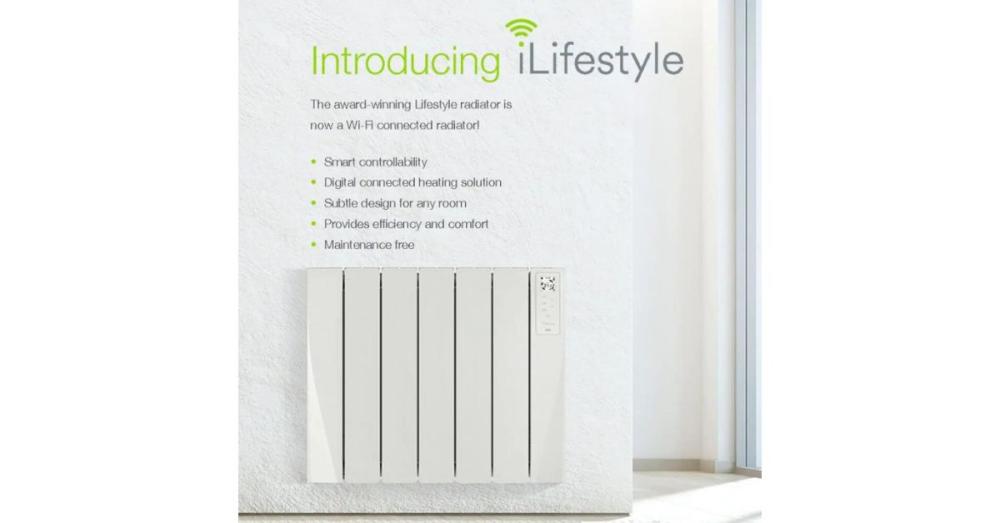
The smallest model suits cloakrooms, hallways, landings and small bathrooms where you only need a little background heat. It has a large TFT display for on-unit programming, plus app control, and the universal metal bracket keeps fitting simple. Check the zone rules before fitting it in a bathroom.
2. iLifestyle 750W oil-filled radiator (WLS750)
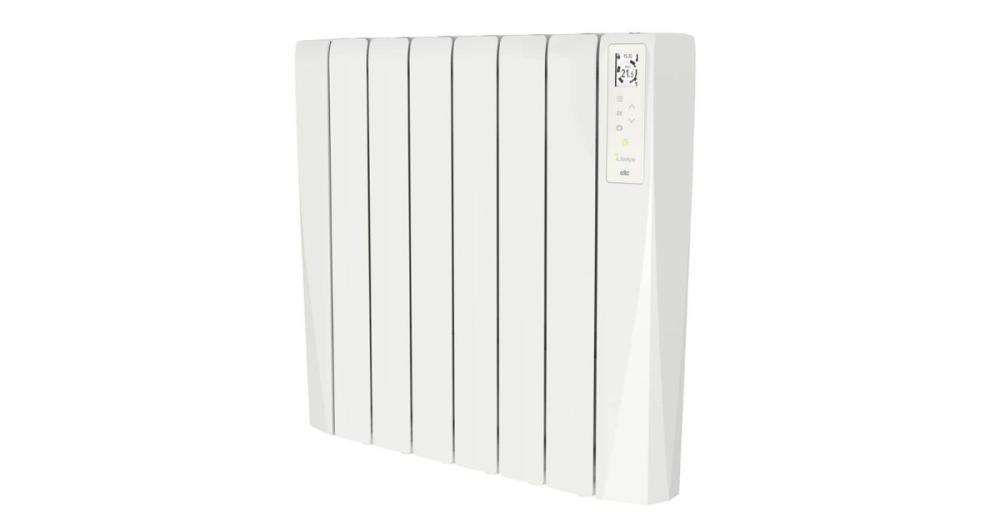
A step up for box rooms, nurseries and small home offices. It works well on its own or alongside other iLifestyle radiators controlled from the same app, so you can heat a study during working hours and leave the rest of the house cool.
3. iLifestyle 1000W oil-filled radiator (WLS1000)
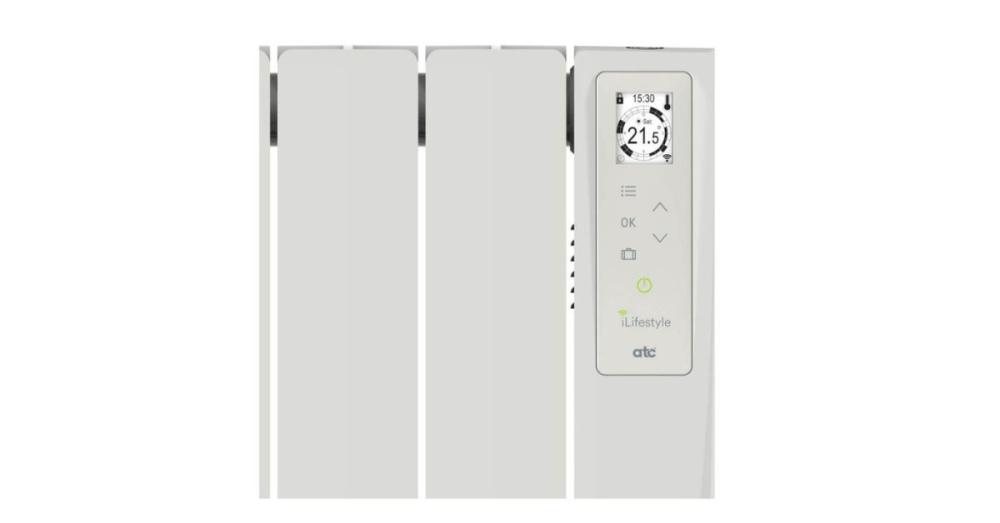
The all-rounder for double bedrooms and mid-sized rooms. It measures 581 x 636 x 98 mm and weighs 10.7 kg, with comfort, eco and frost protection modes and Wi-Fi scheduling, so the room is warm when you need it and not before.
4. iLifestyle 1800W oil-filled radiator (WLS1800)
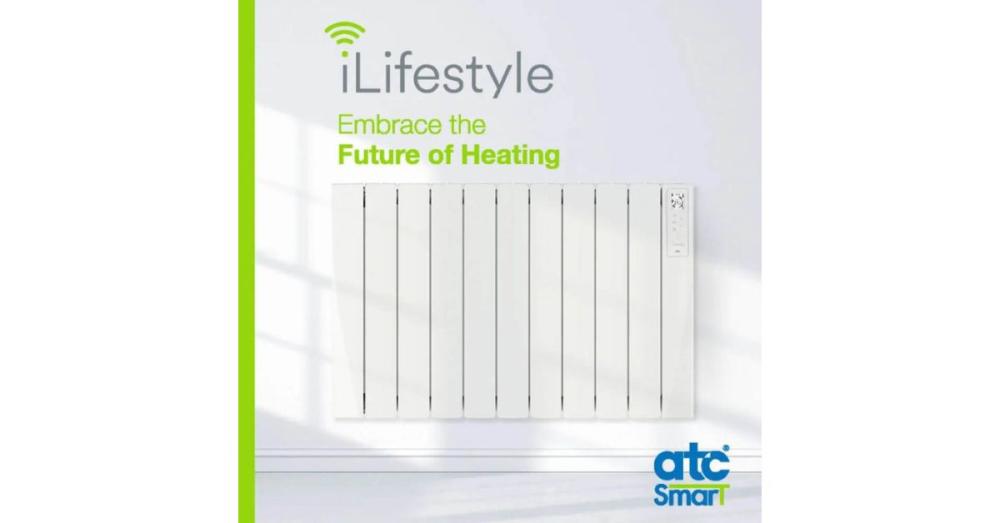
The largest model in the range, with 11 elements, for big lounges, open-plan spaces and offices. It measures 581 x 1036 x 98 mm and weighs 17.7 kg. It offers a 7-day programme, works with Amazon Alexa and Google Home, and is designed for fixed wiring through a fused spur.
5. iLifestyle 1200W and 1500W oil-filled radiators
Sitting between the 1000W and 1800W models, the 1200W (WLS1200) suits larger bedrooms and studies, while the 1500W (WLS1500) is a popular choice for living rooms and kitchen-diners. The WLS1500 measures 581 x 876 x 98 mm and weighs 14.8 kg. Both share the same oil-filled design and Wi-Fi control.
What is the best oil-filled radiator for large rooms?
For a large or open-plan room, the WLS1800 gives the most output in a single unit. In long rooms or rooms with big windows, two smaller radiators at opposite ends often heat more evenly than one large one, and each can run its own schedule.
Not set on oil-filled? Other wall-mounted options
If oil-filled is not the right fit, these wall-mounted electric heaters work differently. Note that neither the Aeris nor the Almeria is oil-filled.
- ATC Aeris ECO Wi-Fi ceramic radiators (500W to 2000W): a ceramic core heating element with die-cast aluminium fins for a steady warmth, with app control, open window detection and a lockable keypad.
- ATC Almeria Eco panel heaters (500W to 2000W): slim, lightweight panel heaters that cost less to buy, with digital timers and Wi-Fi versions in white or black.
- Electric towel radiators: for bathrooms where you also want warm, dry towels.
| Type | How it heats | Heat after switch-off | Best for |
|---|---|---|---|
| Oil-filled radiator (iLifestyle) | Element heats sealed thermal oil and fins | Good: the oil keeps releasing warmth | Bedrooms, living rooms, all-day comfort |
| Ceramic radiator (Aeris) | Ceramic core element with aluminium fins | Some: the ceramic core holds heat | Steady warmth in a lighter unit |
| Panel heater (Almeria) | Heats air directly through a slim panel | Little: cools quickly | Quick top-up heat, lower purchase cost |
| Electric towel radiator | Element heats a towel rail | Depends on model (dry or fluid-filled) | Bathrooms and warm towels |
How do you choose the right wall-mounted oil-filled radiator?
- Get the wattage right. Start with room size, insulation and how you use the room. A bedroom that needs background warmth overnight is different from a conservatory that needs a fast top-up. Oversizing just means more cycling, not more comfort.
- Prioritise controls. An accurate electronic thermostat, a 7-day timer, open window detection and a child lock make more difference to comfort and cost than raw output.
- Decide on smart control. A Wi-Fi oil-filled radiator lets you adjust schedules from your phone, which helps if you work shifts, travel or manage several rooms or a holiday let.
- Check the supply and location. Some models plug in, others are designed for fixed wiring through a fused spur. For bathrooms, match the IP rating to the zone (the iLifestyle range is IP24) and follow the manufacturer’s restrictions.
Pro tip: Browse our smart heaters if app control is a must. One app for every room makes it easy to set different schedules for bedrooms, offices and living spaces.
Energy efficiency and running costs
How do you estimate the running cost?
Use this simple formula: power (kW) × hours of heating × your unit rate (£ per kWh) = cost. Divide the wattage by 1,000 to get kW, so 1500W is 1.5 kW. Your unit rate is on your electricity bill or app.
For example, a 1.5 kW radiator running at full power for 4 hours at an example rate of 25p per kWh uses 6 kWh and costs £1.50. This rate is for illustration only and is not a quoted tariff, so swap in your own rate.
| Model | Power | Maximum cost per hour at an example 25p/kWh |
|---|---|---|
| WLS500 | 0.5 kW | 12.5p |
| WLS750 | 0.75 kW | about 19p |
| WLS1000 | 1.0 kW | 25p |
| WLS1200 | 1.2 kW | 30p |
| WLS1500 | 1.5 kW | about 38p |
| WLS1800 | 1.8 kW | 45p |
These are worst-case figures at full power. Once the room reaches temperature, the thermostat cycles the element on and off, so the real cost depends on insulation, the set temperature and how long the radiator actually draws power.
What is the most energy-efficient oil-filled radiator?
All electric resistance heaters, oil-filled, ceramic or panel, turn practically all the electricity they use into heat at the point of use. In that narrow sense they are close to 100% efficient. That does not make them the cheapest heat: electricity usually costs more per kWh than gas, and a heat pump delivers several units of heat for each unit of electricity.
So the most efficient oil-filled radiator is the one that wastes the least time heating. Look for accurate PID electronic thermostats (ATC lists 0.2°C precision on the iLifestyle range), open window detection, eco modes and good scheduling.
Five ways to cut running costs
- Heat only the rooms you are using, on a timer.
- Turn the thermostat down by a degree and see if you notice the difference.
- Use eco or frost protection modes for rooms that are empty for long periods.
- Keep curtains and furniture clear so heat circulates.
- Check your tariff: some off-peak rates suit scheduled heating.
Installation and placement tips
Find the right spot first
Radiators were traditionally fitted under windows to counter cold downdraughts from single glazing. With double glazing, that rule matters less, so pick a wall where heat can circulate and furniture will not block it.
Wall-mounting checklist
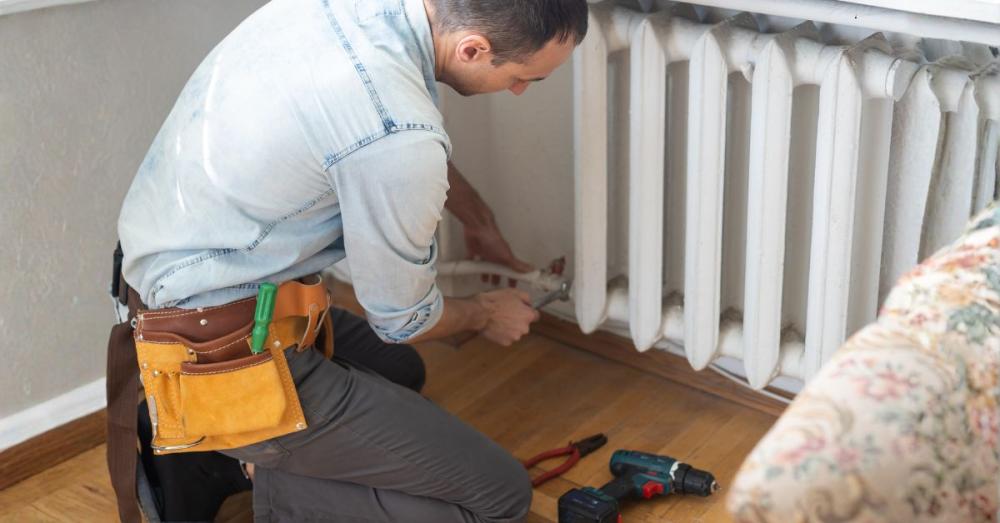
- Confirm the wall type and use fixings rated for the load. The WLS1800 weighs 17.7 kg.
- Check for hidden pipes and cables before drilling.
- Use the bracket or template supplied to keep the radiator level.
- Leave the manufacturer’s recommended clearances above, below and to the sides.
- Keep full-length curtains and furniture clear of the front of the unit.
Credit: MCG Electrics.
Safety: A fixed-wired radiator, such as one supplied from a fused spur, is part of the electrical installation. In the UK it must meet BS 7671 (I.S. 10101 in the Republic of Ireland), and work in bathrooms or new circuits may be notifiable. Use a qualified electrician and always follow the manufacturer’s instructions.
Key takeaways
- Wall-mounted oil-filled radiators save floor space while giving steady, even warmth that lingers after the element switches off.
- Size the radiator to the room: roughly 1000W for a double bedroom, 1500W for a living room and 1800W for large spaces.
- Running cost = kW × hours × your unit rate. Controls such as thermostats, timers and open window detection make the biggest difference.
- Ceramic radiators (Aeris) and panel heaters (Almeria) are alternatives, but they are not oil-filled.
- Fixed-wired radiators should be installed by a qualified electrician to current regulations.
Choosing the best wall-mounted oil-filled radiator
The best wall-mounted oil-filled radiator for you is the right size for the room, with controls that stop it heating empty space. For most UK homes the ATC iLifestyle range covers everything from a 500W cloakroom heater to an 1800W radiator for open-plan living. For more ways to save, read our guide on how smart heating controls can help reduce heating costs.
Shop wall-mounted electric radiators
Oil-filled, ceramic and panel heaters from ATC. Trade prices, next working day delivery across NI & ROI on in-stock orders before 5pm.
Shop electric radiators Shop panel heatersNeed help choosing? Call our team on 028 8675 1515 (048 from ROI), Monday to Friday, 8am–5pm.
FAQs
Are wall-mounted oil-filled radiators expensive to run?
Running cost is the power in kW multiplied by the hours it heats and your unit rate. A 1 kW radiator at an example rate of 25p per kWh costs up to 25p an hour at full power, and less once the thermostat cycles. Sizing correctly and using timers to heat only occupied rooms keeps costs down.
Do oil-filled radiators stay warm after you turn them off?
Yes. The sealed thermal oil inside the radiator absorbs heat and keeps releasing it for a while after the element switches off. That gives a steadier, gentler warmth than a fan heater or a lightweight panel heater, which cool down quickly once they stop heating.
Are oil-filled radiators safe for bedrooms?
Generally, yes, when installed and used as the manufacturer intends. They have no exposed glowing element, run quietly and are thermostatically controlled. Keep the recommended clearances, never cover the unit or dry clothes on it, and keep curtains and bedding clear. Always follow the manufacturer’s safety guidance.
Can I place a wall-mounted oil-filled radiator under a window?
You can, but in a double-glazed home it is not essential. Placing a radiator under a window used to counter cold downdraughts from single glazing. Today it matters more to keep airflow clear, avoid long curtains in front of the unit and choose a wall that suits your furniture layout.
Are oil-filled radiators a good alternative to central heating?
They are a strong option for zone heating in extensions, garden rooms, home offices and flats, or where extending pipework would be disruptive. Each room gets its own thermostat and timer. For heating a whole house all day, compare running costs with your existing system before relying on electric radiators alone.
What should I look for when buying oil-filled radiators for a business site?
Look for robust build quality, accurate electronic thermostats, programmable timers and, for multiple rooms, Wi-Fi control so heating can be scheduled centrally. Check the IP rating for the location, use secure wall fixings and plan for fixed wiring where the manufacturer specifies it. A consistent range makes spares and replacements simpler.
What size oil-filled radiator do I need?
As a rough guide for a well-insulated room: 500W for a small bathroom or hallway, 750W for a box room or home office, 1000W to 1200W for a double bedroom, 1500W for a living room and 1800W for larger or open-plan rooms. Older or draughty rooms may need the next size up.